Dashati 6
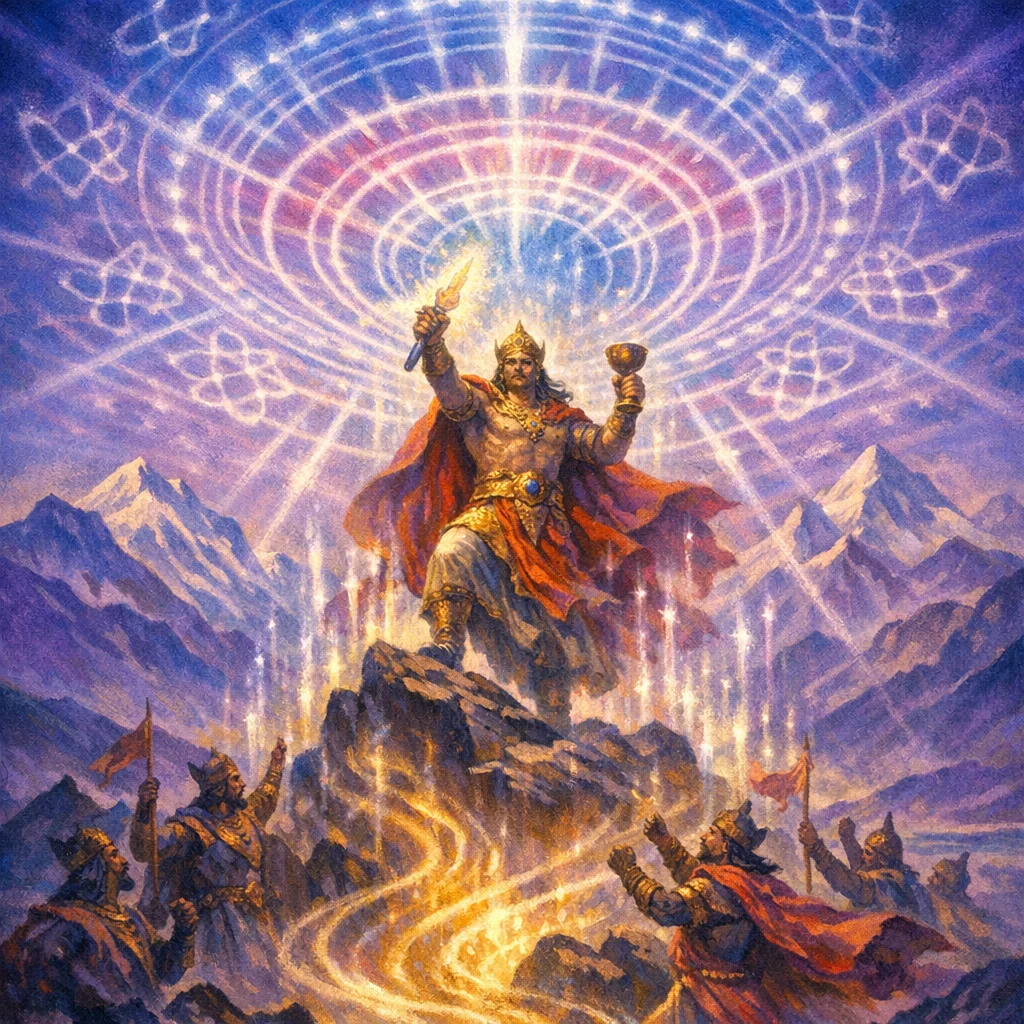
Indra praised as Vṛtra-slayer who accepts stotra and Soma, granting prosperity to the observant patron
Indra
Triumphal and invigorating with a public proclamatory tone suited to Indra-stotra
R̥ṣi attribution is not supplied in the input; identification requires Rigvedic concordance for the underlying RV verses used in this Aindra dashati.
赞颂因陀罗为诛灭弗利陀罗者:他乐受颂歌与苏摩,向守持誓戒、奉行祭仪的施主赐予安泰(śaṃ)、丰厚(magha)与财富(rayi)。祭歌以庄严而凯旋的宣告之调起唱,铺陈其英雄功业与施惠,终以延长式的“stobha”强化呼号;马鲁特众作为同声的助伴,使赞美更为高昂,增益因陀罗的名闻(śruta)与青春之力(yuvā)。其旨在显明祭祀的互惠:严谨的行持与善成的歌咏引来神的悦纳(jujoṣate),遂现为护佑、胜利与兴盛。
Mantras
Mantra 1
विश्वतोदावन्विश्वतो न आ भर यं त्वा शविष्ठमीमहे
遍施者啊,从四方赐与者啊,请从四隅为我们携来(你的)恩赐;我们呼唤你——最强力者。
Mantra 2
एष ब्रह्मा य ऋत्विय इन्द्रो नाम श्रुतो गृणे
此乃祭仪之梵(Brahman),实则名为因陀罗(Indra),声名远播;我今歌咏赞颂。
Mantra 3
ब्रह्माण इन्द्रं महयन्तो अर्कैरवर्धयन्नहये हन्तवा उ
祭司们以赞歌颂扬因陀罗(Indra),以颂诗使其更为强盛;诚然,为我等之利,使其得以击灭来犯之敌。
Mantra 4
अनवस्ते रथमश्वाय तक्षुस्त्वष्टा वज्रं पुरुहूत द्युमन्तम्
为汝——多受呼唤者(Puruhūta)因陀罗(Indra)——工匠神特瓦什特里(Tvaṣṭṛ)打造了战车与骏马,并铸成辉耀的金刚雷霆(vajra)。
Mantra 5
शं पदं मघं रयीषिणो न काममव्रतो हिनोति न स्पृशद्रयिम्
吉祥之位、丰赐之福、富足祭者所愿之欲——无戒之人既不能将其驱离,亦不能触及那财富。
Mantra 6
सदा गावः शुचयो विश्वधायसः सदा देवा अरेपसः
恒常,群牛清净,遍能养育万有;恒常,诸天无瑕无垢。
Mantra 7
आ याहि वनसा सह गावः सचन्त वर्त्तनिं यदूधभिः
来吧,与vanasā同来;群牛以乳房相随,伴行于为你所定之道。
Mantra 8
उप प्रक्षे मधुमति क्षियन्तः पुष्येम रयिं धीमहे त इन्द्र
因陀罗啊,在你的护佑之下,我们安住于甘蜜般的福泽;愿我们兴盛,愿我们得取并守持财富。
Mantra 9
अर्चन्त्यर्कं मरुतः स्वर्क्का आ स्तोभति श्रुतो युवा स इन्द्रः
马鲁特众神以善颂而歌,赞扬这颂歌;声名远播、青春焕发——那位因陀罗,以stobha(赞唱)而被颂扬。
Mantra 10
प्र व इन्द्राय वृत्रहन्तमाय विप्राय गाथं गायत यं जुजोषते
诸祭司啊,请高声歌唱赞颂之歌,献与因陀罗——最强的弗栗陀罗(Vṛtra)屠灭者、睿智者;他喜悦我等的颂歌与供献,并慈然纳受。
Frequently Asked Questions
It proclaims Indra as the Vṛtra-slayer who is pleased by properly sung praise and offerings, and who rewards the disciplined, observing worshipper with welfare and wealth.
The verses stress that prosperity is linked to right ritual conduct: the one who neglects observance (avrata) neither attains the patron’s wealth nor can disrupt the welfare gained through correct worship.
Stobha refers to the characteristic Sāman-style chant-expansions that intensify praise; here it signals heightened musical acclamation of Indra, with the Maruts depicted as participating in the praise.