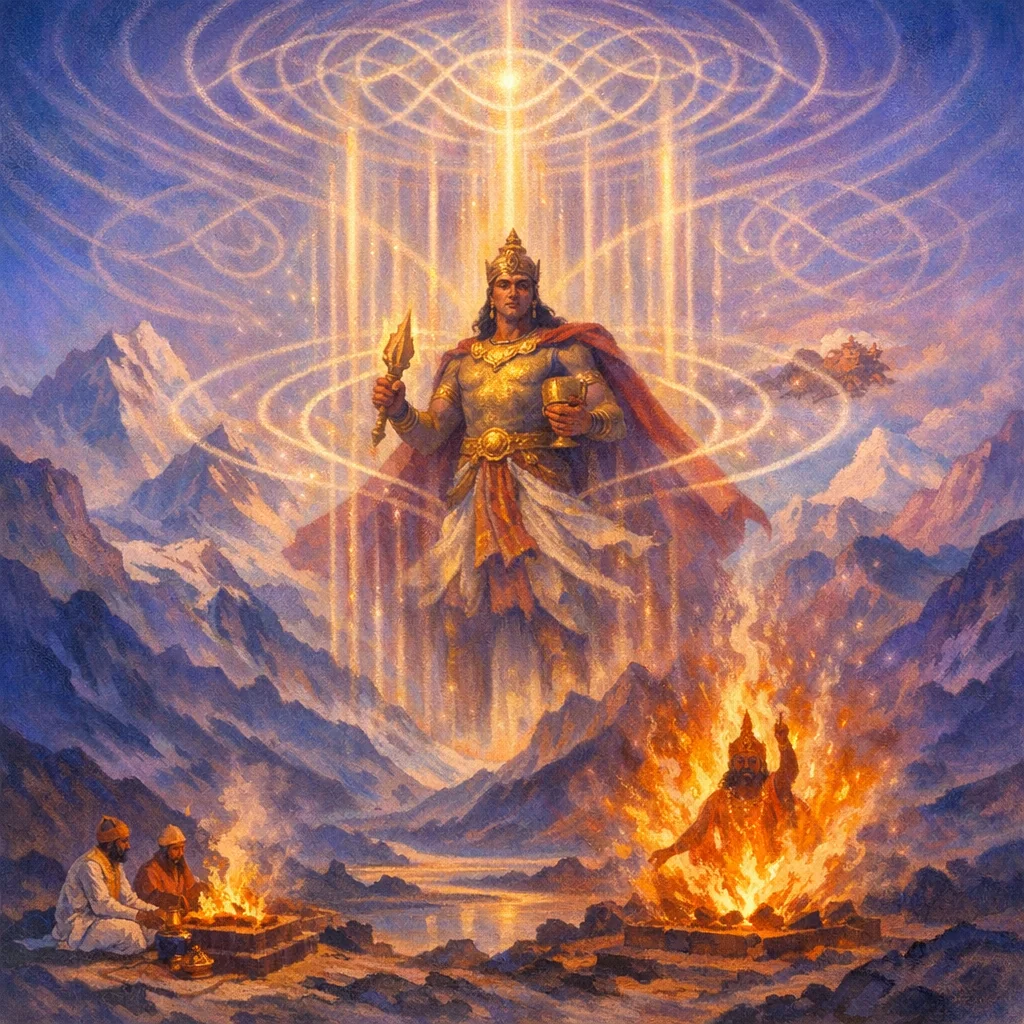
Dashati 4
Aindra protection and yajña-success through divine guidance, Soma-inspired resolve, and Agni as the rite’s wealth-center
Indra (Aindra orientation Soma-exhilaration setting)
Upbeat resolute and protective—moving from benediction to exhilarated striving
The dashati draws on underlying Ṛgvedic sources; r̥ṣi attribution is not provided in the input and cannot be fixed here without the exact RV hymn mapping for each verse.
本组十颂以因陀罗为主导(阿因陀罗取向、苏摩欢悦之境),并召请密特罗、伐楼那、阿利耶曼、八位瓦苏与阿耆尼同护祭主:使其越过敌意与过失、扫除罪障与祭仪阻碍(黑暗与不祥),令心(manas)、巧能(dakṣa)与意志/决断(kratu)趋于吉祥。苏摩的醉悦(andaḥ)激发奋发与胜争之力;终以阿耆尼为仪式之“家”与财富/滋养的汇聚处,使牛马与力量归集,护送祭祀达成其应得之果,安然超越憎敌(ati dviṣaḥ)。整体旋律气质昂扬坚决、护佑有力:由祝福启请渐升至苏摩驱动的动势,最后在阿耆尼周围以安定的“归家”式收束。
Mantras
Mantra 1
आ ते अग्न इधीमहि द्युमन्तं देवाजरम् युद्ध स्या ते पनीयसी समिद्दीदयति द्यवीषं स्तोतृभ्य आ भर
我们点燃你,阿耆尼(Agni)啊,辉耀者、不老的天神;愿你可爱之焰为战而立。被点燃的柴薪既燃,便以天界之威光照;请把(你的赐予)带来,赐与赞颂者。
Mantra 2
आग्निं न स्ववृक्तिभिर्होतारं त्वा वृणीमहे शीरं पावकशोचिषं वि वो मदे यज्ञेषु स्तीर्णबर्हिषं विवक्षसे
如人择取阿耆尼(Agni)一般,我们以善转之颂辞选你为祭司 Hotṛ:强健者,具净化之焰。于苏摩(Soma)的欢悦中,在诸祭仪、铺陈圣草(barhis)之处,你愿宣唱仪轨,并受纳我们的敬献。
Mantra 3
महे नो अद्य बोधयोषो राये दिवित्मती यथा चिन्नो अबोधयः सत्यश्रवसि वाय्ये सुजाते अश्वसूनृते
噢烏莎斯(Uṣas),今日为我们而觉醒,使我们得大财富;你光辉灿然。正如你往昔曾唤醒我们,如今亦然——噢真实闻名者、善生者、言辞和美者,赐予骏马与祝福者。
Mantra 4
भद्रं नो अपि वातय मनो दक्षमुत क्रतुम् अथा ते सख्ये अन्धसो वि वो मदे रणा गावो न यवसे विवक्षसे
请为我们吹送吉祥之善:正念、才能与神圣的意志;于是,在你的友谊中,凭藉Soma之饮,在欢醉的激昂里,你渴望竞逐,如群牛奔向牧草。
Mantra 5
क्रत्वा महां अनुष्वधं भीम आ वावृते शवः श्रिय ऋष्व उपाकयोर्नि शिप्री हरिवां दधे हस्तयोर्वज्रमायसम्
以圣力(kratu)而伟大,威可畏者,他以光辉环抱其力量;那高峻、髯须者、驾黄骠马者(因陀罗 Indra),在双手中执持铁制的雷霆之杵。
Mantra 6
स घा तं वृषणं रथमधि तिष्ठाति गोविदम् यः पात्रं हारियोजनं पूर्णमिन्द्रा चिकेतति योजा न्विन्द्र ते हरी
诚然,他登上那雄健的战车——寻牛者;他,因陀罗啊,洞察那为黄褐骏马所备、盛满苏摩(Soma)的祭器:因陀罗啊,驾上你的两匹黄褐骏马。
Mantra 7
अग्निं तं मन्ये यो वसुरस्तं यं यन्ति धेनवः अस्तमर्वन्त आशवो ऽस्तं नित्यासो वाजिन इषं स्तोतृभ्य आ भर
我以为那位就是阿耆尼(Agni)——那财富之主;群牛趋向于他;迅疾的骏马趋向于他;常被轭系的竞驰者趋向于他:请把滋养带来,赐予赞颂者。
Mantra 8
न तमंहो न दुरितं देवासो अष्ट मर्त्यम् सजोषसो यमर्यमा मित्रो नयति वरुणो अति द्विषः
罪咎不至,灾厄不临:那凡人若为八神同心所引导;若由阿梨耶曼(Aryaman)与密特罗(Mitra)领行,且由伐楼那(Varuṇa)载越诸怨敌。
Frequently Asked Questions
It teaches that the sacrifice succeeds when the gods protect the sacrificer from fault and hostility, while Soma strengthens resolve and Agni gathers nourishment and wealth at the ritual center.
They represent orderly, covenant-keeping divine powers that “lead” the mortal beyond enemies; the ‘eight’ are understood as the Vasus who assist and stabilize the sacrificer’s rite.
It portrays Agni as the central hearth of the yajña: offerings, gains, and strength ‘converge’ there, so the praisers ask Agni to bring iṣ (nourishment) to them through the rite.