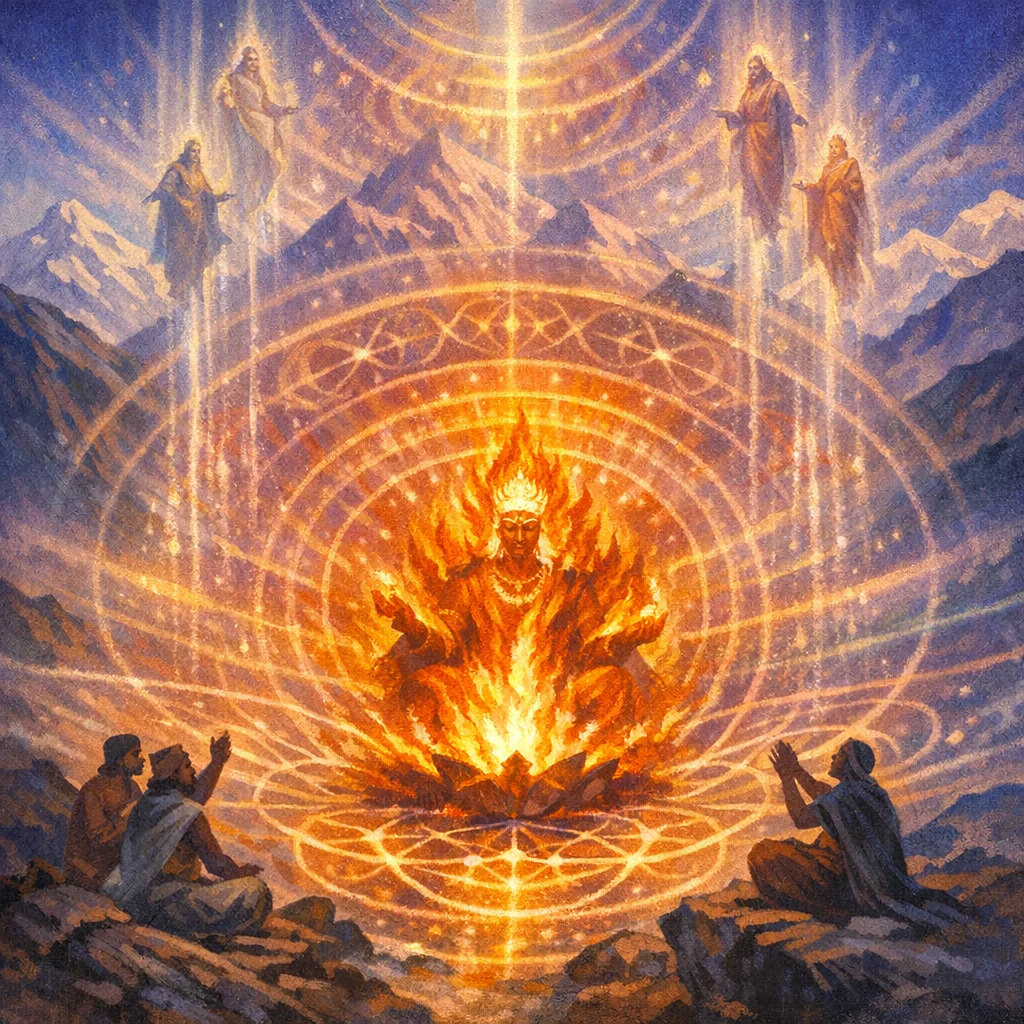
Dashati 1
Agni as the invited sacrificial guest who manifests among men with the gods and removes obstacles to the rite
Agni
Invocatory and bright—welcoming yet forceful moving from invitation to triumphant efficacy
R̥ṣi attribution is not determinable from the provided dashati excerpt alone; identification requires mapping each sāman-verse to its underlying Ṛgvedic ṛk and its traditional r̥ṣi assignment.
主题:阿耆尼(Agni)被恭迎为祭会中的神圣宾客与供献的承载者;他与诸神同临人间祭众之中,受赞颂与燃起,以摧破障碍、护持祭仪,并由成功的供献赐予财富与吉祥成果。
Mantras
Mantra 2
देवेभिर्मानुषे जने
与诸天神同在,于人间众生之中,在祭会(礼拜者的集会)里临在。
Mantra 3
अग्निं दूतं वृणीमहे होतारं विश्ववेदसम् अस्य यज्ञस्य सुक्रतुम्
我等择取阿耆尼(Agni)为使者,为祭官(Hotṛ),为遍知者;愿他为此祭祀之善作、善仪之行者。
Mantra 4
अग्निर्वृत्राणि जङ्घनद्द्रविणस्युर्विपन्यया समिद्धः शुक्र आहुतः
阿耆尼(Agni)渴望赐予财宝,已击碎诸弗利陀罗(Vṛtra);由赞颂而炽燃,光辉灿然,受供而饱。
Mantra 5
प्रेष्ठं वो अतिथिं स्तुषे मित्रमिव प्रियम् अग्ने रथं न वेद्यम्
我赞颂阿耆尼(Agni)——你们最亲爱的宾客,亲如友人;如同战车般可亲近、当求而得,宜于祭坛之途。
Mantra 6
त्वं नो अग्ने महोभिः पाहि विश्वस्या अरातेः उत द्विषो मर्त्यस्य
阿耆尼(Agni)啊,汝以宏大神力护佑我等:免于一切伤害,也免于凡人之憎恨。
Mantra 7
एह्यू षु ब्रवाणि ते ऽग्न इत्थेतरा गिरः एभिर्वर्धास इन्दुभिः
来吧,诚然;我向你宣说,阿耆尼(Agni),这些与其他如法之颂辞。愿凭此赞歌,并凭苏摩(Soma)之滴,你得增长。
Mantra 9
त्वामग्ने पुष्करादध्यथर्वा निरमन्थत मूर्ध्नो विश्वस्य वाघतः
阿耆尼(Agni)啊,阿闼婆那(Atharvan)自莲华之水中搅生出汝;自宇宙之顶而出——那“瓦伽特”(Vāghat),万供之献者,最先为祭祀而生汝。
Mantra 10
अग्ने विवस्वदा भरास्मभ्यमूतये महे देवो ह्यसि नो दृशे
阿耆尼(Agni)啊,具毗婆斯瓦特(Vivasvat)之光辉者,请为我们带来扶助,以成就这伟大的祭仪;因为你确是天神,显现于我们眼前。
Frequently Asked Questions
It presents Agni as the invited sacrificial guest who becomes present in the human assembly together with the gods, protects the rite by crushing obstacles, and brings prosperity through successful offerings.
It highlights Agni’s mediating role: he stands at the junction of divine and human, making the sacrifice a shared space where gods are approached through the humanly organized ritual gathering.
In Sāyaṇa’s ritual reading, “Vṛtras” are obstructive forces that hinder the sacrifice and its fruit; Agni ‘crushes’ these impediments so the offering and its benefits can proceed without blockage.