Adhyaya 129
Adhyāya 129 — त्रिविधधर्म-निर्णयः (Threefold Sources of Dharma; Pravṛtti–Nivṛtti and Ṛṣi-dharma)
Upa-parva: Anuśāsana-parva — Dharma-vidhāna and Mokṣa-nīti Discourse (Śiva–Umā Saṃvāda segment)
Umā asks Maheśvara to articulate the sarvavyāpī (universally applicable) dharma beyond the previously stated varṇa-oriented duties. Maheśvara replies by grounding dharma in a triad: Veda-injunction (vedokta), Smṛti/śāstra tradition, and the lived practice of the cultivated (śiṣṭācāra). He outlines brāhmaṇa norms, including the six livelihood-related duties (yajana, yājana, dāna, pratigraha, adhyāpana, adhyayana) and emphasizes nitya-svādhyāya, yajña, and dāna. The discourse then specifies gṛhastha pravṛtti-dharma—pañca-yajña purity, truthful and non-envious speech, hospitality with graded offerings, and ethical wealth acquisition and distribution (a tripartite allocation aligning dharma, kāma, and growth/continuity). A contrasting nivṛtti-dharma is described as mokṣa-oriented: universal compassion, loosening of attachments, minimal dependence on objects and places, meditative interiority, and disciplined wandering. Umā then requests the superior ṛṣi-dharma; Maheśvara describes austere subsistence modes (uñcha/phenapāna), vālakhilya exemplars, ritual attentiveness maintained through restraint, and the primacy of self-conquest—especially mastery over desire and anger—as the core of all ṛṣi disciplines.
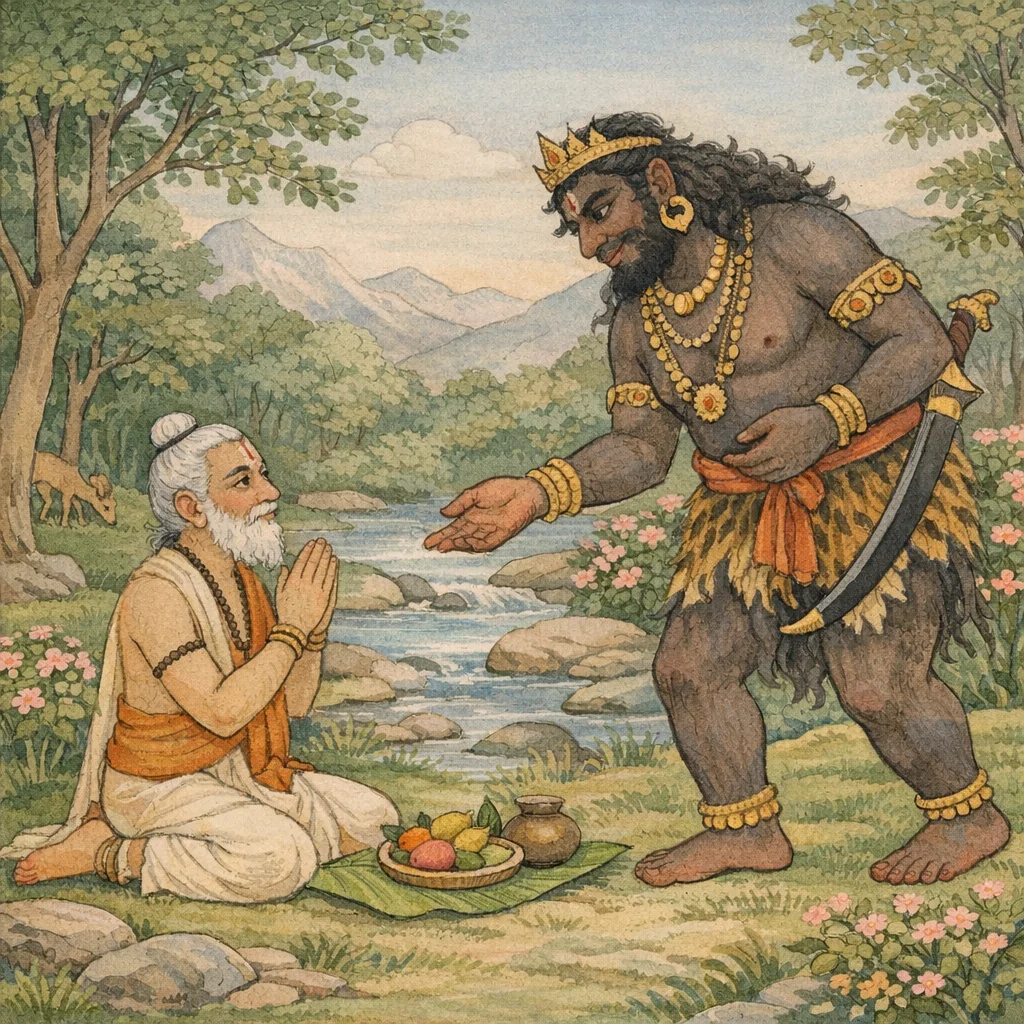
Chapter Arc: धर्मचिन्ता से भरे एक वेदज्ञ ब्राह्मण को देखकर कथानक आरम्भ होता है—वह विद्वानों को भी इन्द्रियों के अधीन और वेद-विरुद्ध कर्मों में प्रवृत्त देख कर भीतर-ही-भीतर व्याकुल है। → ब्राह्मण की यह चिन्ता केवल उपदेश नहीं रहती; वह अपने आचरण से ‘धर्म’ को जीवित करने का प्रयत्न करता है। इसी क्रम में उसका सामना एक राक्षस से होता है—जहाँ भय, अविश्वास और हिंसा की सम्भावना स्वाभाविक रूप से बढ़ती जाती है। → ब्राह्मण राक्षस का समादर कर उसे ‘अतिथि/मान्य’ की भाँति पूजता है; प्रत्युत्तर में राक्षस भी सम्मानित होकर ब्राह्मण का प्रत्युपकार करता है—उसे मित्र बनाता है और अर्थ-सहायता/उपकार देकर मुक्त करता है। → कथा यह स्थापित करती है कि सत्कार, संयम और धर्मनिष्ठ व्यवहार—even भयावह प्रतीत होने वाले प्राणी में भी—सद्भाव जगाकर हिंसा को मैत्री में बदल सकता है; दान-धर्म का प्रभाव केवल वस्तु-दान नहीं, ‘मान-दान’ भी है।
Shlokas
Verse 38
वेदज्ञ ब्राह्मणोंको वेदविरुद्ध कर्ममें तत्यर और विद्दानोंको इन्द्रियोंक अधीन देखकर मेरी समझमें तुम निरन्तर चिन्तित रहते हो। सम्भवतः इसीलिये तुम्हारा शरीर सफेद (पीला) पड़ गया है और तुम दुर्बल हो गये हो
婆罗门说道:“见那些知晓吠陀的婆罗门竟仍执著于违背吠陀之行,又见博学之士为诸根所役,我断定你长久忧惧不安。或许正因此,你的身躯转为苍白,亦渐渐衰弱。”
Verse 39
एवं सम्पूजितं रक्षो विप्रं तं प्रत्यपूजयत् । सखायमकरोच्चैनं संयोज्यार्थमुमोच ह
既受如此礼敬,那罗刹也以应有的敬意回礼于那位婆罗门。他与之结为友伴,赠以财物,随后便将其释放。
Verse 124
इति श्रीमहाभारते अनुशासनपर्वणि दानधर्मपर्वणि हरिणकृशकाख्याने चतुर्विशत्यधिकशततमो<ध्याय:
至此,《圣摩诃婆罗多》之《教诫篇》(Anuśāsana Parva)中,论施舍之法(dāna-dharma)一章——名为《鹿与农夫》的故事——第一百二十四章告终。
Frequently Asked Questions
How to identify a universally binding dharma (sarvavyāpī) when duties appear differentiated by varṇa and life-stage; the chapter answers by rooting dharma in Veda, Smṛti, and śiṣṭācāra and by mapping action-oriented and renunciant pathways.
Sustained discipline through svādhyāya, yajña, and dāna; rigorous hospitality and ethical speech; and acquiring wealth by dharma, then distributing it in regulated portions aligned with dharma, legitimate enjoyment, and continuity.
Rather than a formal phalaśruti stanza, the chapter embeds outcome-logic: pravṛtti-dharma yields social and ritual purity and stability, while nivṛtti and ṛṣi-dharma—marked by detachment and self-mastery—are presented as the disciplined route toward mokṣa and ascetic attainment.