Adhyaya 27
Umā–Caṇḍī–Raudrī–Māheśvarī Rakṣā-Mantra for Poison-Removal and Enemy-Subjugation
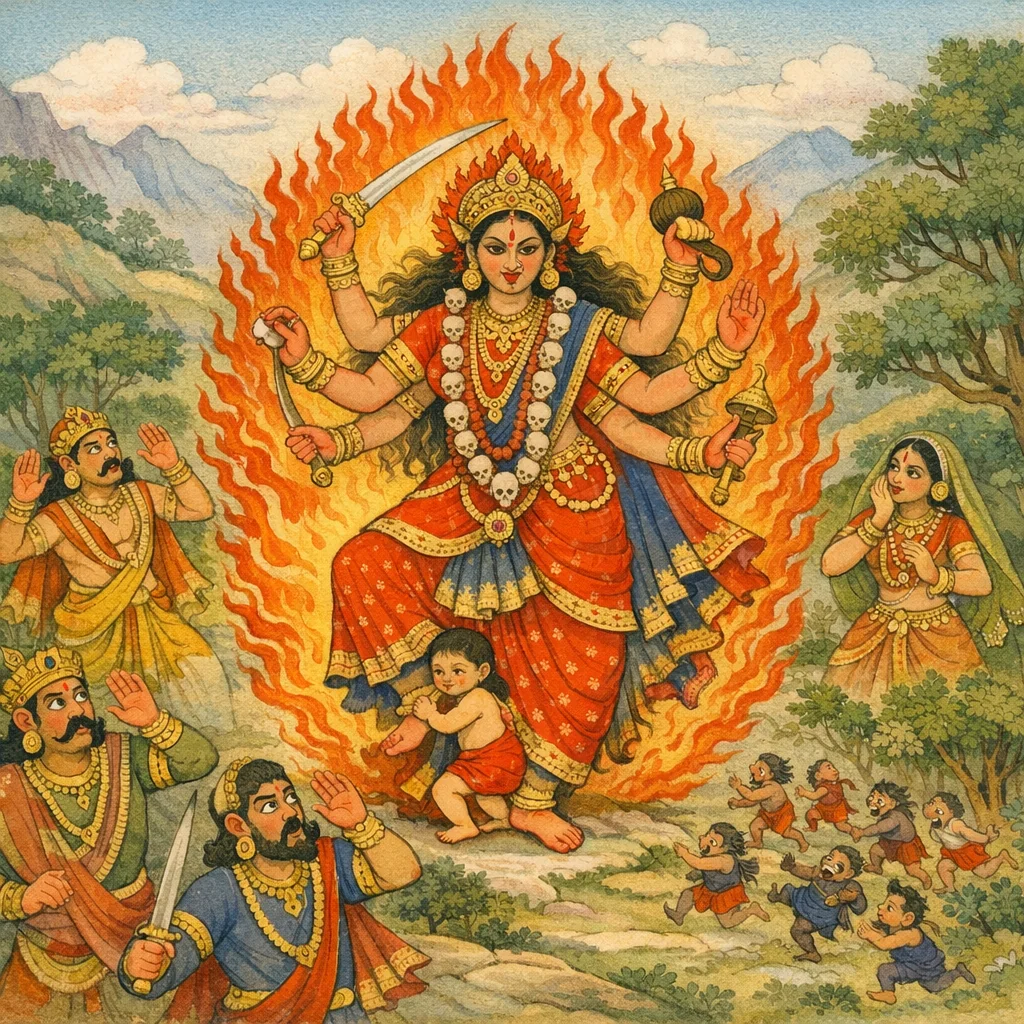
苏多传授一段凝练的护身祈请,奉献于女神以多种威猛相示现——乌玛、旃提、劳德丽、摩诃伊湿伐梨——赞叹其可怖的神相,并命其击破怨敌、令其迷乱,同时在鲁陀罗以骇然之相安住之际护佑祈请者。赞颂随即转为具行持力的真言:近似种子音的音节与强烈的发声,使驱邪镇厄之势更为峻烈。所说功效包括解除蛇毒、破除诸般毒害影响,并遮止侵扰孩童的“摄持灵”(graha)。在叙事脉络中,本章如同一段实修仪轨的插入,赐予读者可即刻诵持的护法公式,然后经文再转入相邻诸章的法义、仪轨或教理内容。
Shlokas
Frequently Asked Questions
Umā, Caṇḍī, Raudrī, and Māheśvarī are invoked to emphasize the Devī’s comprehensive power—from auspicious identity (Umā) to fierce protective and destructive capacities (Caṇḍī/Raudrī/Māheśvarī). Multiple names broaden the mantra’s protective scope and intensify devotional focus.
Protection is framed as the Devī’s active intervention: striking the enemy, inducing mohana (bewilderment), and breaking viṣa (poison). The mantra also implies visualization (“behold that with your mind”) alongside sound-power, typical of rakṣā prayogas.