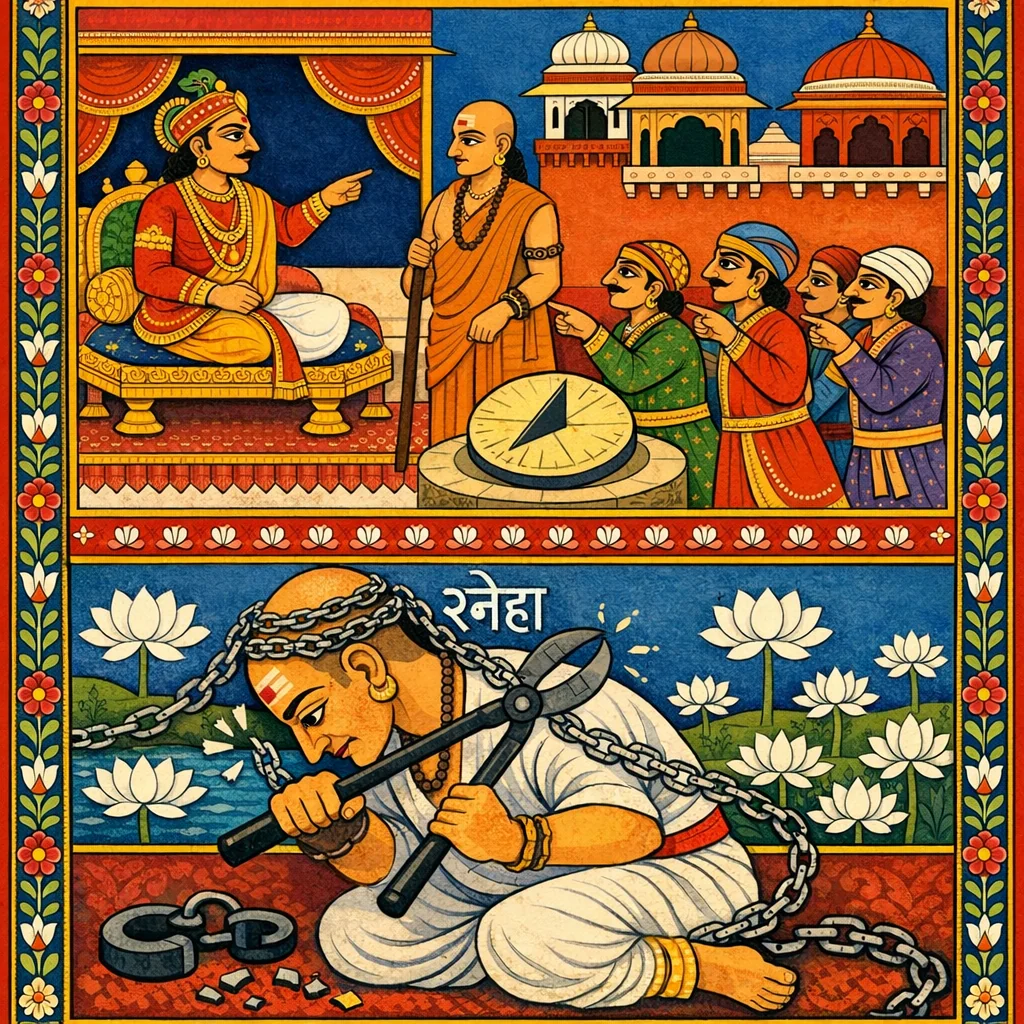
Chapter 13: On Time, Conduct, and the Causes of Bondage and Liberation
Adhyaya 13
Observations on the Strengths and Weaknesses of People
第13章呈现一组复合性的训诫格言,具有Subhāṣita式Nīti文献的典型特征,在个人伦理、政治社会学与形而上预设之间往复转换。本章强调即便短暂亦应优先选择伦理上“纯净”的行动,并将对当下的审慎关注与对过去的无益哀伤或对未来的臆测相对照;同时把人的生命理解为受若干先决条件(寿命、财富、知识、死亡)所塑造,而这些条件被设想为自受胎之时即已决定。若干偈颂阐明业力因果与互惠性:行为被说成会“追随”行为者,而求学则被描绘为可通过侍奉师长而获得。政治主题尤为突出:臣民被认为会映照统治者的品格,从而将个人德性置于治理与社会秩序之中。文本亦将执著(sneha, viṣayāsaṅga)视为恐惧与痛苦之源,并把束缚与解脱对举为心识状态。章末以坚贞不移的理想及尊师(guru)的仪式—伦理重要性作结,反映历史性的教育规范与社会等级结构。
Key Concepts
Key Principles
Strategic Themes
Shlokas in Chapter 13
Verse 1
मुहूर्तमपि जीवेच्च नरः शुक्लेन कर्मणा । न कल्पमपि कष्टेन लोकद्वयविरोधिना ॥
宁可凭清净之行只活片刻,也不愿以苦难之法苟活长久,那等行径违背今世与来世。
Verse 2
गते शोको न कर्तव्यो भविष्यं नैव चिन्तयेत् । वर्तमानेन कालेन वर्तयन्ति विचक्षणाः ॥
逝者不悲,来者不忧;明智之人随顺当下之时而行。
Verse 3
स्वभावेन हि तुष्यन्ति देवाः सत्पुरुषाः पिता । ज्ञातयः स्नानपानाभ्यां वाक्यदानेन पण्डिताः ॥
天神、贤人与父亲,因本性之善而自得;亲族因沐浴与饮食而欢;学者因赠以言语、以论道而悦。
Verse 4
आयुः कर्म च वित्तं च विद्या निधनमेव च । पञ्चैतानि हि सृज्यन्ते गर्भस्थस्यैव देहिनः ॥
寿命、业行、财富、学识与死亡——此五者,据说在胎中之时便已为众生所定。
Verse 5
अहो बत विचित्राणि चरितानि महात्मनाम् । लक्ष्मीं तृणाय मन्यन्ते तद्भारेण नमन्ति च ॥
嗟乎,大丈夫之行真奇:视财富福运(吉祥天女)如草芥,却又为其所伴之重担而俯身。
Verse 6
यस्य स्नेहो भयं तस्य स्नेहो दुःखस्य भाजनम् । स्नेहमूलानि दुःखानि तानि त्यक्त्वा वसेत् सुखम् ॥
若情爱成了恐惧,情爱便成忧苦之器。诸苦根于执著;舍其根本,方得安乐。
Verse 7
अनागतविधाता च प्रत्युत्पन्नमतिस्तथा । द्वावेतौ सुखमेधेते यद्भविष्यो विनश्यति ॥
能筹谋未至之事者,与当下决断明敏者,二者易得安成;唯倚“将来”者,终至败亡。
Verse 8
राज्ञि धर्मिणि धर्मिष्ठाः पापे पापाः समे समाः । राजानमनुवर्तन्ते यथा राजा तथा प्रजाः ॥
君王行正,则民多尚正;君王为恶,则民多趋恶;君王平和,则民亦平和。君如何,民亦如何。
Verse 9
जीवन्तं मृतवन्मन्ये देहिनं धर्मवर्जितम् । मृतो धर्मेण संयुक्तो दीर्घजीवी न संशयः ॥
生而无德者,我视同死;死而与德相应者,名声长存,必无疑。
Verse 10
धर्मार्थकाममोक्षाणां यस्यैकोऽपि न विद्यते । अजागलस्तनस्येव तस्य जन्म निरर्थकम् ॥
若于法、利、欲、解脱四者之中,连一者也无,其生无益,如山羊颈上之乳:有而无用。
Verse 11
दह्यमानाः सुतीव्रेण नीचाः परयशोऽग्निना अशक्तास्तत्पदं गन्तुं ततो निन्दां प्रकुर्वते ॥
卑劣之人被他人名声之“火”灼烧;既无力企及其位,便转而诋毁、毁谤。
Verse 12
बन्धाय विषयासङ्गो मुक्त्यै निर्विषयं मनः । मन एव मनुष्याणां कारणं बन्धमोक्षयोः ॥
执著于诸欲境则成系缚;心离诸境则得解脱。对人而言,系缚与解脱的根本原因,皆在此心。
Verse 13
देहाभिमाने गलितं ज्ञानेन परमात्मनि । यत्र यत्र मनो याति तत्र तत्र समाधयः ॥
以了知至上我而生的智慧,使对身躯的我执消融;心行至何处,何处皆成三昧。
Verse 14
ईप्सितं मनसः सर्वं कस्य सम्पद्यते सुखम् । दैवायत्तं यतः सर्वं तस्मात्सन्तोषमाश्रयेत् ॥
心之所求,终不成任何人的长久之乐。既然万事系于天命,当以知足为依。
Verse 15
यथा धेनुसहस्रेषु वत्सो गच्छति मातरम् । तथा यच्च कृतं कर्म कर्तारमनुगच्छति ॥
如小牛在千牛之中亦能寻得其母,所作之业亦必随逐其作者。
Verse 16
अनवस्थितकार्यस्य न जने न वने सुखम् । जनो दहति संसर्गाद्वनं संगविवर्जनात् ॥
事业不定之人,处人群无乐,入山林亦无乐。人世因交往而“灼”;山林因离群而“灼”。
Verse 17
यथा खात्वा खनित्रेण भूतले वारि विन्दति । तथा गुरुगतां विद्यां शुश्रूषुरधिगच्छति ॥
如以锹掘地而得水,勤于侍奉、专心聆听的弟子,亦能获得寄于师者之学。
Verse 18
कर्मायत्तं फलं पुंसां बुद्धिः कर्मानुसारिणी । तथापि सुधियश्चार्या सुविचार्यैव कुर्वते ॥
人的果报系于业行,心智亦常随业而转。即便如此,智者行事必先深思熟虑。
Verse 19
सन्तोषस्त्रिषुकर्तव्य: स्वदारेभोजनेधने || त्रिषुचैवन कर्तव्योऽध्ययनेजपदानयोः ॥
当知足于三:己妻、饮食、财物;却不可知足于三:学习、诵念、布施。
Verse 20
एकाक्षरप्रदातारं यो गुरुं नाभिवन्दते । श्वानयोनिशतं गत्वा चाण्डालेष्वभिजायते ॥
不礼敬师者——纵师仅授一字——据说将屡受卑贱之生(如百世入犬胎),终而生于所谓旃陀罗之列。
Verse 21
युगान्ते प्रचलेन्मेरुः कल्पान्ते सप्त सागराः । साधवः प्रतिपन्नार्थान्न चलन्ति कदाचन ॥
劫末之时,连须弥山亦可震动;大劫终时,七海亦可翻扰。唯有贤善之人,既定之志,终不偏移。
Frequently Asked Questions
The text repeatedly frames human outcomes through a dual vocabulary of causality: karmic consequence (actions returning to the agent) and fate-like determination (key life parameters described as fixed from conception). Alongside this, it presents a mind-centered account of bondage and liberation, describing attachment and sense-object fixation as causes of suffering and mental restraint/knowledge as linked with composure and meditative stability.
Interpersonal ties are treated through functional and affective categories rather than formal typologies: attachment (sneha) is described as generating fear and sorrow; social interaction is contrasted with solitude as producing different forms of discomfort; and teacher–student relations are presented through norms of reverence and service as the means of acquiring knowledge. The ruler–subject relationship is described as imitative, with public conduct modeled on royal conduct.
The chapter’s strategic relevance lies less in tactical counsel and more in governance psychology and institutional ethics: it links political order to the ruler’s moral profile (a theme compatible with broader Rajadharma discourse) and emphasizes disciplined decision-making in the present. Its karmic and pedagogical motifs parallel common instructional strategies in texts like the Panchatantra’s didactic framing, while the ruler–people mirroring and pragmatic temporality resonate with the Arthashastra-adjacent concern for state stability via leadership conduct and social modeling.
Read Chanakya Niti in the Vedapath app
Scan the QR code to open this directly in the app, with audio, word-by-word meanings, and more.