Adhyaya 7
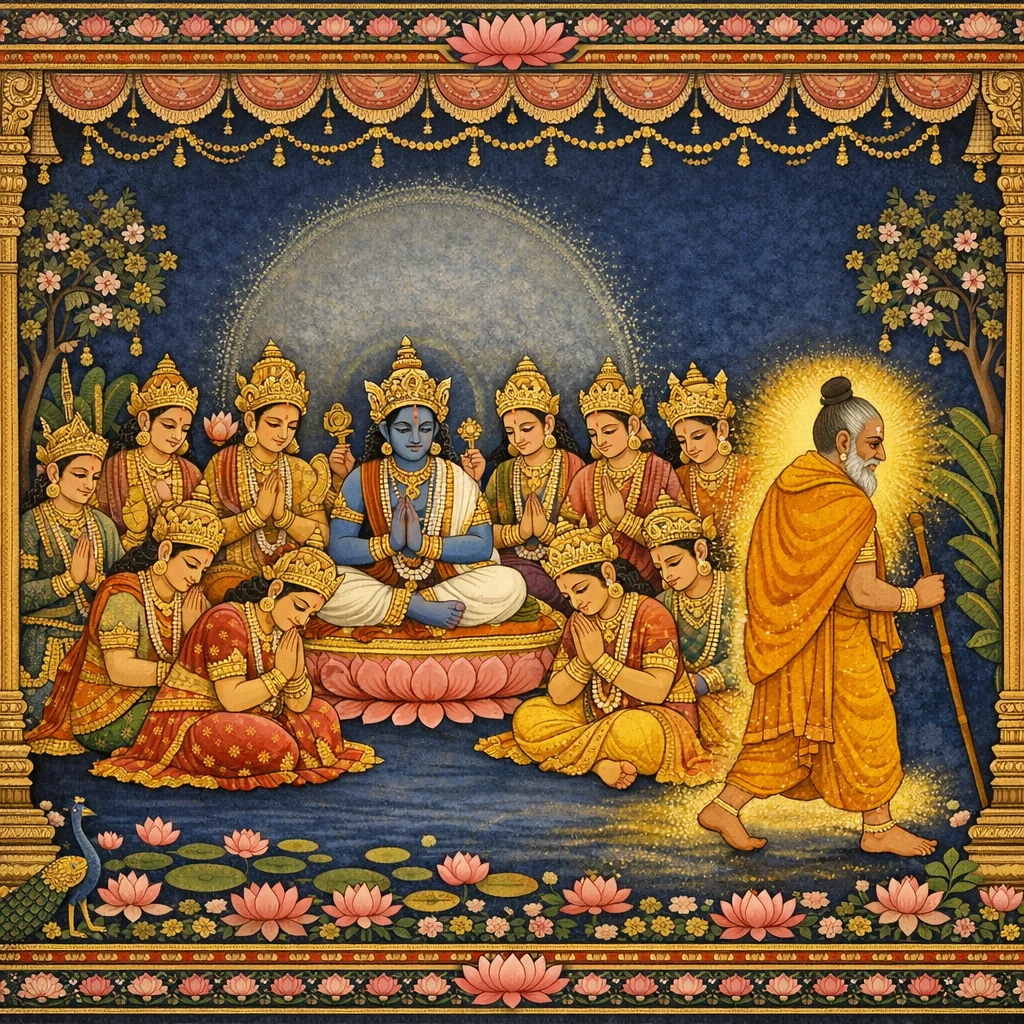
Bṛhaspati Rejects the Demigods: The Root of Deva Weakness and the Need for Humility
承接天神与阿修罗之争的进展,并呼应第六卷强调“内在资质胜于外在地位”的主题,帕利克希特王向舒迦提婆·高斯瓦弥追问一个关键转折:为何天神之师布里哈斯帕提会离开自己的弟子。本章指出,天神的过失在于对灵性上师缺乏应有的恭敬与专注——因自恃地位、沉迷权势而犯下的guru-aparādha。布里哈斯帕提一旦离去,天神的灵性护持随之削弱,使他们在对抗阿修罗时陷入战略与道德的迷乱。叙事由此把忏悔与净化的教诲,连接到天界治理:当达摩的根本——敬师与依止至上主Bhagavān——被忽略时,宇宙秩序便动摇。本章走向预示天神将另寻谋策,并最终被迫回归真实的谦卑与以毗湿奴为中心的依靠,进入后续弗利特拉阿修罗(Vṛtrāsura)篇章的发展。
Shlokas
Frequently Asked Questions
Because the devas failed in proper guru-sevā and respect—an offense rooted in pride and neglect. In Bhāgavata theology, the guru is not merely an advisor but the channel of dharma and divine favor; when disciples disregard him, their spiritual potency and right judgment diminish, and their worldly power becomes unreliable.
They violated appropriate etiquette and honor toward him—treating the guru as secondary to courtly and political concerns. Such disrespect constitutes guru-aparādha, which is portrayed as spiritually corrosive: it blocks blessings, weakens protection (poṣaṇa), and invites disorder even among the devas.
Bṛhaspati’s withdrawal explains the devas’ ensuing vulnerability and missteps, preparing the ground for the larger lesson that victory depends on humility, proper shelter, and Viṣṇu’s will—not merely celestial weaponry. This moral causality culminates in the Vṛtrāsura episodes, where devotion and surrender overturn simplistic labels of ‘deva’ and ‘asura.’