
Bhagavad Gita — Vishwarupa Darshana Yoga, Shloka 54
Vishwarupa Darshana Yoga
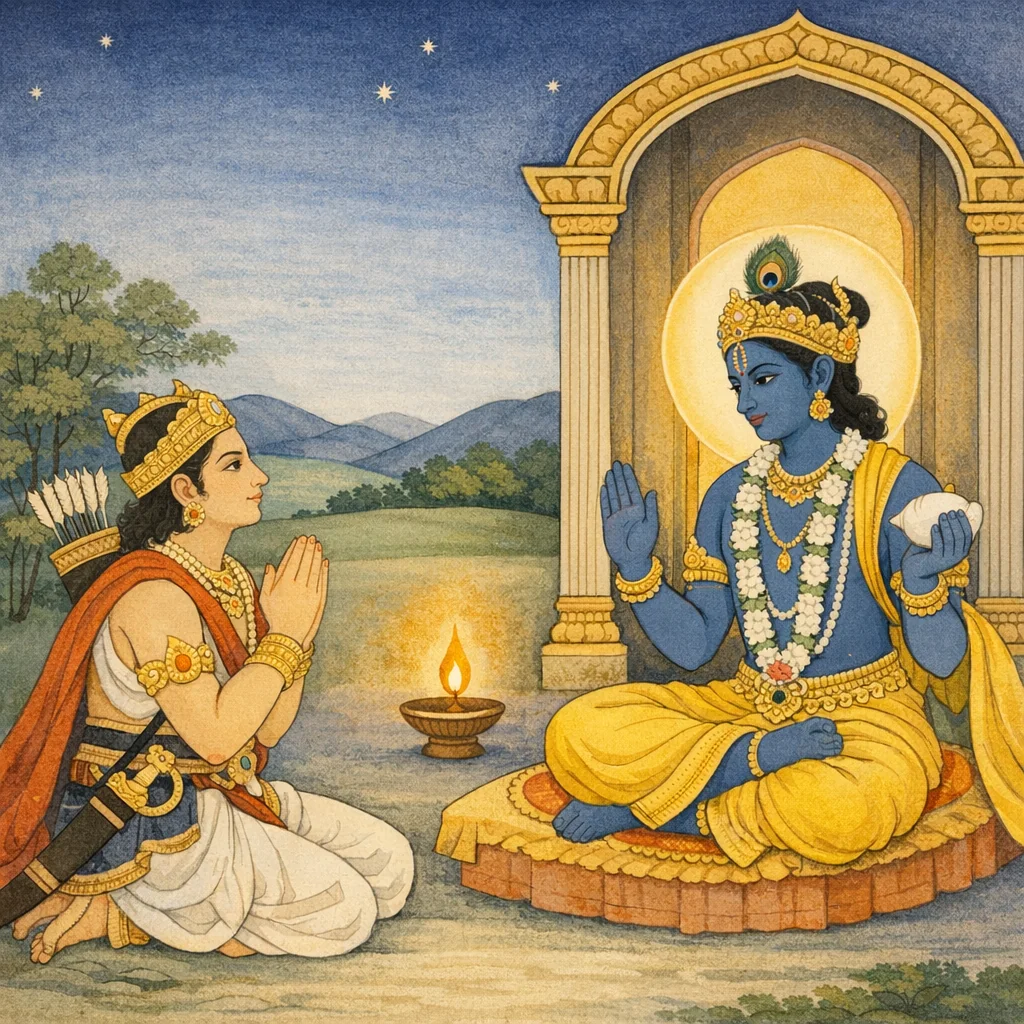
भक्त्या त्वनन्यया शक्य अहमेवंविधोऽर्जुन । ज्ञातुं द्रष्टुं च तत्त्वेन प्रवेष्टुं च परंतप ॥ ११.५४ ॥
bhaktyā tv ananyayā śakya aham evaṁvidho'rjuna | jñātuṁ draṣṭuṁ ca tattvena praveṣṭuṁ ca paraṁtapa || 11.54 ||

然而,唯以无二之奉爱(专一的奉爱),我才能被如实知晓、真实得见,并得以进入其中;阿周那啊,焚敌者。
But by exclusive devotion I can be known, truly seen, and entered into, O Arjuna, as I am.
By devotion that is non-other (exclusive), I in such a form am possible to be known, to be seen in truth, and to be entered into, O scorcher of foes.
Traditional translations often paraphrase ‘ananyā bhakti’ as ‘single-minded’ or ‘exclusive’; ‘praveṣṭum’ is interpreted variously as mystical union, continual communion, or entry into the divine presence—an interpretive hinge across Vedāntic and bhakti traditions.
FAQs
‘Exclusive devotion’ can be read as sustained attentional commitment, reducing inner conflict and enabling deeper integration of values, perception, and action.
The triad ‘know–see–enter’ suggests a progression from conceptual understanding to direct apprehension to participatory realization of the divine reality.
It provides the chapter’s culminating teaching: the cosmic vision is not an end in itself but points to a stable path—devotion—by which the divine is realized.
It can inform practices of commitment: choosing a coherent life-orientation (ethical, contemplative, devotional) and returning to it consistently rather than fragmenting attention.