
Bhagavad Gita — Vibhuti Yoga, Shloka 25
Vibhuti Yoga
महर्षीणां भृगुरहं गिरामस्म्येकमक्षरम् । यज्ञानां जपयज्ञोऽस्मि स्थावराणां हिमालयः ॥ १०.२५ ॥
maharṣīṇāṃ bhṛgur ahaṃ girām asmy ekam akṣaram | yajñānāṃ japa-yajño 'smi sthāvarāṇāṃ himālayaḥ || 10.25 ||

在诸大圣仙中,我是婆利古(Bhrigu);在一切言语中,我是唯一的音节——唵(Om)。在诸祭祀中,我是持诵默念之祭(japa);在一切不动之物中,我是喜马拉雅。
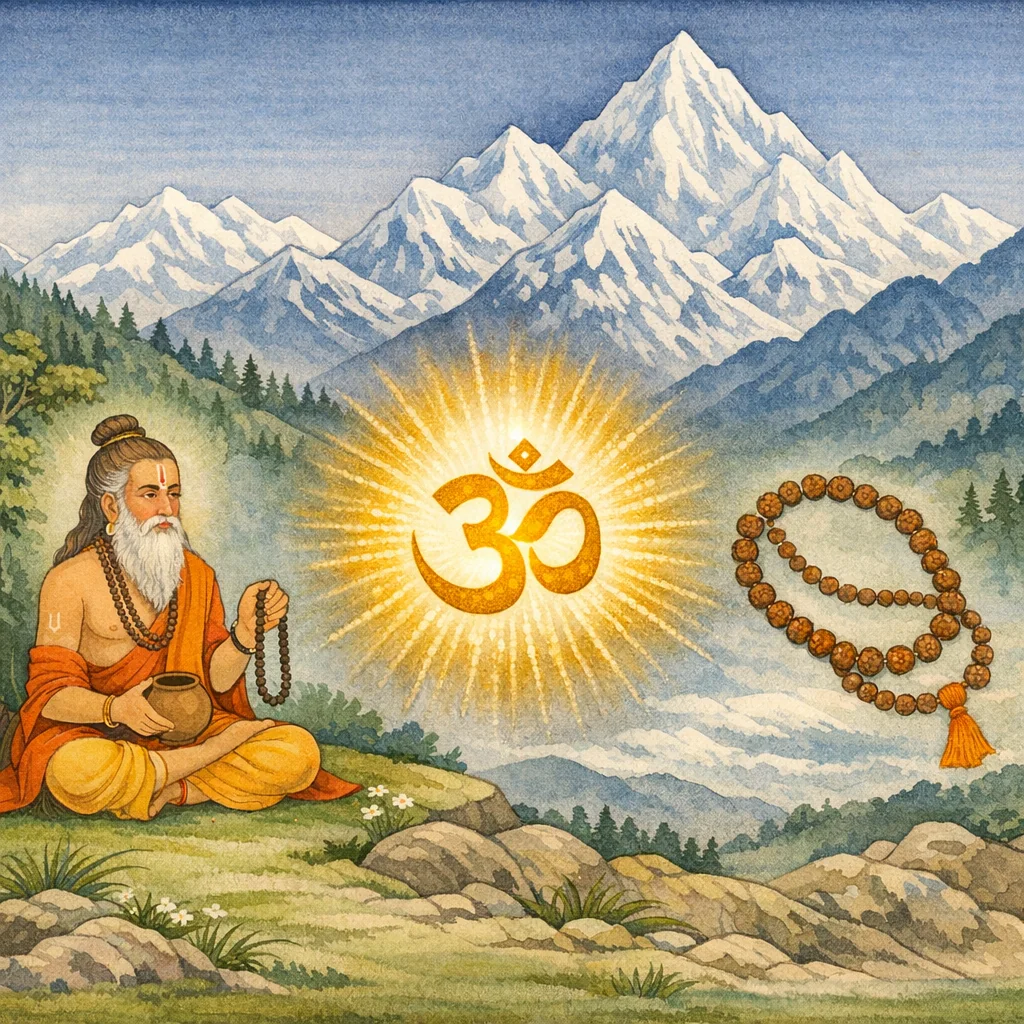
Among the great sages I am Bhrigu; among words I am the one syllable (Om); among sacrifices I am the sacrifice of silent repetition (japa); among immovable things I am the Himalaya.
Among the great seers I am Bhṛgu; among utterances I am the single imperishable syllable; among rites I am the japa-offering; among the immobile I am Himālaya.
‘ekam akṣaram’ is widely taken as ‘Oṃ,’ though the verse does not explicitly name it. ‘japa-yajña’ elevates interiorized ritual (recitation/meditation) as a legitimate and eminent form of yajña.
FAQs
It emphasizes practices of focused repetition and sound-symbols to steady attention and cultivate reflective awareness.
The ‘imperishable syllable’ functions as a sonic pointer to the absolute; japa is presented as a paradigmatic offering because it unites intention, speech, and mind.
The verse bridges Vedic ritual culture with meditative religiosity, aligning with the Gītā’s broader synthesis.
Can be applied as a secular-friendly contemplative technique: repetitive attention training (mantra-like practice) for clarity and resilience.