
Bhagavad Gita — Moksha Sannyasa Yoga, Shloka 2
Moksha Sannyasa Yoga
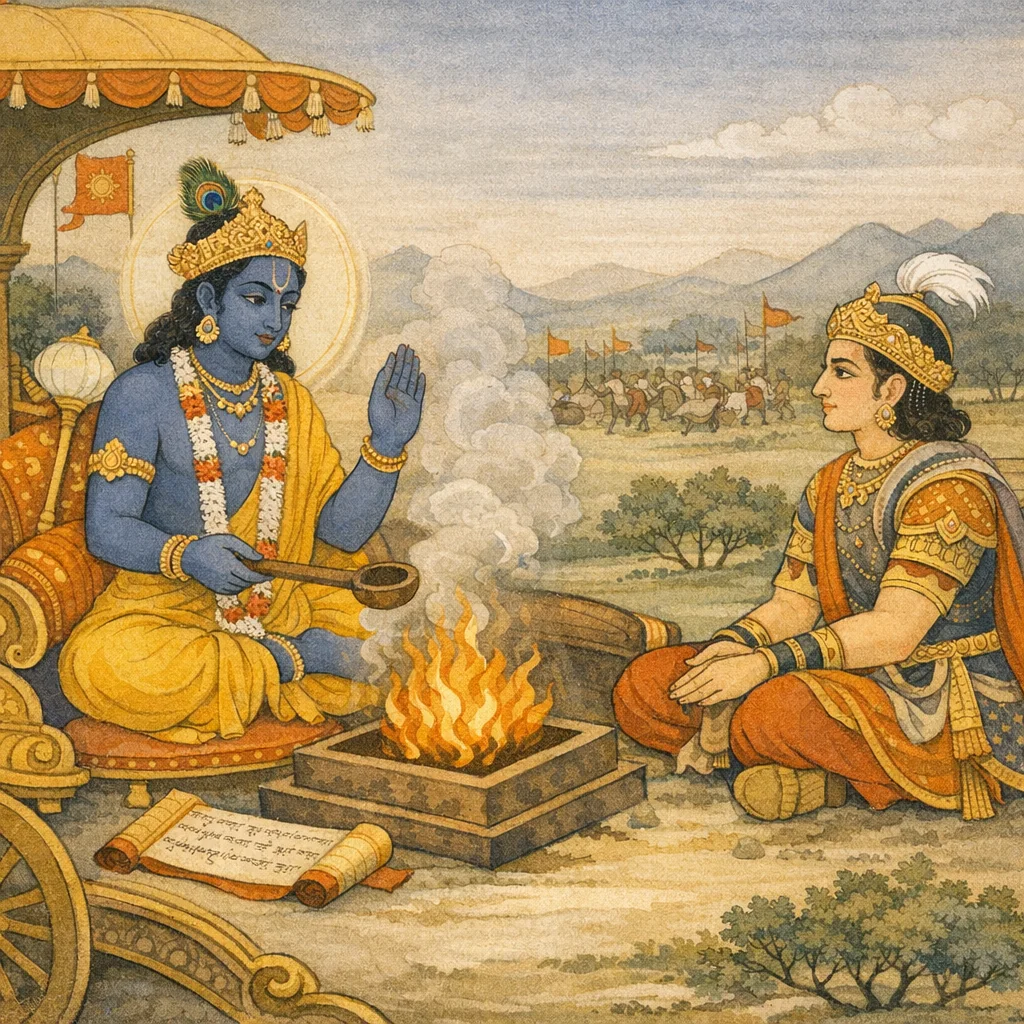
श्रीभगवानुवाच । काम्यानां कर्मणां न्यासं संन्यासं कवयो विदुः सर्वकर्मफलत्यागं प्राहुस्त्यागं विचक्षणाः ॥ १८.२ ॥
śrībhagavān uvāca | kāmyānāṃ karmaṇāṃ nyāsaṃ saṃnyāsaṃ kavayo viduḥ | sarvakarmaphalatyāgaṃ prāhus tyāgaṃ vicakṣaṇāḥ || 18.2 ||

世尊说:智者称舍弃欲求之业(kāmya-karman)的放下(nyāsa)为“出离(saṃnyāsa)”;而把一切行为之果的舍弃称为“舍(tyāga)”,这是明辨者所说。
श्रीभगवान् बोले— काम्य कर्मों के त्याग (न्यास) को विद्वान ‘संन्यास’ कहते हैं और समस्त कर्मों के फलों के त्याग को विवेकी जन ‘त्याग’ कहते हैं।
The Blessed Lord said: The sages understand saṃnyāsa as the laying aside of desire-motivated actions; the discerning declare tyāga to be the relinquishment of the fruits of all actions.
Many traditional commentaries align saṃnyāsa with renouncing kāmya-karmas (optional, desire-driven rites) while allowing obligatory duties; tyāga is framed as inner non-claiming of results. The academic gloss highlights this as a functional-ethical distinction rather than only an institutional one.
FAQs
The verse separates two psychological levers: reducing desire-driven projects (saṃnyāsa as nyāsa of kāmya-karmas) and reducing possessiveness about outcomes (tyāga of fruits), both aimed at lowering anxiety and compulsive striving.
By relocating renunciation to the level of ‘fruit-claiming,’ the teaching supports a view where agency operates without egoic appropriation, compatible with broader Gītā ideas about the self and guṇas.
It answers Arjuna’s request with a technical distinction that will structure the chapter’s later typology of tyāga across the three guṇas.
It can guide professional life: one may keep doing necessary work while releasing fixation on recognition or payoff, and also reduce optional activities driven mainly by craving or status.