
Bhagavad Gita — Moksha Sannyasa Yoga, Shloka 13
Moksha Sannyasa Yoga
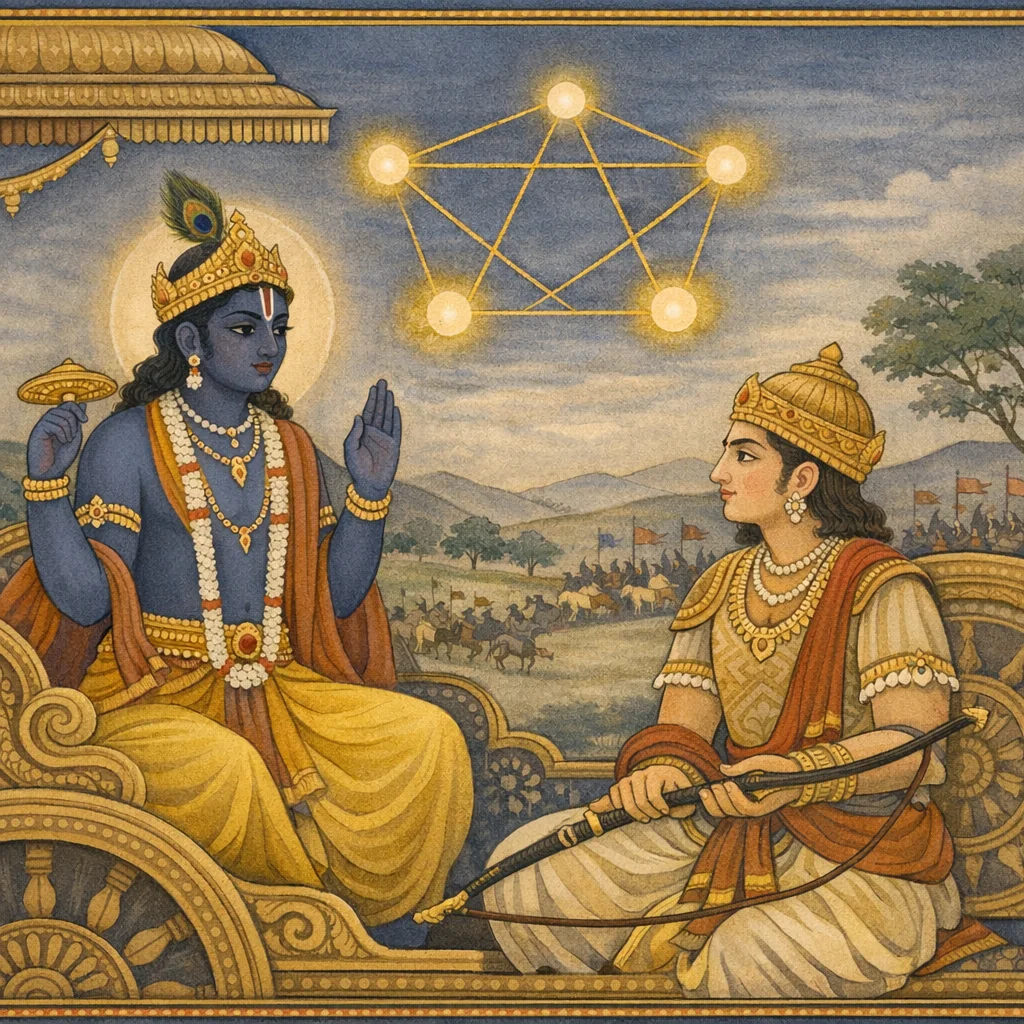
पञ्चैतानि महाबाहो कारणानि निबोध मे । सांख्ये कृतान्ते प्रोक्तानि सिद्धये सर्वकर्मणाम् ॥ १८.१३ ॥
pañcaitāni mahā-bāho kāraṇāni nibodha me | sāṅkhye kṛtānte proktāni siddhaye sarva-karmaṇām || 18.13 ||

大臂者啊!从我处当知这五种因,它们在数论(Sāṅkhya,辨别之智)的定论中,为一切行为之成就而宣说。
हे महाबाहो! मुझसे इन पाँच कारणों को जानो, जो सांख्य (विवेक) के सिद्धान्त में समस्त कर्मों की सिद्धि के लिए कहे गए हैं।
Learn from me, O mighty-armed, these five causes, declared in the Sāṅkhya teaching as the settled conclusion, for the accomplishment of all actions.
‘Sāṅkhye kṛtānte’ is often taken traditionally as ‘in the Sāṅkhya doctrine (as a definitive conclusion).’ Academic translations preserve the sense of a doctrinal framework rather than later classical Sāṅkhya systematization.
FAQs
By listing multiple causes, the text reduces simplistic self-blame or self-glorification, encouraging a more realistic view of how actions arise from many factors.
The verse introduces a structured account of action’s conditions, aligning with Indian analytic traditions that explain agency through interacting principles rather than a single absolute agent.
It transitions from renunciation of fruits (18.11–12) to an analysis of action and responsibility (18.13–17), setting up the critique of egoic doership.
In evaluating success or failure, consider systems and conditions (resources, tools, context, chance) alongside personal effort, fostering humility and better decision-making.