
Shloka 8
Karma Yoga — Karma Yoga
नियतं कुरु कर्म त्वं कर्म ज्यायो ह्यकर्मणः । शरीरयात्रापि च ते न प्रसिद्ध्येदकर्मणः ॥ ३.८ ॥
niyataṃ kuru karma tvaṃ karma jyāyo hy akarmaṇaḥ | śarīrayātrāpi ca te na prasiddhyed akarmaṇaḥ || 3.8 ||

你当履行你所规定的本分;行动确实胜于不行动。因为若不行动,连维持你的身体行住都不能成就。
Perform your prescribed duty; action is superior to inaction. Even the maintenance of your body would not be possible through inaction.
Do the regulated (prescribed) action; action is indeed better than non-action. Even your bodily continuance would not succeed through non-action.
‘Niyatam karma’ is read variously as Vedic duty, social-role duty, or disciplined/appropriate action. The pragmatic point is consistent: embodied existence entails activity; the question is how to act rightly.
FAQs
The verse counters paralysis and avoidance by emphasizing structured responsibility. It suggests that clarity often comes through disciplined engagement rather than rumination.
While ultimate freedom is not equated with activity, the verse treats action as the field in which purification and insight mature for embodied persons.
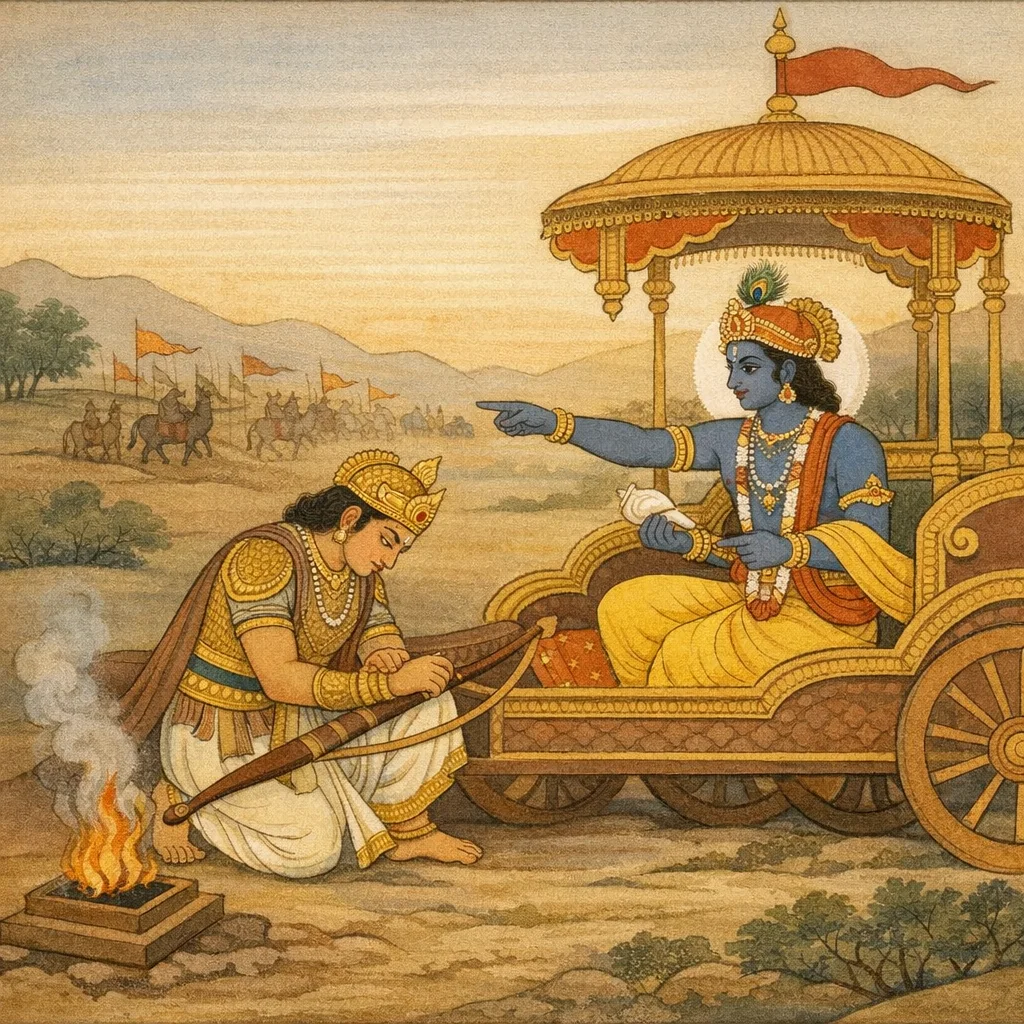
In the narrative, Arjuna’s reluctance is reframed: he is urged to do his role-appropriate work, not as mere worldly striving but as a disciplined practice.
Maintain essential responsibilities—health, livelihood, care for others—while cultivating non-attachment. The principle supports balanced living rather than escapism.