
Shloka 25
Karma Yoga — Karma Yoga
सक्ताः कर्मण्यविद्वांसो यथा कुर्वन्ति भारत । कुर्याद्विद्वांस्तथासक्तश्चिकीर्षुर्लोकसंग्रहम् ॥ ३.२५ ॥
saktāḥ karmaṇy avidvāṁso yathā kurvanti bhārata | kuryād vidvāṁs tathāsaktaś cikīrṣur lokasaṅgraham || 3.25 ||

正如无知者执著于业而行事,婆罗多啊,智者也应如此行事,却不执著,愿为维系世间(lokasaṅgraha)。
As the unwise act with attachment to work, O Bhārata, so should the wise act without attachment, desiring the welfare/holding-together of the world.
Just as the unknowing, attached to action, act, so should the knowing act without attachment, intending the maintenance of the people/world.
Traditional renderings often stress compassionate guidance; literal translations foreground the contrast between ‘avidvān’ (unknowing) and ‘vidvān’ (knowing) and the intentionality (cikīrṣuḥ) behind the wise person’s action.
FAQs
The verse distinguishes compulsive, reward-driven effort from values-driven effort; the latter reduces anxiety tied to outcomes while sustaining engagement.
Knowledge does not negate action; it transforms the inner stance—action proceeds, but without appropriation by ego or craving.
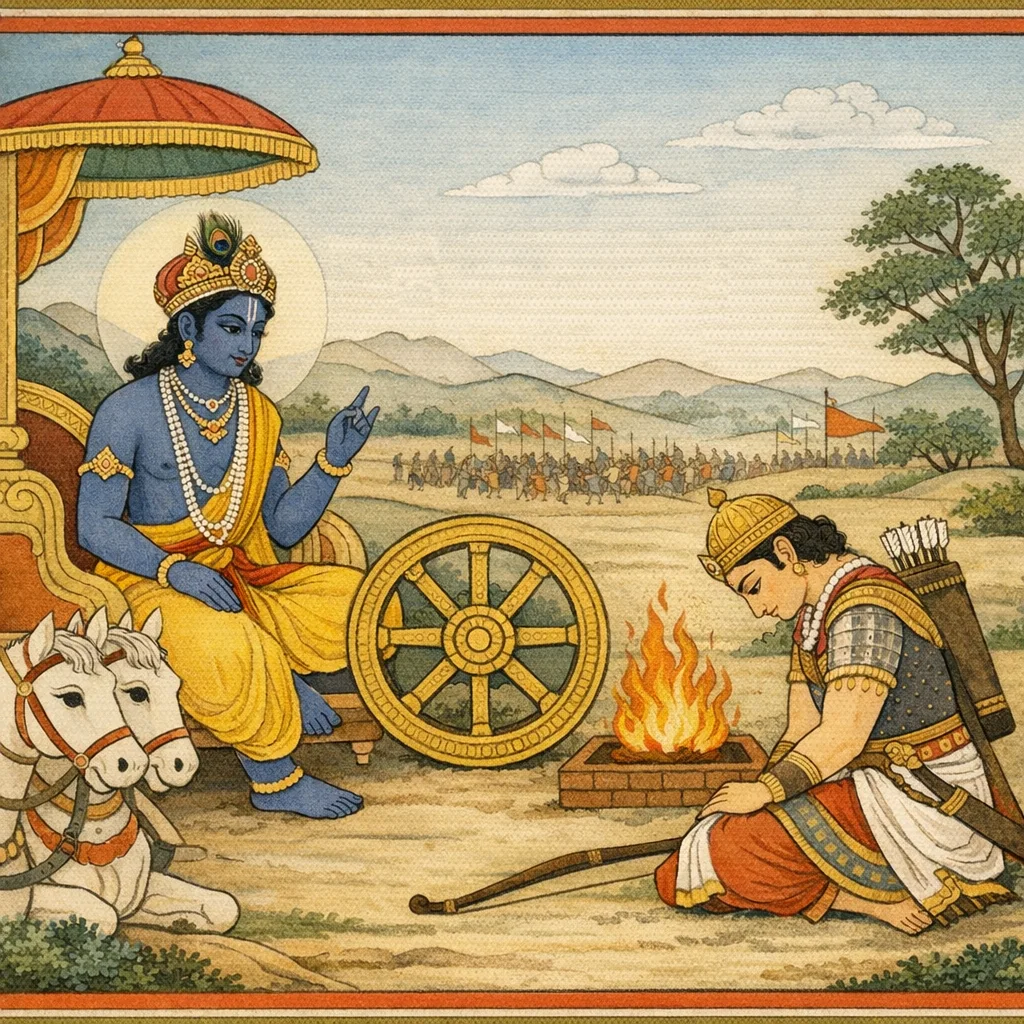
Krishna advises Arjuna that exemplary participation in duty can guide others while remaining inwardly free.
Professionals can pursue excellence as service (maintaining systems and communities) rather than as identity or status reinforcement.