
Bhagavad Gita — Arjuna Vishada Yoga, Shloka 16
Arjuna Vishada Yoga
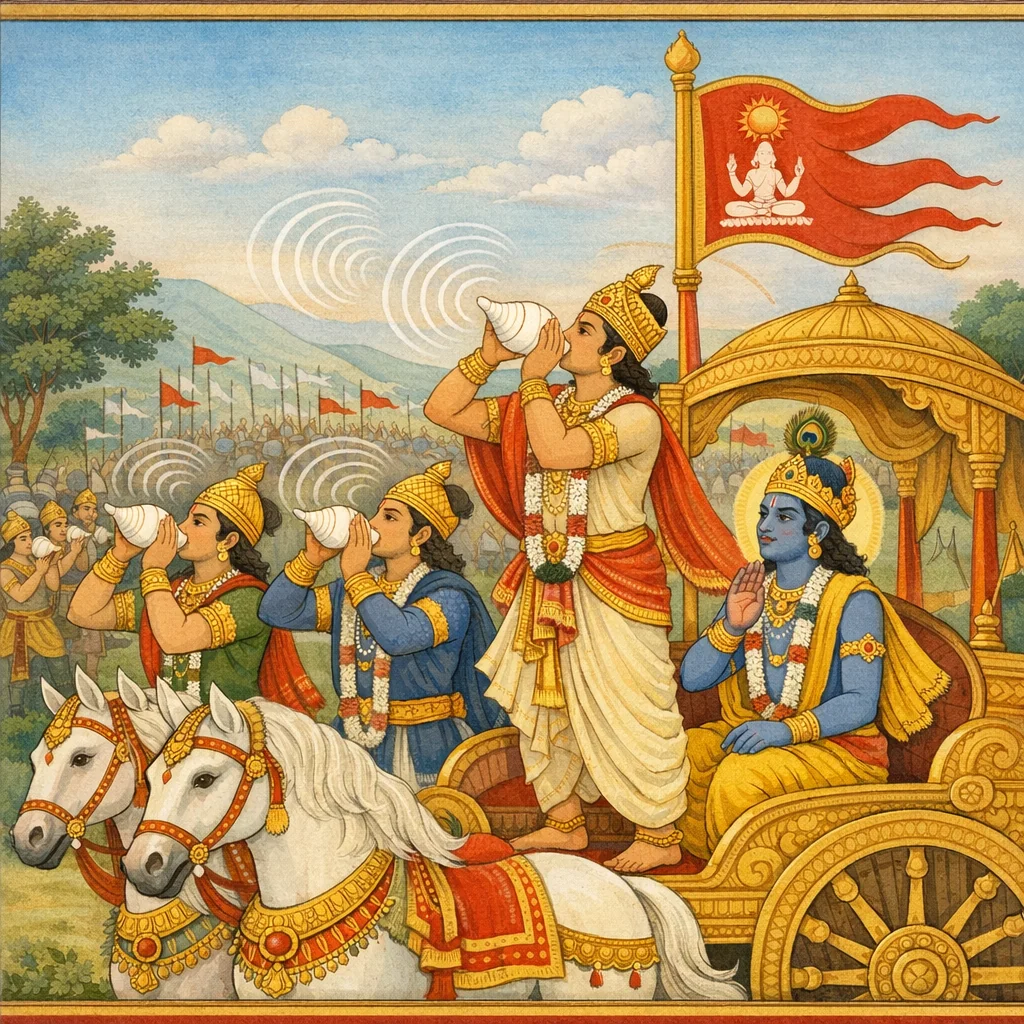
अनन्तविजयं राजा कुन्तीपुत्रो युधिष्ठिरः । नकुलः सहदेवश्च सुघोषमणिपुष्पकौ ॥ १.१६ ॥
ananta-vijayaṁ rājā kuntī-putro yudhiṣṭhiraḥ | nakulaḥ sahadevaś ca sughoṣa-maṇipuṣpakau || 1.16 ||

昆提之子、国王优提士提罗吹响名为“无尽胜”(Anantavijaya)的法螺;那库罗与萨诃提婆亦分别吹响“善音”(Sughoṣa)与“宝花”(Maṇipuṣpaka)之螺。
“कुन्तीपुत्र राजा युधिष्ठिर ने अनन्तविजय, तथा नकुल और सहदेव ने सुघोष और मणिपुष्पक नामक शंख बजाए।”
“King Yudhiṣṭhira, Kuntī’s son, blew the Anantavijaya; and Nakula and Sahadeva blew the Sughoṣa and the Maṇipuṣpaka.”
‘अनन्तविजय’ को कुछ परंपराएँ ‘असीम विजय’ के अर्थ-संकेत सहित पढ़ती हैं; अकादमिक दृष्टि से यह मुख्यतः शंख का नाम है, यद्यपि नामार्थ (semantic aura) कथानक-रचना में प्रभाव डालता है।
FAQs
The roll-call of named conches supports group coherence: each participant is recognized, reducing uncertainty and strengthening shared purpose.
The verse is not a metaphysical teaching; any symbolic reading (e.g., “endless victory” as steadfastness) is secondary to the narrative function.
The narrator continues enumerating prominent Pāṇḍava figures and their signals, emphasizing parity and preparedness.
Highlights the importance of acknowledging roles across a team, including less central members, to create a complete and functioning whole.