
Bhagavad Gita — Arjuna Vishada Yoga, Shloka 14
Arjuna Vishada Yoga
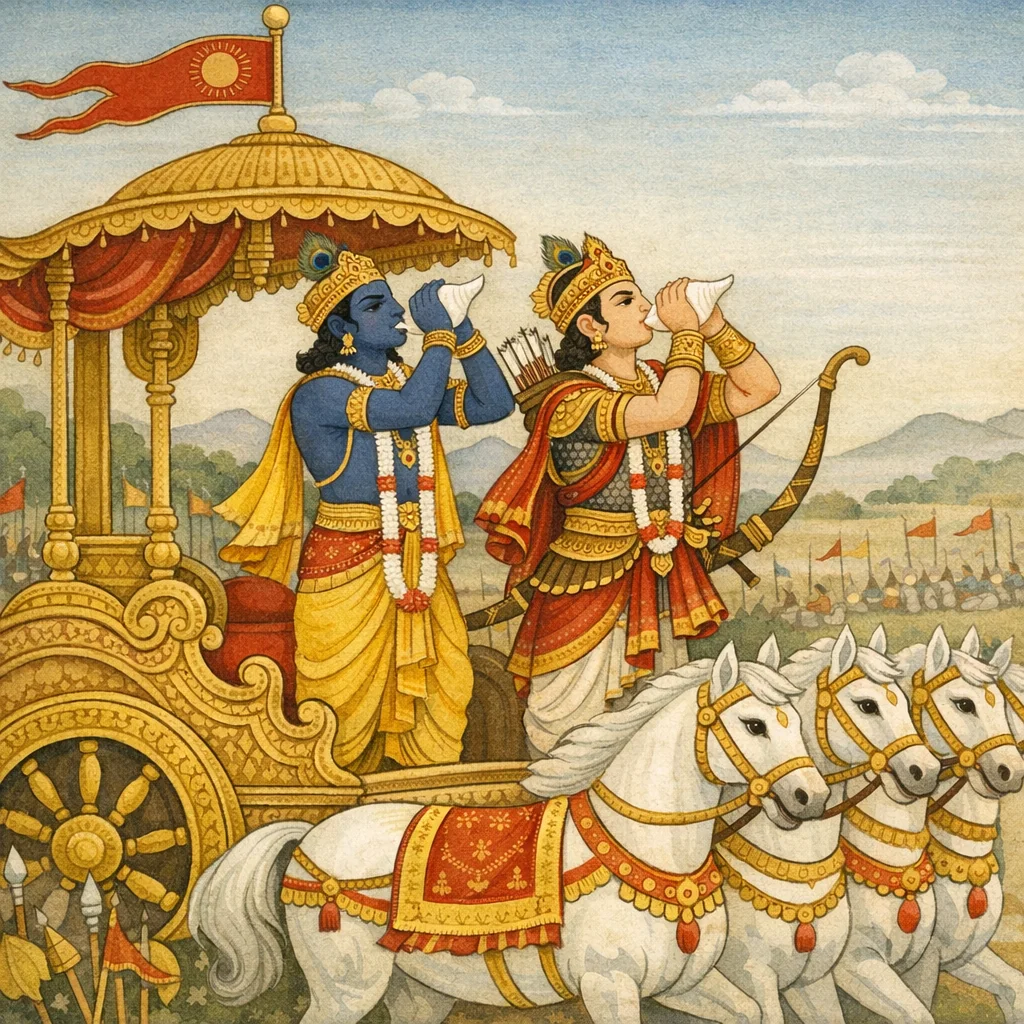
ततः श्वेतैर्हयैर्युक्ते महति स्यन्दने स्थितौ । माधवः पाण्डवश्चैव दिव्यौ शङ्खौ प्रदध्मतुः ॥ १.१४ ॥
tataḥ śvetair hayair yukte mahati syandane sthitau | mādhavaḥ pāṇḍavaś caiva divyau śaṅkhau pradadhmatuḥ || 1.14 ||

尔时,立于由白马驾驭的宏大战车上,摩达婆(克里希那)与般度之子(阿周那)吹响了他们的神圣法螺。
“इसके बाद श्वेत घोड़ों से युक्त महान रथ पर स्थित माधव (कृष्ण) और पाण्डव (अर्जुन) ने दिव्य शंख बजाए।”
“Then Mādhava and the Pāṇḍava, standing on a great chariot yoked with white horses, blew their divine conches.”
‘दिव्यौ’ को परंपरागत भाष्य ‘अलौकिक/श्रेष्ठ’ के अर्थ में लेते हैं; अकादमिक अनुवाद में इसे ‘splendid/ceremonially significant’ भी समझा जाता है।
FAQs
The paired action of Kṛṣṇa and Arjuna models supported agency: the individual (Arjuna) acts with the presence of counsel (Kṛṣṇa), stabilizing intention.
In later theological readings, “divine conches” may imply divine sanction; historically, it can be read as a literary marker of prestige and auspiciousness.
The narrative shifts focus to the Pāṇḍava side, mirroring the earlier sound signals and balancing the scene’s ceremonial symmetry.
Highlights the value of mentorship and aligned signaling—leaders and practitioners communicating readiness together.