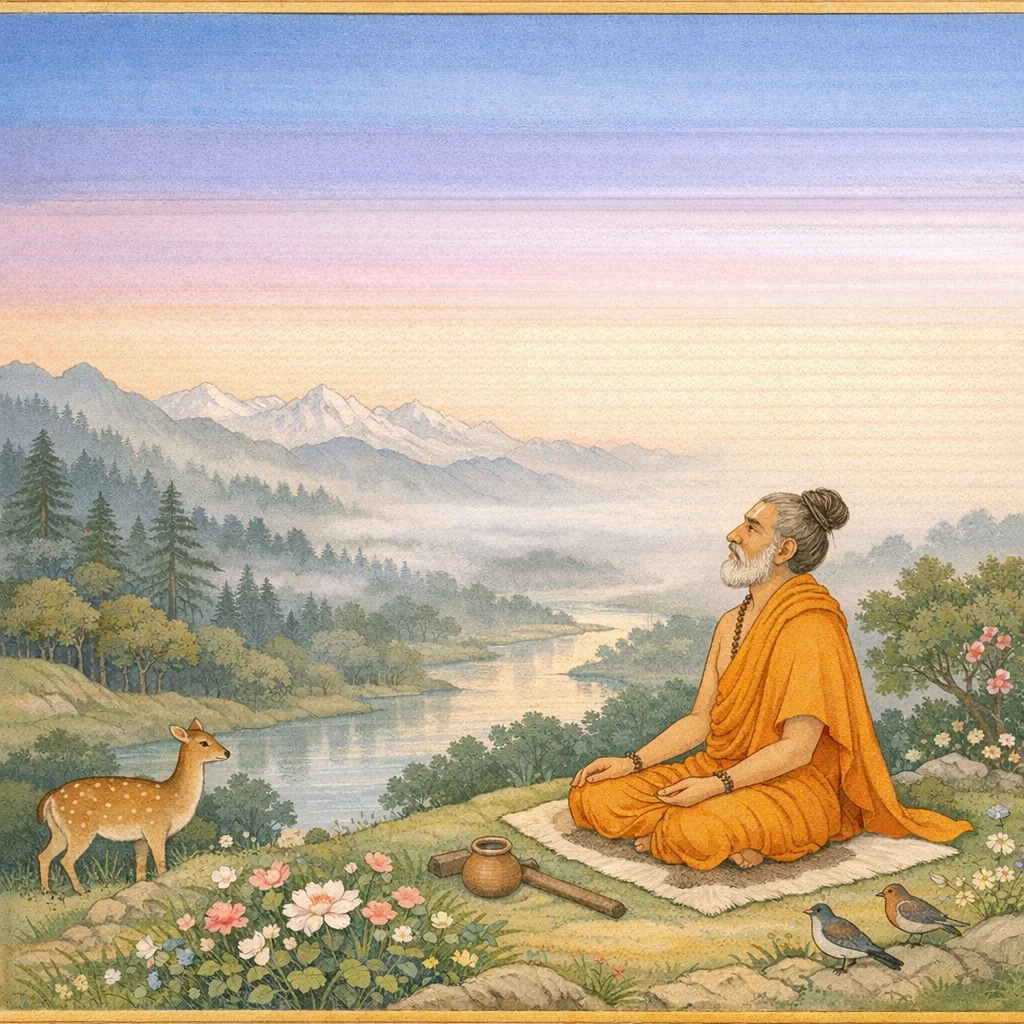
Turiyateeta
Turiyateeta Upanishad là một Sannyasa Upanishad gắn với Atharvaveda. Dù cực kỳ ngắn, văn bản này làm tinh tế hóa giáo lý Mandukya về turiya bằng cách nói đến turiyateeta—“vượt cả turiya.” Ý nghĩa là Thực tại tối hậu không phải một “trạng thái thứ tư” bên cạnh thức‑mộng‑ngủ sâu, mà là ý thức làm chứng (sākṣin) cho cả ba: tự chiếu sáng và không thể bị nắm bắt như một đối tượng kinh nghiệm. Về bối cảnh lịch sử, các Sannyasa Upanishad thường được hiểu thuộc giai đoạn hậu cổ điển khi truyền thống xuất gia và học thuật Advaita Vedanta đã phát triển. Hình thức một câu/ một kệ khiến nó trở thành công thức dễ ghi nhớ cho quán chiếu sâu (nididhyāsana). Giáo huấn chính nhấn mạnh phương pháp phủ định (neti neti), sự tan rã của cảm thức “ta là người làm/ người hưởng,” vượt qua các đối đãi, và lý tưởng jīvanmukti—giải thoát ngay trong đời sống nhờ tri kiến bất nhị về Atman và Brahman. Xuất gia ở đây trước hết là ly tham nội tâm, không chỉ là từ bỏ xã hội bên ngoài.
Key Teachings
- Turīyātīta: the Absolute is “beyond even turīya
” i.e.
beyond any conceptualized ‘fourth state’
- Ātman/Brahman as sākṣin: the ever-present witness of waking
dream
and deep sleep
- Non-objectifiability (aviṣayatva): reality cannot be grasped as an experience or mental content
- Neti neti and apophatic pedagogy: negation as a method to dissolve subtle reification
- Asaṅga (non-attachment): freedom as disidentification from body–mind and social roles
- Jīvanmukti ideal: liberation as present knowledge
not a post-mortem attainment
- Transcendence of dualities: beyond doer/enjoyer
merit/demerit
praise/blame
pleasure/pain
- Saṃnyāsa as inner renunciation: external abandonment is secondary to abidance in non-dual awareness
Verses of the Turiyateeta
Explore the verses of this Upanishad.
No verses available for this Upanishad yet.