Adhyaya 20
गरुडजन्म तथा विनतादास्यवृत्तान्तः (Garuḍa’s Birth and Vinatā’s Enslavement)
Upa-parva: Āstīka Upākhyāna (Garuḍa–Vinātā Episode)
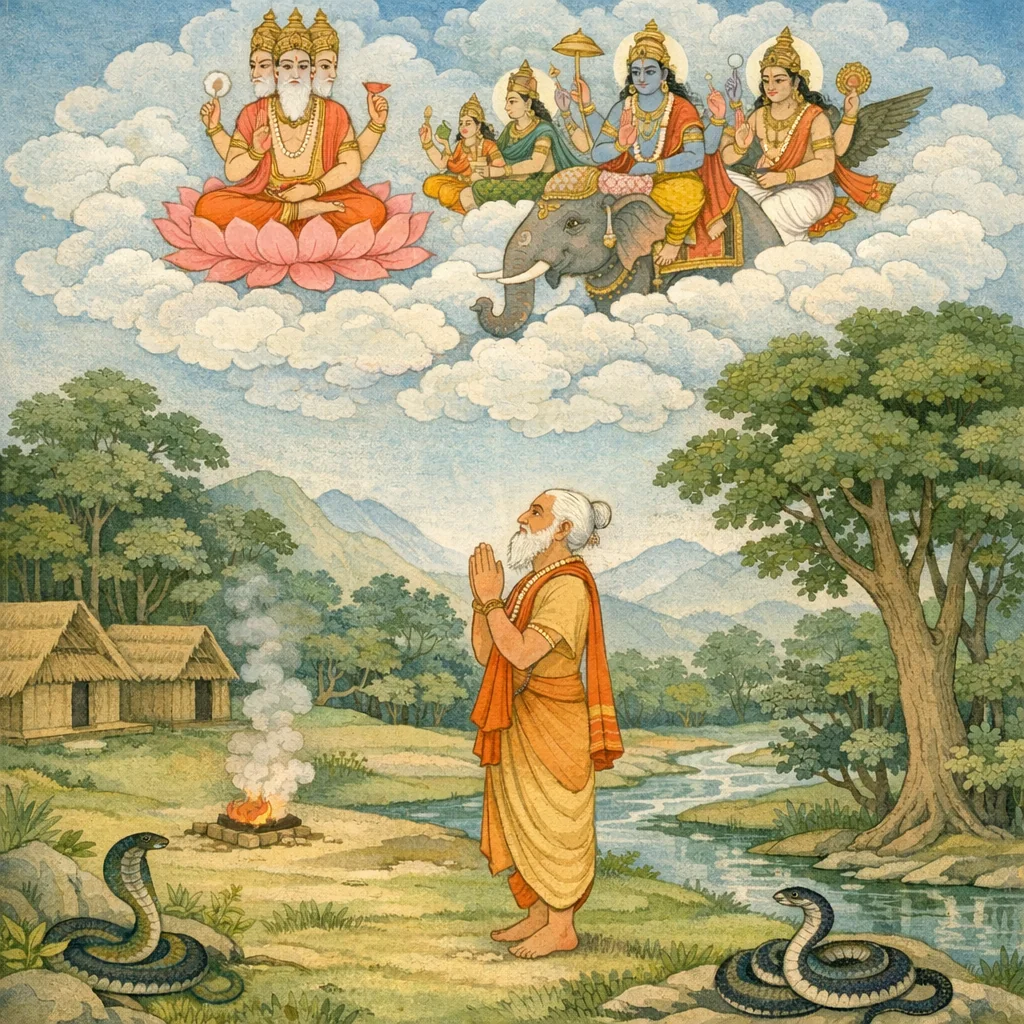
This chapter reports (via Sauti) the immediate consequence of the Kadru–Vinatā wager: after crossing the ocean, Kadru observes numerous black hairs attached to the serpent’s tail, interprets this as proof in her favor, and assigns the despondent Vinatā to servitude. In parallel, the narrative shifts to a cosmological register: at the destined time Garuḍa is born, bursting the egg without maternal assistance, rapidly expanding and taking to the sky. His blazing appearance resembles an immense conflagration; beings, fearing a world-consuming fire, seek refuge with Agni. Agni clarifies that the radiance is Garuḍa’s, comparable to his own tejas. Devas and ṛṣis then approach Garuḍa and praise him with elevated epithets—seer, lord of birds, protector, and cosmic illuminator—framing him as both beneficent and potentially catastrophic. The chapter closes with a key ethical-cosmological act: Garuḍa, thus addressed, performs tejas-pratisaṃhāra, withdrawing and regulating his radiance, signaling controlled power rather than indiscriminate destruction.
Chapter Arc: उग्रश्रवा (सौति) शौनकादि ऋषियों को उस निर्णायक प्रसंग में ले जाते हैं जहाँ कद्रू विनता से पूछती है—उच्चैःश्रवा घोड़े का वर्ण क्या है? एक छोटे-से उत्तर पर दास्य और वंश-भाग्य टिके हैं। → विनता निश्चयपूर्वक कहती है कि अश्वराज श्वेत है और कद्रू से भी वर्ण बताने को कहती है; दोनों बहनों में शर्त बँधती है कि जो गलत होगी वह दूसरी की दासी बनेगी। इसी बीच कद्रू का कठोर शाप नागों पर उतरता है, और उसका प्रतिध्वनि ब्रह्मा तक पहुँचती है—देवगणों सहित सृष्टिकर्ता उस शाप को लोक-हित की दृष्टि से स्वीकारते हैं, क्योंकि नागों की संख्या और उग्रता बढ़ रही है। → ब्रह्मा कश्यप को बुलाकर कहते हैं कि ये दन्दशूक (सर्प) अत्यन्त विषोल्बण, महाभोग और परंतप हैं; कद्रू के शाप पर क्रोध न किया जाए—यह पुरातन विधान है कि यज्ञ में सर्प-विनाश होगा। फिर वे कश्यप को विषहर विद्या प्रदान करते हैं, ताकि विनाश-नियति के बीच भी उपचार और संतुलन बना रहे। → सृष्टि-व्यवस्था का संतुलन स्पष्ट होता है—नागों का संहार नियत है, पर साथ ही विषहर विद्या का दान करुणा और संरक्षण का मार्ग खोलता है। कद्रू-विनता की शर्त निजी कलह से उठकर विश्व-व्यवस्था (यज्ञ, शाप, नियति) के ताने-बाने में जुड़ जाती है। → शप्त नागों के बीच कर्कोटक जैसे प्रमुख भुजग कद्रू से आगे की योजना/उपाय की बात करते हैं—और कथा उस बिंदु पर ठहरती है जहाँ नाग-समुदाय शाप से बचने या उसे मोड़ने की युक्ति खोजने को उद्यत है।
Shlokas
Verse 1
इस प्रकार श्रीमह्ाभारत आदिपरव्वके अन्तर्गत आस्तीकपर्वमें अमृतमन्थन-समाप्ति नामक उन्नीसवाँ अध्याय पूरा हुआ ॥/ १९ ॥ अपर बक। ] अि्शशाएड< विशो<् ध्याय: कद्रू और विनताकी होड़
Sauti nói: “Ta nay đã kể trọn vẹn việc cam lộ được khuấy lên như thế nào. Chính trong cuộc khuấy ấy đã xuất hiện con tuấn mã rực rỡ, uy lực vô song.”
Verse 2
यं निशम्य तदा कद्रूविनतामिदमब्रवीत् । उच्चै:श्रवा हि किं वर्णो भद्रे प्रत्रूहि माचिरम्
Nghe vậy, Kadrū nói với Vinatā: “Ôi hiền muội, Uccaiḥśravā rốt cuộc mang màu gì? Hãy nói mau, chớ chần chừ.”
Verse 3
विनतोवाच श्वेत एवाश्वराजो<यं किं वा त्वं मनन््यसे शुभे । ब्रृहि वर्ण त्वमप्यस्य ततो5त्र विपणावहे
Vinatā đáp: “Ôi người cát tường, tuấn mã vương này quả là trắng. Còn chị nghĩ sao? Chị cũng hãy nói màu của nó, rồi chúng ta đặt cuộc cược tại đây.”
Verse 4
कटूरुवाच कृष्णवालमहं मन्ये हयमेनं शुचिस्मिते । एहि सार्ध मया दीव्य दासीभावाय भामिनि
Kadrū nói: “Ôi em gái có nụ cười trong sạch, ta cho rằng con ngựa này có đuôi đen. Nào—hãy cược với ta về điều ấy, lấy thân phận nô tỳ làm giá, hỡi người kiêu hãnh. Nếu lời em đúng, ta sẽ sống làm kẻ hầu của em; bằng không, em phải trở thành nô tỳ của ta.”
Verse 5
सौतिर्वाच एवं ते समयं कृत्वा दासीभावाय वै मिथ: । जम्मतुः स्वगृहानेव श्रो द्रक्ष्याव इति सम ह
Sauti nói: “Thế rồi hai chị em lập giao ước với nhau, rằng một người sẽ làm nô tỳ cho người kia. Họ trở về nhà riêng của mình và quyết định: ‘Ngày mai chúng ta sẽ đến xem con ngựa.’”
Verse 6
ततः पुत्रसहसत्रं तु कद्रूर्जिह्यां चिकीर्षती । आज्ञापयामास तदा वाला भूत्वाञ्जनप्रभा:
Rồi Kadrū—với lòng dạ quanh co, muốn dùng mưu trá—ra lệnh cho ngàn đứa con rắn của mình: “Hãy hóa thành những sợi lông đen và mau bám vào đuôi con ngựa ấy, để ta khỏi phải làm nô tỳ.” Những con rắn nào không tuân lệnh, bà liền nguyền rủa: “Khi bậc vương hiền Janamejaya, dòng dõi Pāṇḍava, khởi lễ tế rắn, ngọn lửa rực cháy của nghi lễ ấy sẽ thiêu các ngươi thành tro.”
Verse 7
आविशध्वं हयं क्षिप्रं दासी न स्थामहं यथा । नावपद्यन्त ये वाक्यं ताञ्छशाप भुजड्मान्
Śaunaka nói: “Hãy lập tức chui vào con ngựa ấy, để ta khỏi phải làm nô lệ.” Những con rắn không chịu nghe lời, Kadrū—với ý đồ quanh co—liền nguyền rủa: “Khi bậc vương hiền Janamejaya, dòng dõi Pāṇḍava, bắt đầu lễ tế rắn, ngọn lửa rực cháy của nghi lễ ấy sẽ thiêu các ngươi thành tro.”
Verse 8
सर्पसत्रे वर्तमाने पावको व: प्रधक्ष्यति । जनमेजयस्य राजर्षे: पाण्डवेयस्प धीमत:
Śaunaka nói: “Khi lễ tế rắn đang diễn ra, ngọn lửa sẽ thiêu các ngươi. Trong nghi lễ của bậc vương hiền Janamejaya, hậu duệ Pāṇḍava đầy trí tuệ, các ngươi sẽ bị lửa nuốt trọn.”
Verse 9
शापमेनं तु शुश्राव स्वयमेव पितामह: । अतिक्रूरं समुत्सृष्टं कद्रवा दैवादतीव हि
Śaunaka nói: Chính Đấng Tổ Phụ (Brahmā) đã tự mình nghe lời nguyền ấy. Bởi một khúc quanh nghiệt ngã của số mệnh, loài rắn nhận lấy một lời nguyền vô cùng khắc nghiệt—lại do chính mẹ chúng, Kadrū, thốt ra.
Verse 10
सार्ध देवगणै: सर्वैर्वाच॑ं तामन्वमोदत । बहुवं प्रेक्ष्य सर्पाणां प्रजानां हितकाम्यया,सम्पूर्ण देवताओंसहित ब्रह्माजीने सर्पोंकी संख्या बढ़ती देख प्रजाके हितकी इच्छासे कद्रूकी उस बातका अनुमोदन ही किया
Śaunaka nói: Brahmā, cùng với toàn thể chư thiên, đã tán thành điều ấy. Thấy loài rắn sinh sôi quá nhiều, và vì mong phúc lợi cho muôn loài, Ngài đã thuận theo—xuất phát từ mối lo cho lợi ích chung.
Verse 11
तिग्मवीर्यविषा होते दन््दशूका महाबला: । तेषां तीक्षणविषत्वाद्धि प्रजानां च हिताय च
Śaunaka said: “These serpents are of fierce potency and venom, mighty in strength and deadly in their bite. Because their poison is so sharp—and for the welfare of living beings—it was right for their mother Kadrū to restrain them by a curse. Those who continually injure other creatures inevitably meet a life-destroying punishment ordained by fate.” Saying this, Brahmā praised Kadrū and summoned Kaśyapa, advising him: “Blameless one, the biting serpents born of you have huge bodies and dreadful venom; yet since their mother has cursed them, you must not be angered by it. Their destruction in a sacrifice is an ancient destined event known to you as well.” Having thus consoled Prajāpati Kaśyapa, the Creator granted him the knowledge that neutralizes serpent-venom.
Verse 12
युक्त मात्रा कृतं तेषां परपीडोपसर्पिणाम् । अन्येषामपि सत्त्वानां नित्यं दोषपरास्तु ये
Śaunaka said: “The mother acted with due measure in cursing those creatures who creep about to torment others. For those beings who are ever intent on wrongdoing and who constantly injure other living creatures, a life-destroying punishment inevitably falls upon them by divine ordinance.” Thus speaking, Brahmā praised Kadrū and, summoning Kaśyapa, told him not to be angered by the curse laid upon the mighty, venomous serpents he had begotten, for their destruction in a sacrifice was already foreseen; and Brahmā then consoled Kaśyapa and granted him the knowledge for neutralizing serpent-venom.
Verse 13
तेषां प्राणान््तको दण्डो देवेन विनिपात्यते । एवं सम्भाष्य देवस्तु पूज्य कद्रें च तां तदा
Śaunaka said: “For such beings, a life-ending punishment is cast down by the divine. Having spoken thus, the god (Brahmā) then honored Kadrū and praised her decision: those mighty serpents, unbearable in prowess and fierce with venom, roam about ever eager to harm others; therefore, for the welfare of all creatures, it was right that their mother cursed them. Upon those who continually injure living beings, a deadly chastisement inevitably descends by the ordinance of fate.”
Verse 14
आहूय कश्यपं देव इदं वचनमत्रवीत् । यदेते दन्दशूकाश्न सर्पा जातास्त्वयानघ
Śaunaka said: “Summoning Kaśyapa, the Lord spoke these words: ‘O blameless one, these biting serpents that have been born through you…’” The passage frames the serpents’ dangerous nature within a moral order: beings that habitually harm others become subject to a divinely sanctioned punishment, and Kaśyapa is urged not to be angered at their mother’s curse, since a destined event (their destruction in a sacrifice) lies ahead.
Verse 15
विषोल्बणा महाभोगा मात्रा शप्ता: परंतप । तत्र मन्युस्त्वया तात न कर्तव्य: कथंचन
Śaunaka said: “These serpents are swollen with venom and formidable in their power; they have been cursed by their mother. Therefore, O subduer of foes, you must not give way to anger on that account in any manner, dear one.” The ethical point is that when beings habitually harm others, a restraining punishment may arise through destiny; one should not respond with personal wrath but accept the corrective order that protects the welfare of creatures.
Verse 16
दृष्ट पुरातनं होतद् यज्ञे सर्पविनाशनम् । इत्युक्त्वा सृष्टिकृद् देवस्तं प्रसाद्य प्रजापतिम् । प्रादाद् विषहरीं विद्यां कश्यपाय महात्मने
Śaunaka nói: “Chuyện xưa này ai cũng biết—trong một lễ tế sẽ có sự diệt vong của loài rắn.” Nói xong, Đấng Sáng Tạo (Brahmā), sau khi làm hài lòng Prajāpati Kaśyapa, đã ban cho vị hiền giả đại tâm ấy minh chú trừ độc rắn. Đoạn văn đặt cái chết cận kề của loài rắn như một hệ quả do thần lực an bài đối với những kẻ làm hại muôn loài, đồng thời trao truyền tri thức cứu chữa vì lợi ích của sinh linh.
Verse 20
(एवं शप्तेषु नागेषु कद्गवा च द्विजसत्तम । उद्विग्न: शापतस्तस्या: कद्/ूं कर्कोटको<ब्रवीत् ।।
Śaunaka nói: “Hỡi bậc tối thượng trong hàng hai lần sinh! Khi mẹ Kadru đã nguyền rủa loài nāga như thế, Karkoṭaka—bậc đứng đầu trong loài rắn—bị sức mạnh lời nguyền làm cho bồn chồn, nhưng vẫn hân hoan thưa với mẹ: ‘Mẹ hãy yên lòng. Con sẽ hóa thành một sợi lông đen, nhập vào thân con ngựa tuyệt hảo ấy, và hiện ra như chiếc đuôi đen của nó.’ Nghe vậy, Kadru lừng danh đáp con: ‘Hãy như thế, con ta.’”
Frequently Asked Questions
The chapter foregrounds the ethical tension between procedural justice and substantive fairness: Vinatā becomes a servant due to the wager’s adjudicated outcome, illustrating how binding agreements can impose severe consequences even when the result appears socially destabilizing.
Power and brilliance (tejas) require self-regulation and social calibration; the narrative models how recognition and wise counsel can convert fear of destruction into ordered coexistence through restraint rather than escalation.
No explicit phalaśruti appears here; the meta-function is structural—linking Vinatā’s bondage to the necessity of Garuḍa’s later actions, and presenting tejas-pratisaṃhāra as an interpretive key for reading power ethically within the epic’s cosmology.
Read Mahabharata in the Vedapath app
Scan the QR code to open this directly in the app, with audio, word-by-word meanings, and more.