Adhyaya 123
युद्धजयार्णवीयनानायोगाः (Various Yogas from the Yuddha-jayārṇava)
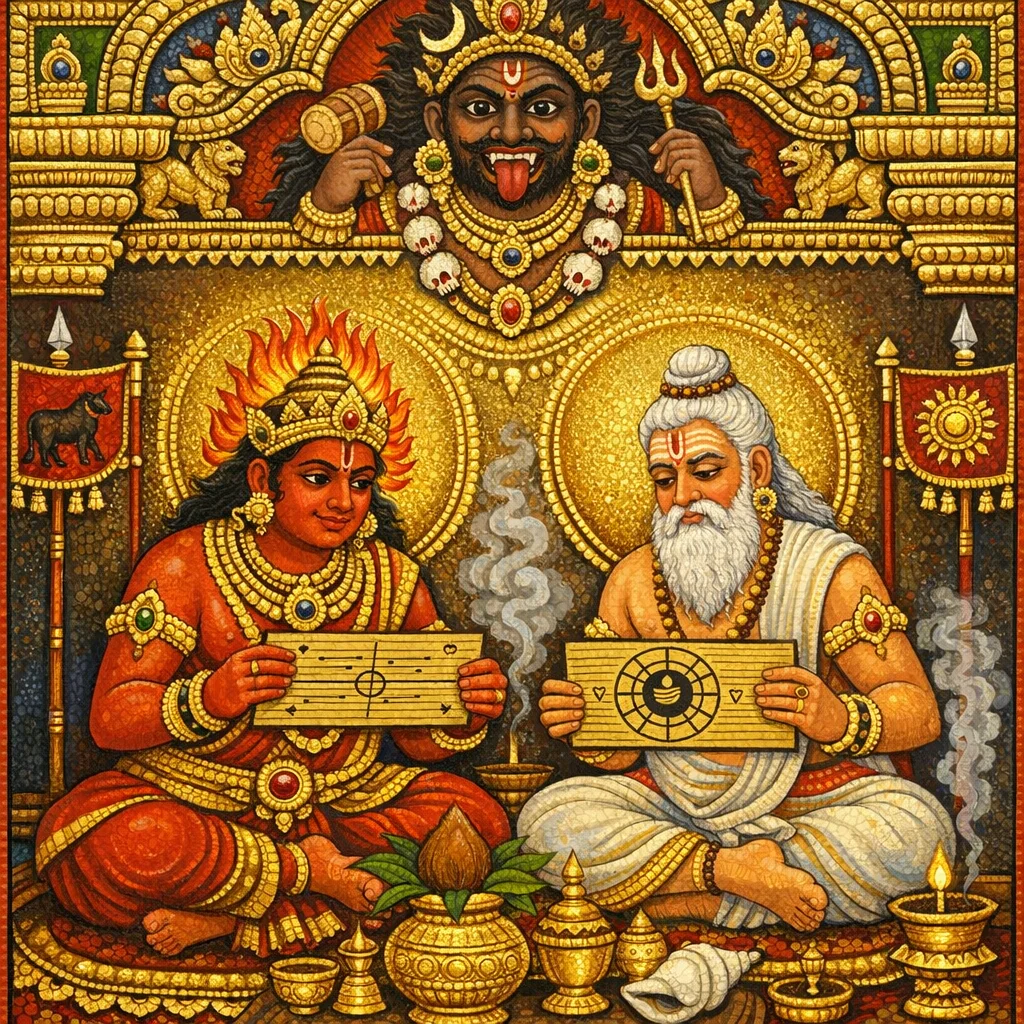
Sau khi khép lại phần kāla-gaṇana (tính toán thời gian), Đức Agni mở ra bản lược yếu hướng đến chiến thắng trong chiến trận, trích từ Yuddhajayārṇava. Chương này phân loại âm vị và tithi theo các nhóm tác nghiệp (bắt đầu với Nandā), rồi gán các dải chữ cái cho các hành tinh chủ quản, đặt thuật đoán vào một lưới mã hóa ngôn ngữ–tinh tú. Văn bản nêu các mô-típ chẩn đoán/đo lường như nāḍī-spandana, ucchvāsa, pala, nối mạch đập cơ thể và đơn vị thời gian với việc đọc điềm báo. Tiếp đó phát triển chiêm tinh chiến tranh dựa trên các cakra—Svarodaya-cakra, Śani-cakra, Kūrma-cakra, Rāhu-cakra—quy định phân khu, vị trí theo phương hướng và các phần “ban tử”, cùng hệ tên nakṣatra/muhūrta để định việc gì hợp thời. Cuối cùng chuyển sang pháp hộ trì và cầu thắng: ứng dụng Bhairava-mantra (śikhā-bandha, tilaka, añjana, dhūpa-lepana) và các dược liệu đeo mang cùng công thức vaśīkaraṇa (tilaka, lepa, dầu). Toàn chương nêu bật Agneya vidyā như sự tổng hợp Jyotiṣa, kỹ thuật nghi lễ và dược học ứng dụng nhằm phụng sự chiến thắng theo dharma.
Shlokas
No shlokas available for this adhyaya yet.
Frequently Asked Questions
A war-oriented Jyotiṣa toolkit: tithi and letter-to-graha mappings, multiple prognostic cakras (Svarodaya, Śani, Kūrma, Rāhu), and muhūrta-based prescriptions for what actions to perform or avoid.
They act as diagrammatic decision systems: divisions, directional placements, and specific ‘death-giving’ portions (notably linked with Śani) guide timing and risk assessment for actions related to conflict and protection.
The chapter treats victory as a synthesis of right timing (Jyotiṣa), protective rite (mantra and ritual acts like tilaka/añjana), and supportive materia medica—typical of the Agni Purana’s encyclopedic Agneya-vidyā approach.
Action-appropriateness: Raudra is prescribed for fierce acts, while Śveta is aligned with purification activities like bathing—demonstrating karmic regulation through time-quality.
Yes. Shloka 25 explicitly notes differences between manuscripts (e.g., a line absent in the Gha manuscript and alternate readings in the Kha manuscript), which is valuable for critical study.