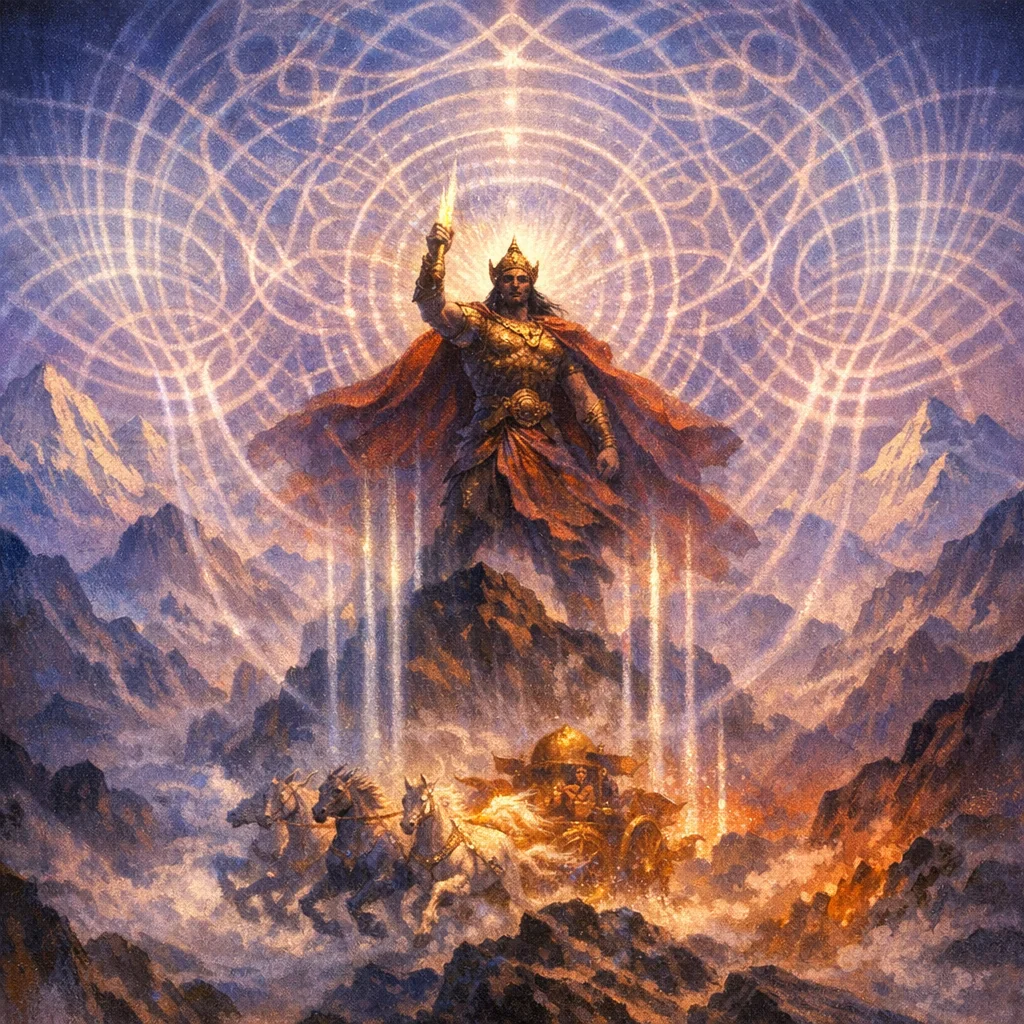
Dashati 7
Aindra praise: awakening and yoking Indra’s power through expertly metered chant for victory and effective sacrifice
Indra
Heroic and energizing (āindra-utsāha) with a crafted technical liturgical tone
Ṛṣi attribution is not recoverable from the supplied excerpt alone; it requires Rigvedic source-hymn concordance for these mantras.
General Soma-yajña application within Aindra stotra sequences; suited to Indra-centered offerings and empowerment of the rite
Mantras
Mantra 1
विधुं दद्राणं समने बहूनां युवानं सन्तं पलितो जगार देवस्य पश्य काव्यं महित्वाद्या ममार स ह्यः समान
The impetuous (god), rushing in the assembly of many, youthful though abiding, the grey-haired (priest) hath awakened (with song): behold the god's poetic marvel, through his greatness; to-day he accomplisheth (the work), he who was the same of old.
Mantra 2
शाक्मना शाको अरुणः सुपर्ण आ यो महः शूरः सनादनीडः यच्चिकेत सत्यमित्तन्न मोघं वसु स्पार्हमुत जेतोत दाता
With puissant aid, the radiant, fair-winged hero, of ancient seat, cometh; whatsoever he discerneth, that verily is true, and not in vain: (he is) the winner and the giver of desirable wealth.
Mantra 3
इन्द्रस्य बाहू स्थविरौ युवानावनाधृष्यौ सुप्रतीकावसह्यौ तौ युञ्जीत प्रथमौ योग आगते याभ्यां जितमसुराणां सहो महत्
Indra’s arms are firm yet youthful, unassailable, of good front, irresistible; let him yoke those two foremost when the conflict is at hand, by which great might over the Asuras is won.
Frequently Asked Questions
It presents Indra as the power awakened in the ritual assembly by skilled song, and it stresses that properly formed speech and meter make the praise effective and victory-giving.
It highlights chandas-conscious chanting: the singer ‘yokes’ the voice through recognized meters, signaling that correct metrical form is itself part of the hymn’s ritual power.
They belong to the Sāma performance domain and would be sung by the Sāmavedic chanters—especially the Udgātṛ, supported by the Prastotṛ and Pratihartṛ—within an Indra-focused stotra sequence.