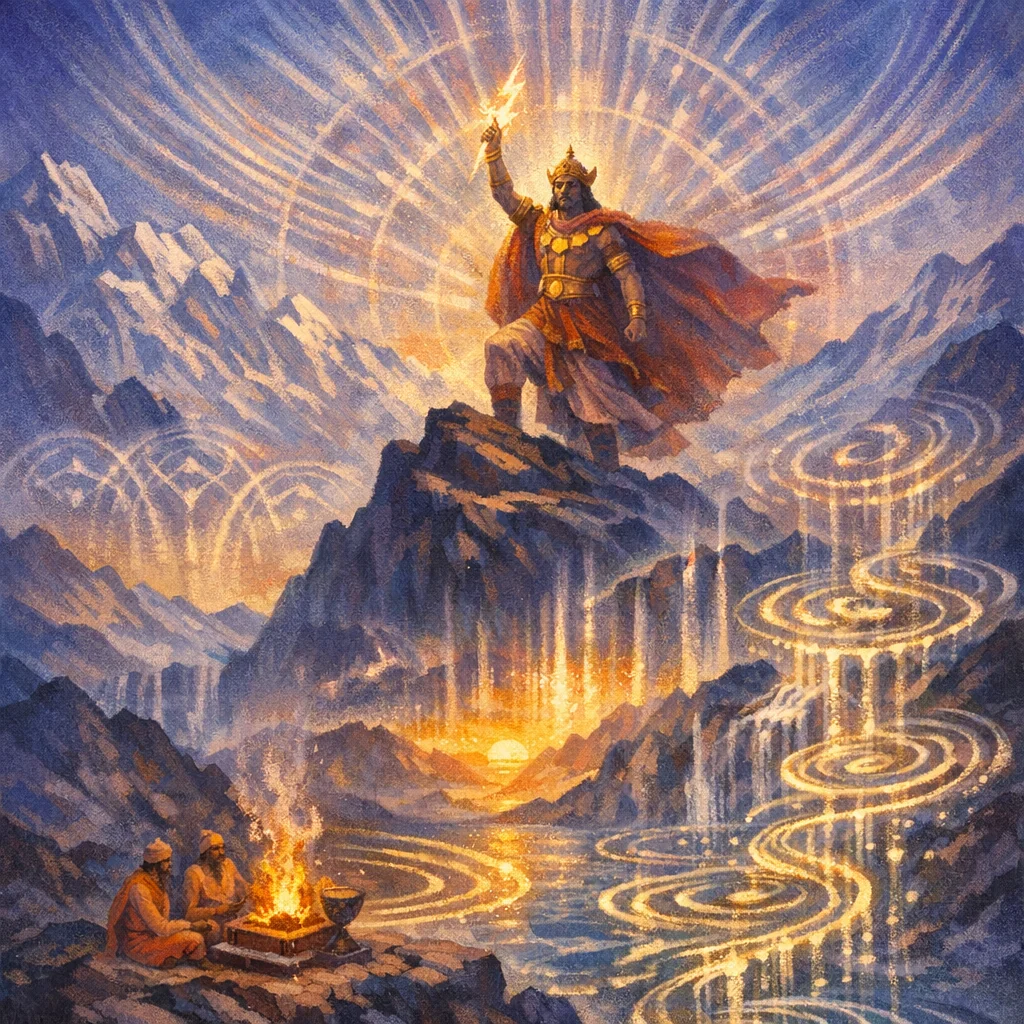
Dashati 8
Aindra victory-power that removes obstacles and secures auspicious gain in the Soma rite
Indra
Heroic and propulsive with an auspicious ‘opening’ brightness where Uṣas-verses appear
R̥ṣi attributions are not provided in the input; proper identification requires RV source mapping/anukramaṇī for each mantra and the Sāmavedic gāna assignment for this prapāṭhaka/daśati.
Primarily Soma-yajña usage: Indra as chief recipient of Soma with pavamāna filtration imagery explicitly tied to soma-pavana (vāra) and the resulting mada (exhilaration).
Mantras
Mantra 1
इन्द्राय सोम पातवे वृत्रघ्ने परि षिच्यसे
O Soma, thou art poured forth abundantly for Indra to drink, for the slayer of Vṛtra.
Mantra 2
उषो अद्येह गोमत्यश्वावति विभावरि रेवदस्मे व्युच्छ सूनृतावति
Uṣas, to-day come hither, rich in kine and rich in horses; widely-illumining, opulent and admirable, shine forth, endowed with sūnṛtā, (bringing auspicious utterance) for our rite.
Mantra 3
परि त्यं हर्यतं हरिं बभ्रुं पुनन्ति वारेण यो देवान्विश्वां इत्परि मदेन सह गच्छति
They cleanse, with the woollen strainer, that desirable tawny, ruddy (Soma), which, with exhilaration, goeth forth encompassing all the gods.
Frequently Asked Questions
It links ritual success to divine power: Indra breaks impediments and defeats hostility, while the rite is auspiciously opened by Uṣas and energized by purified Soma.
Uṣas signals the rite’s timely beginning and brings “saubhaga” (prosperities), and Soma—once filtered and exhilarating—becomes the shared power that reaches the gods and supports Indra’s victory-giving role.
Sāyaṇa takes vṛtra as “āvaraṇa” (obstruction), so vṛtratūrasi means Indra has the power to break through impediments—especially those that hinder the sacrifice and its intended results.