Dashati 7
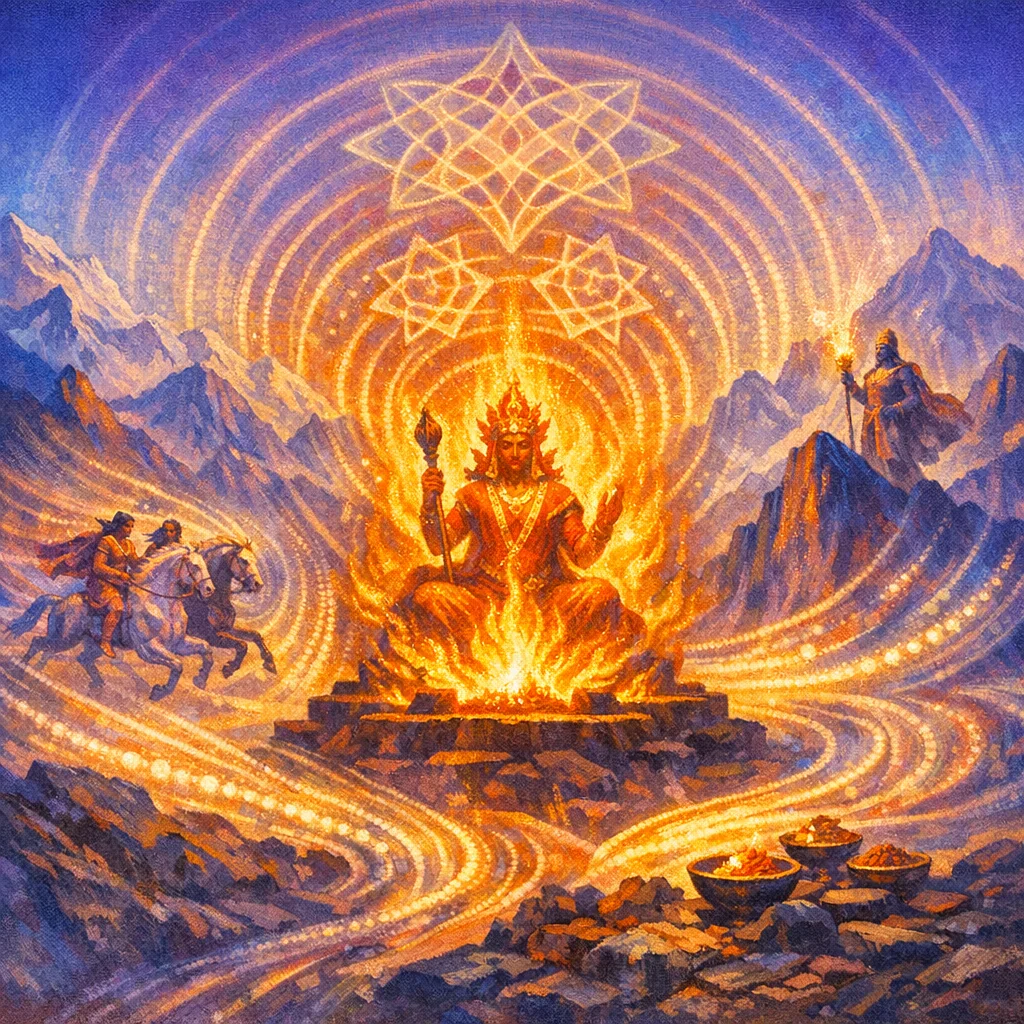
Agni as the sovereign of sacrifice (yajña-samrāṭ) and the energizing divine powers that make the rite fruitful
Agni
Bright forward-driving praise—processional and triumphant suited to ‘calling in’ deities and affirming ritual sovereignty
Ṛṣi and chandas are not provided; identification requires tracing each mantra to its Ṛgvedic source and consulting the Sāmavedic anukramaṇī for this arcikā/prapāṭhaka location.
Applicable within Soma-yajña singing where Agni is established as ritual lord and Indra is strengthened by Soma for bestowal of wealth; exact graha-stotra mapping cannot be fixed from the supplied data alone.
Mantras
Mantra 1
अस्तावि मन्म पूर्व्यं ब्रह्मेन्द्राय वोचत पूर्वीरृतस्य बृहतीरनूषत स्तोतुर्मेधा असृक्षत
The ancient hymn hath been celebrated; utter ye the sacred prayer to Indra: many great (praises) of ṛta have resounded; the inspirations of the worshipper have been sent forth.
Mantra 2
समिन्द्रो रायो बृहतीरधूनुत सं क्षोणी समु सूर्यम् सं शुक्रासः शुचयः सं गवाशिरः सोमा इन्द्रममन्दिषुः
Indra hath wholly shaken forth great riches; (he hath set in order) the earths and also the sun; the bright, the pure (energies), and cattle-wealth as chief: the Soma-juices have exhilarated Indra.
Mantra 3
स नो दूराच्चासाच्च नि मर्त्यादघायोः पाहि सदमिद्विश्वायुः
Do thou protect us, both from afar and from near, from the mortal that would injure; ever, indeed, (be to us) of universal life (the giver of full vitality).
Frequently Asked Questions
The simile highlights Agni’s fitness and splendour in the rite—like a decorated steed ready for procession—while stressing his role as the sovereign presence guiding the sacrifice.
It describes the Aśvins as ‘born of/connected with the waters,’ emphasizing their swift, life-giving arrival and their power to aid the sacrificer and bring wealth.
The repeated “sam” conveys completeness and totality: Indra sets things fully in order and shakes forth abundant riches, especially after being exhilarated by Soma.