Dashati 17
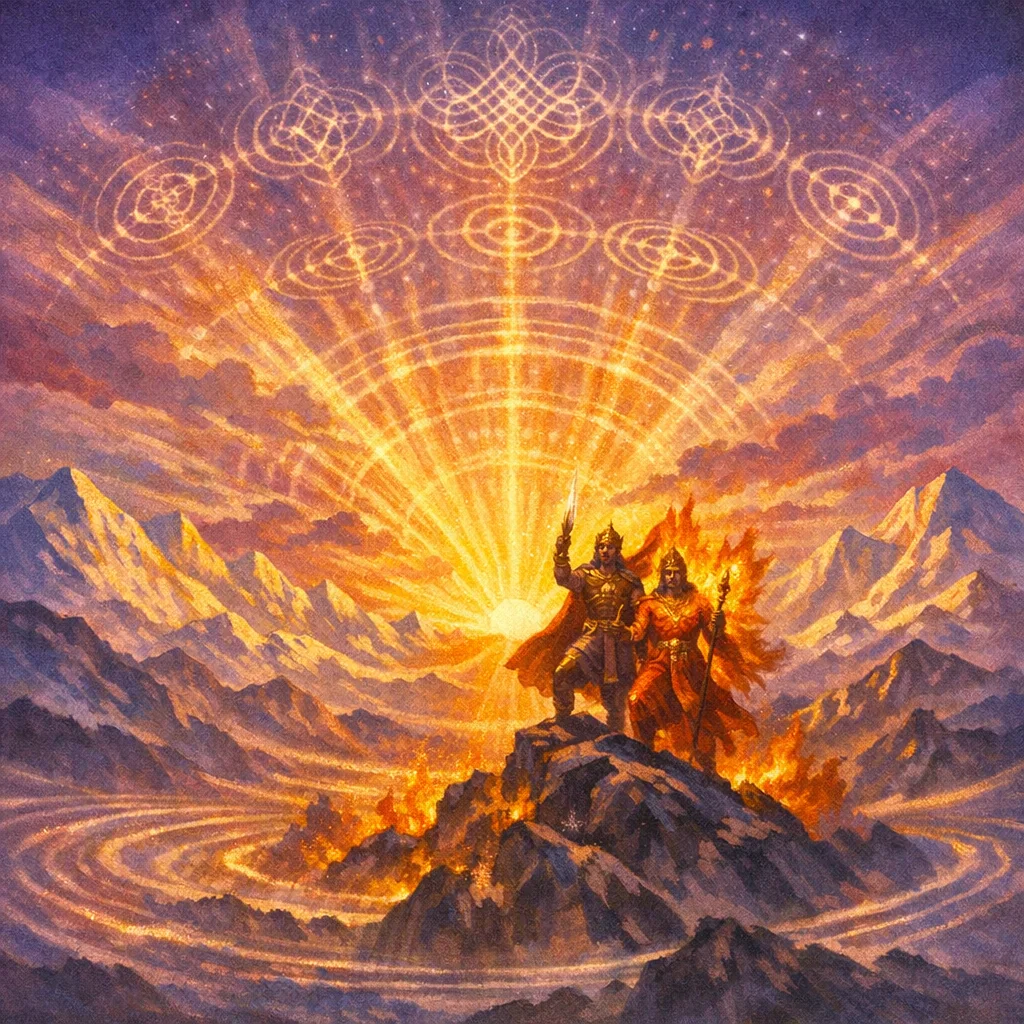
Aindra dawn-invocation: cosmic awakening and the joint victory-power of Indra–Agni
Indra–Agni
Uplifting and martial-energizing: from luminous dawn-rise to triumphant victory-acclamation
The excerpted Indrāgnī triṣṭubh material is RV-derived; without the full anukramaṇī mapping for this Sāmavedic selection a single r̥ṣi-family attribution cannot be asserted here.
Applied in Soma-yajña as an Aindra/Indrāgnī set: praise supporting Indra’s śastra-side and Agni’s stotra-side oriented to gaining vāja and removing obstruction.
Mantras
Mantra 1
तोशा वृत्रहणा हुवे सजित्वानापराजिता इन्द्राग्नी वाजसातमा
With grateful praise I invoke Indra and Agni, the slayers of Vṛtra, ever-victorious, unconquered, the most liberal bestowers of sustenance.
Mantra 2
यद्युञ्जाथे वृषणमश्विना रथं घृतेन नो मधुना क्षत्रमुक्षतम् अस्माकं ब्रह्म पृतनासु जिन्वतं वयं धना शूरसाता भजेमहि
When ye yoke, O Aśvins, your vigorous chariot, then with ghee and with honey bedew our might; cherish our sacred prayer in conflicts, that we may partake of riches, prizes won by heroes.
Mantra 3
अर्वाङ्त्रिचक्रो मधुवाहनो रथो जीराश्वो अश्विनोर्यातु सुष्टुतः त्रिवन्धुरो मघवा विश्वसौभगः शं न आ वक्षद्द्विपदे चतुष्पदे .
May the three-wheeled, honey-bearing chariot of the Aśvins, swift-horsed, come hither, well-praised; three-seated, bountiful, of universal good fortune—may it bring us welfare, for biped and for quadruped.
Frequently Asked Questions
It links the morning awakening of the cosmos (Agni, Sun, Dawns) with ritual momentum, then calls Indra–Agni to defeat obstruction and grant strength, food, and victory (vāja).
As a paired power, they act ‘with one deed’—combining victory-force and sacrificial fire—to break forts, destroy Vṛtra-like obstruction, and secure success for the Soma rite and the worshipper.
Savitṛ represents the divine ‘impulse’ that sets all beings and ritual acts in motion, while the Aśvins symbolize swift arrival and timely help—framing Indra–Agni’s heroic work within a dawn-time ritual setting.