Adhyaya 7
Bṛhaspati Rejects the Demigods: The Root of Deva Weakness and the Need for Humility
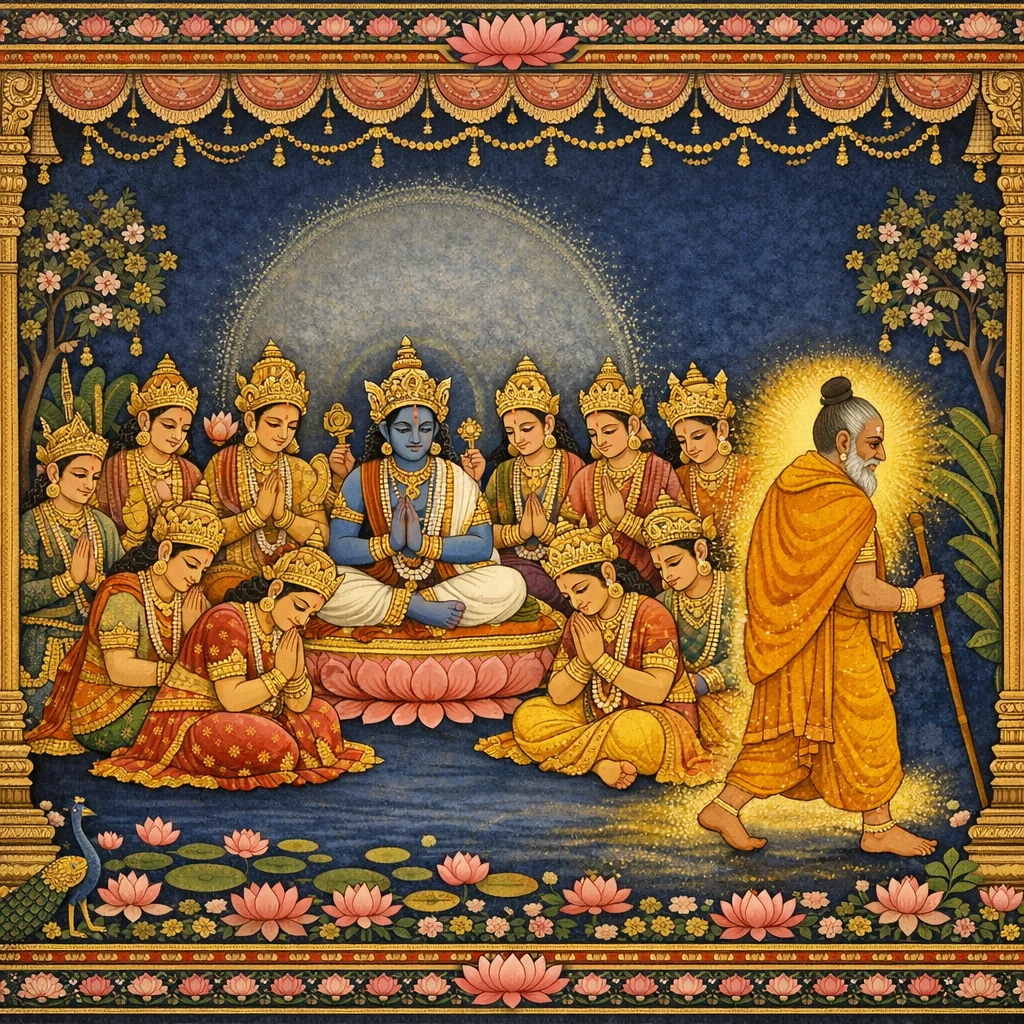
دیو–اسور کشمکش کے پس منظر میں مہاراجہ پریکشت شُکدیَو گوسوامی سے پوچھتے ہیں کہ دیوگرو برہسپتی نے اپنے ہی شاگردوں سے کنارہ کیوں کیا۔ اس باب میں بتایا گیا ہے کہ دیوتاؤں نے منصب کے غرور اور سیاسی مشغولیت کے باعث گرو کی واجب تعظیم اور توجہ میں کوتاہی کی—یہی گرو-اپرادھ تھا۔ برہسپتی کے چلے جانے سے دیوتاؤں کی روحانی پشت پناہی کمزور پڑتی ہے اور اسوروں کے مقابلے میں حکمت و دھرم کے بارے میں الجھن بڑھتی ہے۔ تعلیم یہ ہے کہ دھرم کی جڑ گرو-بھکتی اور بھگوان وِشنو پر بھروسا ہے؛ جب یہ نظرانداز ہو تو کائناتی نظم متزلزل ہوتا ہے۔ آگے چل کر دیوتا متبادل مشورہ ڈھونڈتے ہیں اور آخرکار عاجزی اور وِشنو-مرکوز شरणاگتی کی طرف لوٹنے پر مجبور ہوتے ہیں—ورتراسور کے قصے کی تمہید۔
Shlokas
Frequently Asked Questions
Because the devas failed in proper guru-sevā and respect—an offense rooted in pride and neglect. In Bhāgavata theology, the guru is not merely an advisor but the channel of dharma and divine favor; when disciples disregard him, their spiritual potency and right judgment diminish, and their worldly power becomes unreliable.
They violated appropriate etiquette and honor toward him—treating the guru as secondary to courtly and political concerns. Such disrespect constitutes guru-aparādha, which is portrayed as spiritually corrosive: it blocks blessings, weakens protection (poṣaṇa), and invites disorder even among the devas.
Bṛhaspati’s withdrawal explains the devas’ ensuing vulnerability and missteps, preparing the ground for the larger lesson that victory depends on humility, proper shelter, and Viṣṇu’s will—not merely celestial weaponry. This moral causality culminates in the Vṛtrāsura episodes, where devotion and surrender overturn simplistic labels of ‘deva’ and ‘asura.’