
Shloka 31
Vibhuti Yoga — Vibhuti Yoga
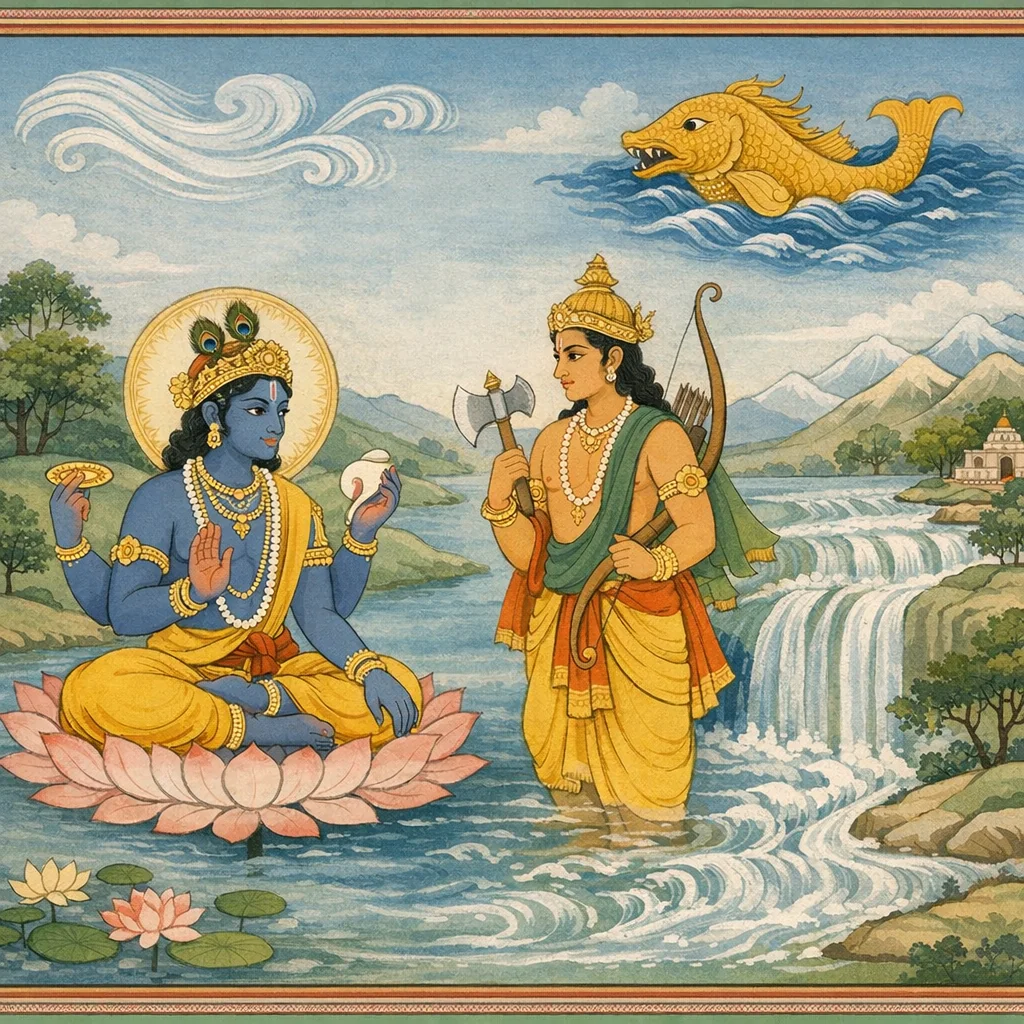
पवनः पवतामस्मि रामः शस्त्रभृतामहम् । झषाणां मकरश्चास्मि स्रोतसामस्मि जाह्नवी ॥ १०.३१ ॥
pavanaḥ pavatām asmi rāmaḥ śastrabhṛtām aham | jhaṣāṇāṃ makaraś cāsmi srotasām asmi jāhnavī || 10.31 ||

Among purifiers I am the wind; among weapon-bearers I am Rāma. Among aquatic creatures I am the makara; among rivers I am Jāhnavī (the Gaṅgā).
Among purifiers I am the wind; among weapon-bearers I am Rāma. Among aquatic creatures I am the makara; among rivers I am Jāhnavī (the Gaṅgā).
Among that which blows/moves I am the wind; among those who bear weapons I am Rāma; among fish/sea-creatures I am makara; among flowing waters I am Jāhnavī (Gaṅgā).
pavatām can be taken as “of the blowing/moving” or “of the purifying,” since wind is culturally associated with purification. “Rāma” is commonly understood as Rāma Dāśarathi; some commentators discuss it as Paraśurāma, but mainstream tradition favors Dāśarathi here.
FAQs
Wind can symbolize the restless but cleansing movement of attention and breath; disciplined “bearing of tools” (śastra) can be read as skillful agency rather than aggression.
The verse treats natural forces and revered exemplars as loci of the same ultimate presence, implying a unified reality expressed through diverse forms.
These are culturally salient referents—wind, Rāma, makara, Gaṅgā—used to anchor the teaching in a shared symbolic world.
It can motivate ecological respect (rivers), mindfulness of breath (wind), and ethical use of power/skills (weapon-bearers as responsible agents).