
Shloka 20
Vibhuti Yoga — Vibhuti Yoga
अहमात्मा गुडाकेश सर्वभूताशयस्थितः । अहमादिश्च मध्यं च भूतानामन्त एव च ॥ १०.२० ॥
aham ātmā guḍākeśa sarva-bhūtāśaya-sthitaḥ | aham ādiś ca madhyaṃ ca bhūtānām anta eva ca || 10.20 ||

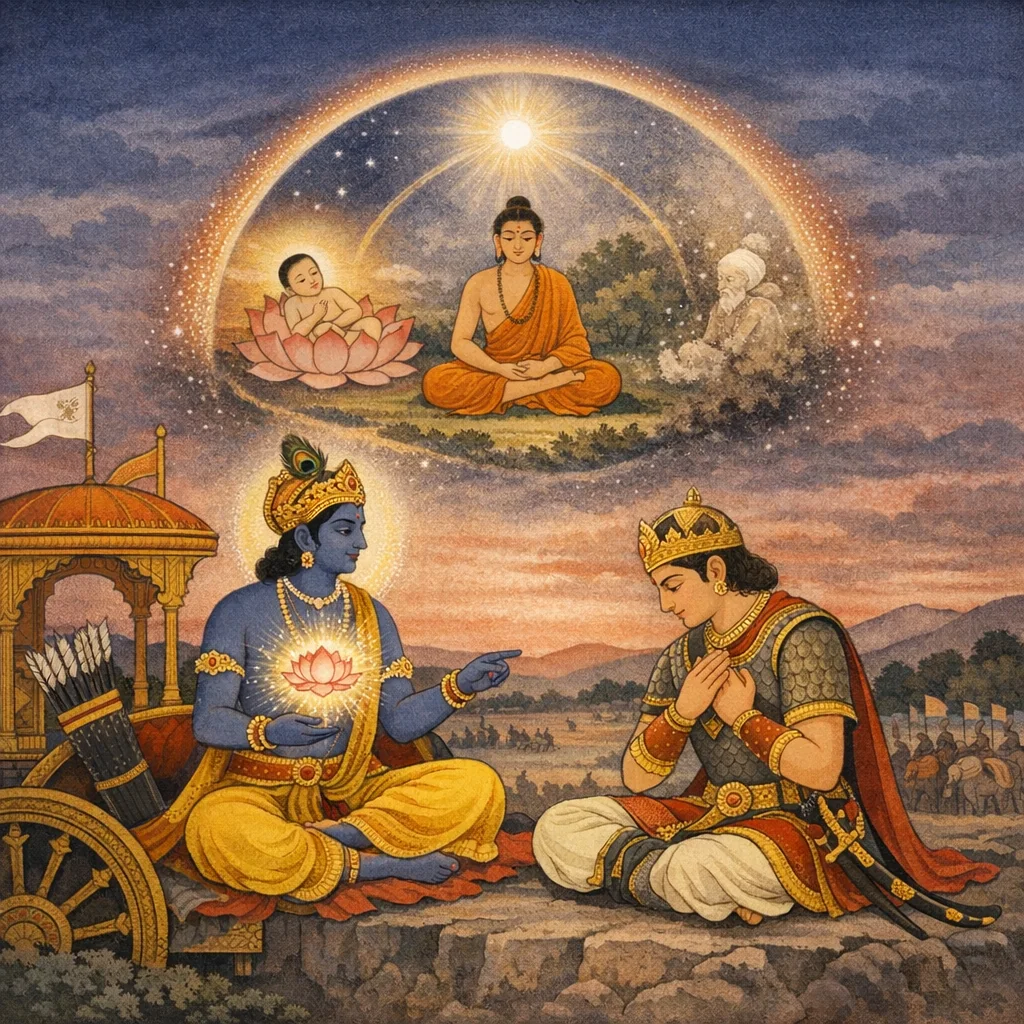
O Gudākeśa, I am the Self abiding in the hearts of all beings; I am the beginning, the middle, and also the very end of beings.
O Gudakesha, I am the Self seated in the hearts of all beings; and I am the beginning, the middle, and also the end of beings.
I am the Self, O Guḍākeśa, abiding in the inner locus (āśaya) of all beings; I am the beginning, the middle, and indeed the end of beings.
‘āśaya’ is often rendered ‘heart’ or ‘inner seat.’ Philosophically, this can be read theistically (God indwelling) or in a non-dual register (Self as the inner reality). The Sanskrit permits both emphases.
FAQs
It encourages inward attention: the sense of a stable witnessing core can be cultivated as a basis for composure and ethical reflection.
The verse asserts the divine/Self as the inner basis of conscious life and as the temporal arc of all entities (origin–continuance–completion).
It begins the vibhūti list with a comprehensive claim: the divine is not only among things but also their inner reality.
Useful for reflective practices that link personal identity to a broader field of life, fostering empathy and responsibility.