
Bhagavad Gita — Moksha Sannyasa Yoga, Shloka 47
Moksha Sannyasa Yoga
श्रेयान्स्वधर्मो विगुणः परधर्मात्स्वनुष्ठितात् । स्वभावनियतं कर्म कुर्वन्नाप्नोति किल्बिषम् ॥ १८.४७ ॥
śreyān sva-dharmo viguṇaḥ para-dharmāt sv-anuṣṭhitāt | svabhāva-niyataṃ karma kurvan nāpnoti kilbiṣam || 18.47 ||

Better is one’s own dharma, though deficient in qualities, than another’s dharma well performed. Doing the work ordained by one’s own nature, one does not incur sin.
अपना धर्म गुणरहित भी हो तो भी अच्छी तरह आचरण किए हुए परधर्म से श्रेष्ठ है। स्वभाव से नियत कर्म करते हुए मनुष्य पाप को नहीं प्राप्त होता।
Better is one’s own dharma, even if lacking merit, than another’s dharma well performed. Performing the action determined by one’s nature, one does not incur fault (kilbiṣa).
The key interpretive issue is ‘svadharma’: commentators may tie it to social role, life-stage, or individual disposition. ‘Viguṇaḥ’ can mean ‘deficient in qualities/less excellent,’ not necessarily morally wrong; the verse prioritizes integrity and appropriateness over imitation.
FAQs
It warns against aspirational imitation that ignores one’s actual capacities; such mismatch can lead to instability, guilt, or burnout, whereas fitting duties support steadiness.
Acting according to one’s nature within prakṛti can be spiritually non-binding when done without egoistic clinging; the verse sets a pragmatic ethic within the path to liberation.
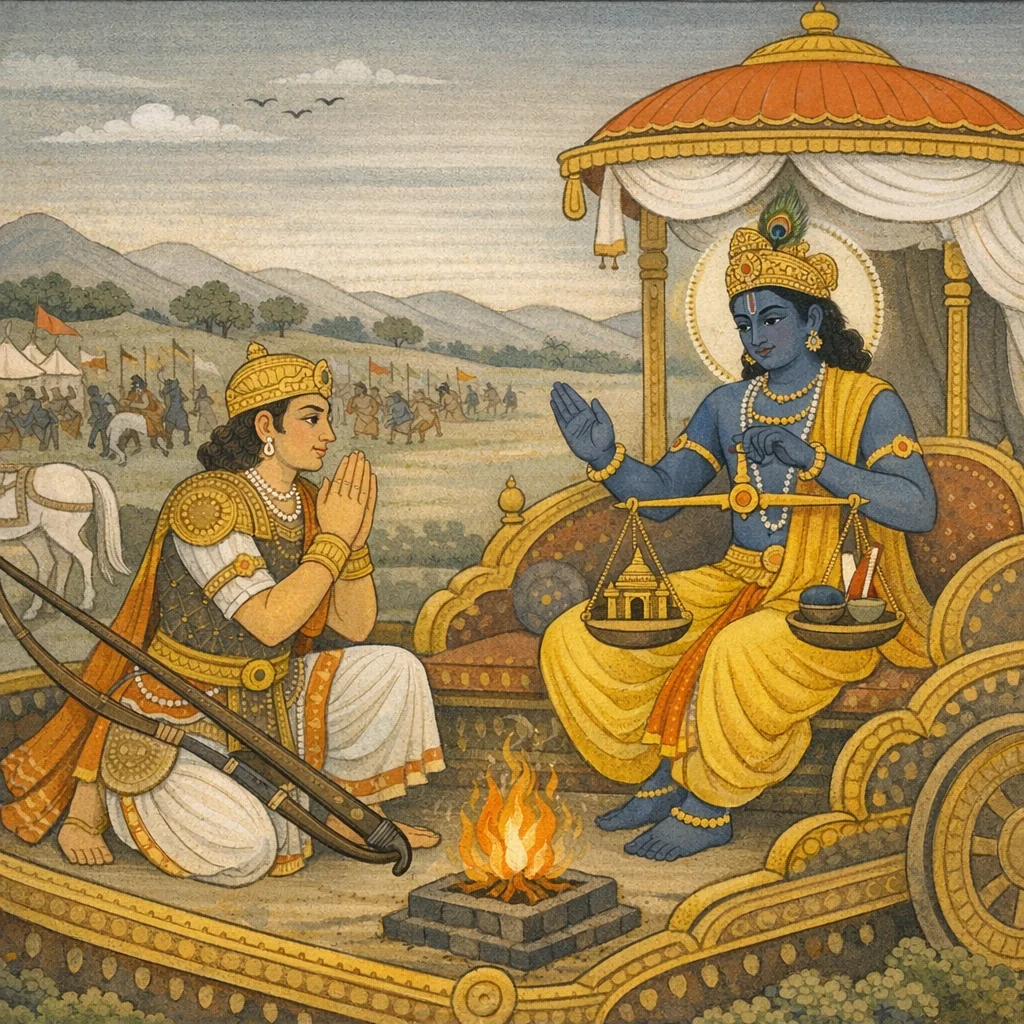
In the Gītā’s narrative, Arjuna is tempted to withdraw from his duty; this principle reinforces the chapter’s guidance that right action is tied to one’s rightful responsibility.
It can be used to frame career and ethical decisions: choose responsibilities aligned with competence and conscience, rather than copying admired roles without preparedness.