Dashati 4
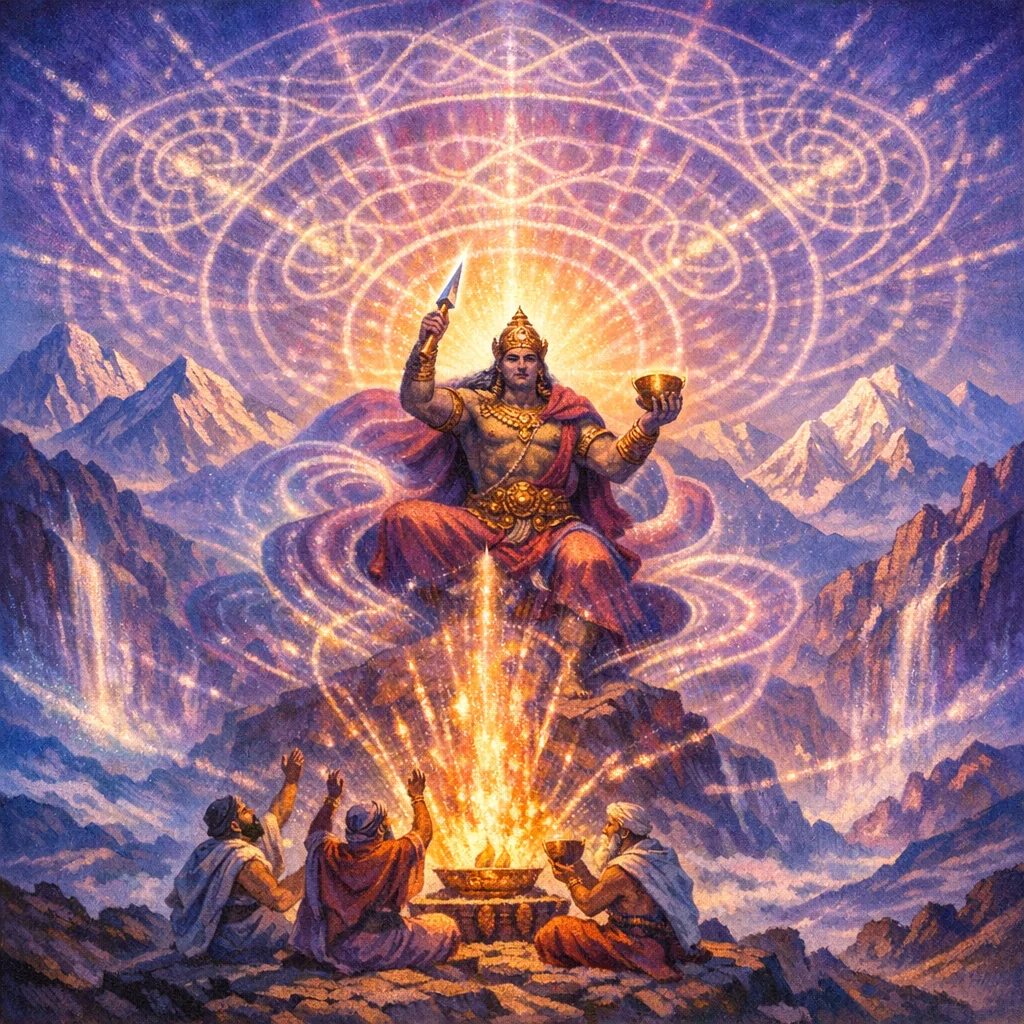
Aindra Soma-stuti: praising Indra at the Soma-pressing for strength, protection, and prosperity
Indra
Exultant and rallying (utsāha) suited to Soma-invitation and praise
R̥ṣi attributions are not supplied in the input; these mantras are drawn from Rigvedic stotras adapted into Sāman melodies where family-attribution normally follows the Rigveda source hymn.
Directly tied to Soma pressing (sute) and Soma drinking invitation (apibaḥ camū-sutam) oriented to prosperity for the soma-presser (sunvat).
Mantras
Mantra 1
यथा गौरो अपा कृतं तृष्यन्नेत्यवेरिणम् आपित्वे नः प्रपित्वे तूयमा गहि कण्वेषु सु सचा पिब
As the tawny bull, athirst, goes to the prepared waters that are unhostile, so do thou, in our near and nearer fellowship, come quickly; among the Kaṇvas, in gracious companionship, drink (the Soma).
Mantra 2
मन्दन्तु त्वा मघवन्निन्द्रेन्दवो राधोदेयाय सुन्वते आमुष्या सोममपिबश्चमू सुतं ज्येष्ठं तद्दधिषे सहः
May the Soma-drops exhilarate thee, O Maghavan, O Indra, for the bestowal of riches upon the presser; come hither: drink of this Soma, expressed in the camū, the chief (libation); thereby thou assumest thy strength.
Mantra 3
वषट् ते विष्णवास आ कृणोमि तन्मे जुषस्व शिपिविष्ट हव्यम् वर्धन्तु त्वा सुष्टुतयो गिरि मे यूयं पात स्वस्तभिः सदा नः
I utter the Vaṣaṭ for thee, O Viṣṇu, for protection; accept, O Śipiviṣṭa, this my oblation: may well-uttered praises, my hymn, augment thee; do ye ever guard us with auspicious blessings.
Frequently Asked Questions
To sing at the Soma-pressing so Indra is invited to drink the expressed Soma, become exhilarated, and grant strength, welfare, cattle, and wealth to the sacrificer.
Viṣṇu is praised as the deity of sacred order and the ‘knower of procedures’ (vayunāni), reinforcing that the offering is ritually correct and anchored in the supreme station (rajasaḥ parāke).
In this ritual idiom it is more than literal cows: it is a standard sign of sacrificial prosperity—sustenance, abundance, and successful yajña results.