Dashati 16
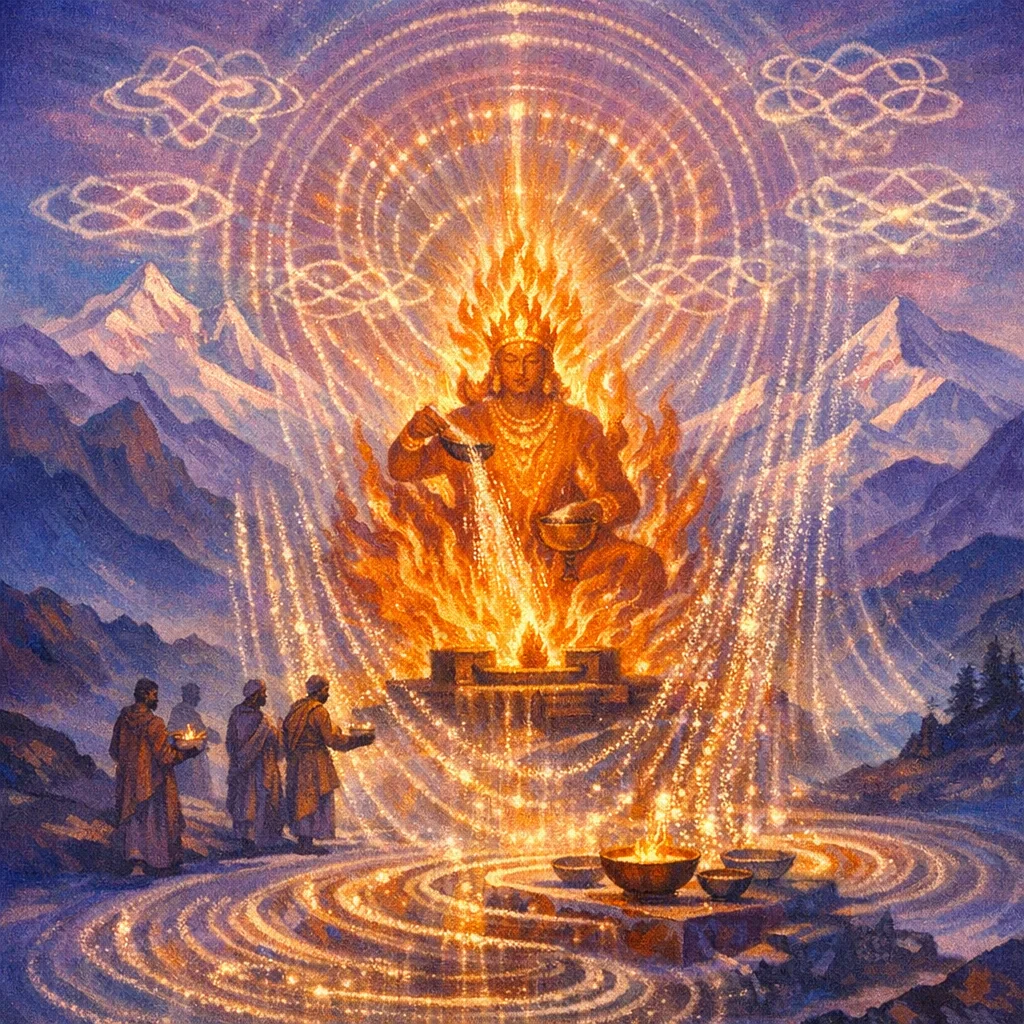
Agni’s ritual pre-eminence and the enlivening power that sustains the sacrifice
Agni
Elevated and proclamatory with a consecratory (abhisecana-like) undercurrent
Individual ṛṣi attributions require concordance with the corresponding Ṛgvedic sources; this dashati appears to combine Agni praise with Aindra/Soma ritual imagery typical of mixed Uttarārcika selections.
Applicable to Soma-yajña contexts where Agni’s presidency and Soma-pressing operations are foregrounded (sprinkling of the trough/well and pressing apparatus imagery).
Mantras
Mantra 1
गाव उप वदावटे महि यज्ञस्य रप्सुदा उभा कर्णा हिरण्यया
The kine draw nigh unto the utterer (of praise), bestowers of swift gifts, (adorning) the great sacrifice; both its ears are golden.
Mantra 2
अभ्यारमिदद्रयो निषिक्तं पुष्करे मधु अवटस्य विसर्जने
I draw nigh unto the steadfast (agents of the rite), where the sweet (Soma) is poured into the basin, at the outletting of the trough.
Mantra 3
उदग्ने शुचयस्तव शुक्रा भ्राजन्त ईरते तव ज्योतींष्यर्चयः
Up rise, O Agni, thy pure and brilliant (flames), shining they are set in motion; thy lights are (as) radiances of praise.
Frequently Asked Questions
It presents Agni as the foremost power of the sacrifice—cosmic in stature and ritually central—who energizes the waters and ensures the rite proceeds effectively and without loss.
Samavedic selections often pair praise with ritual action imagery. Terms like sprinkling the trough/well and references to implements point to Soma-pressing procedures understood as sacred, power-bearing acts.
Stobhas mainly serve musical and liturgical purposes—marking structure, cadence, and expansion for melody. They usually do not change the core meaning of the ṛc-text, but they shape how it is sung in ritual.