Dashati 20
Indra empowered by Soma-exhilaration (mada/matsara) to grant victory and wealth
Indra
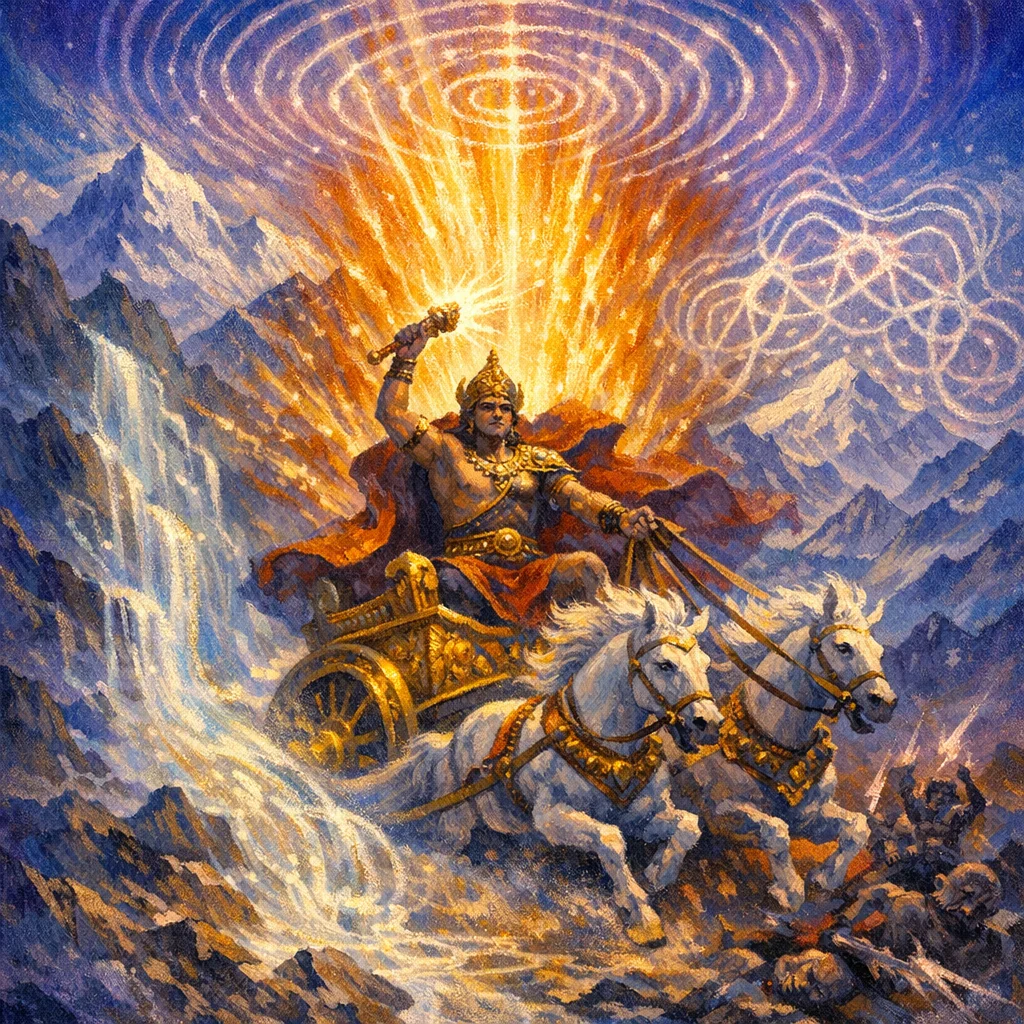
Exultant martial and triumphant—built on the imagery of surging Soma-power and battle-victory
Ṛṣi attribution and chandas are not supplied here; they require Rigvedic concordance for the underlying RV originals used by this Sāmavedic selection.
Soma-cup (pātra/camasa) imagery is explicit; the verses suit Soma-offering moments where Indra’s ‘mada’ is ritually generated and transferred as benefit to the sacrificer.
Mantras
Mantra 1
मत्स्यपायि ते महः पात्रस्येव हरिवो मत्सरो मदः वृषा ते वृष्ण इन्दुर्वाजी सहस्रसातमः
Harivat, the mighty exhilaration, as it were from the vessel, is an impetuous rapture; the Soma-drop, bull-like for the Bull (Indra), is the giver of strength, the most victorious in the winning of thousands.
Mantra 2
आ नस्ते गन्तु मत्सरो वृषा मदो वरेण्यः सहावां इन्द्र सानसिः पृतनषाडमर्त्यः
May thy exhilarating impulse come unto us; the vigorous, excellent rapture: Indra, endowed with might, the giver of gains, the subduer of battles, the immortal.
Mantra 3
त्वं हि शूरः सनिता चोदयो मनुषो रथम् सहावान्दस्युमव्रतमोषः पात्रं न शोचिषा
For thou, Indra, art the hero, the winner; thou impellest the chariot of man; mighty, the spoiler of the Dasyu, the despoiler of the vowless; (thou shinest) with splendour, as a vessel (glitters).
Frequently Asked Questions
It celebrates Soma’s ritual exhilaration (mada/matsara) as the power that makes Indra victorious—bringing battle-success, protection, and abundant gains to the sacrificer.
The ‘pātra’ points to the Soma-cup used in the rite; the imagery stresses that Indra’s strength and the sacrificer’s benefits arise from a concrete sacrificial act, not from emotion alone.
They represent opponents of Vedic order—those without observance (a-vrata) and hostile forces (Dasyu). The hymn frames Indra’s victory as both martial and moral-ritual protection for the yajamāna.