Dashati 19
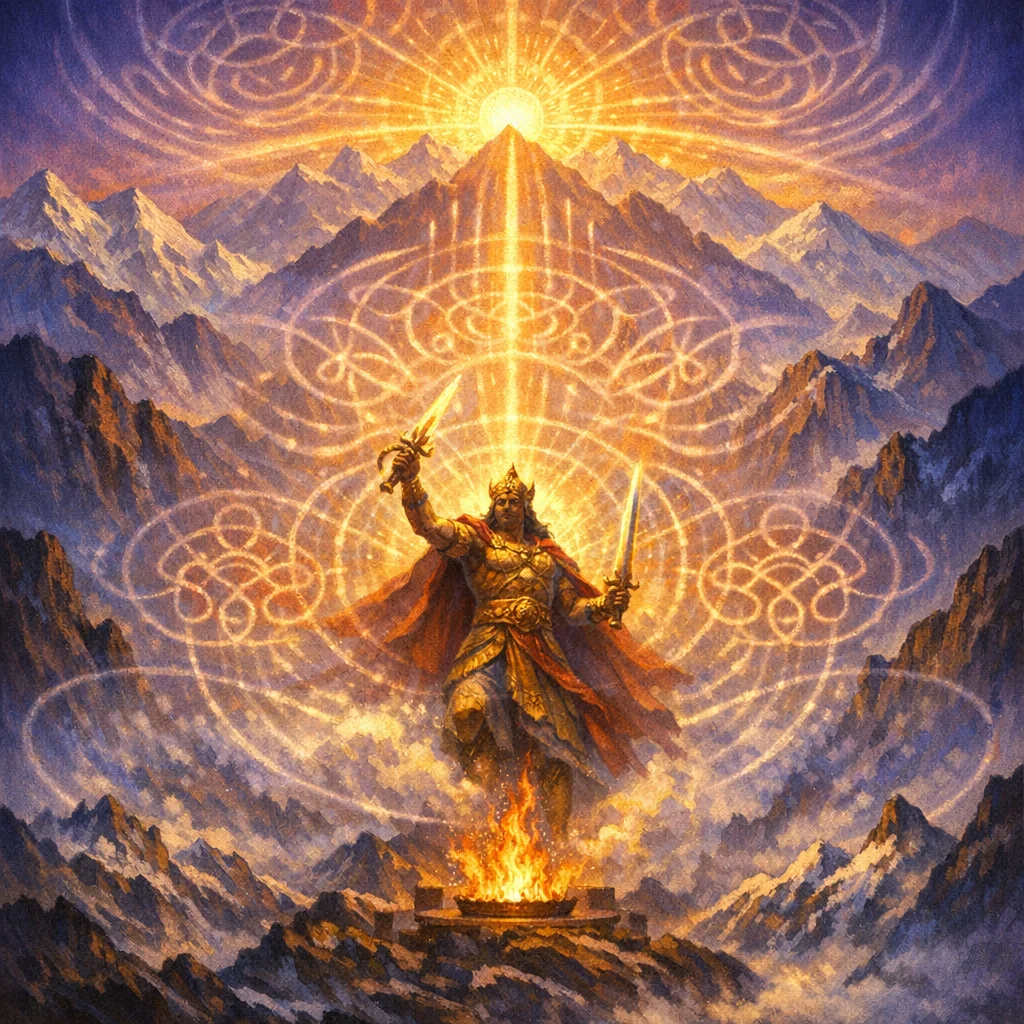
Indra’s primordial birth as Vṛtra-slayer and world-establisher
Indra
Heroic and elevating (vīra–udātta) moving toward radiant ‘heat’ (tapas) in praise
R̥ṣi attribution is not provided in the input; the verses function as Aindra praise typical of Indra-centered hymn strata where the ritual voice is foregrounded over explicit family colophons.
Soma praise to Indra as the principal recipient of Soma and as the power who overcomes obstruction (vṛtra) to release prosperity and flow.
Mantras
Mantra 1
यज्जायथा अपूर्व्य मघवन्वृत्रहत्याय तत्पृथिवीमप्रथयस्तदस्तभ्ना उतो दिवम्
When thou wast born, O unprecedented (hero), O bountiful Indra, for the slaying of Vṛtra, then didst thou expand the earth, and then didst thou uphold also the heaven.
Mantra 2
तत्ते यज्ञो अजायत तदर्क उत हस्कृतिः तद्विश्वमभिभूरसि यज्जातं यच्च जन्त्वम्
Thence was thy sacrifice produced; thence the hymn, and thence the exulting acclamation: therefore art thou the subduer of all—of whatever is born, and of whatever is living.
Mantra 3
आमासु पक्वमैरय आ सूर्यं रोहयो दिवि घर्मं न सामं तपता सुवृक्तिभिर्जुष्टं गिर्वणसे बृहत्
Among the unripe (conditions) thou didst raise up the ripe; thou didst cause the sun to ascend in heaven; like heat (gharma) thou didst make the Sāman glow with well-uttered praises—(a chant) acceptable to the hymn-praised (Indra), the great (one).
Frequently Asked Questions
It celebrates Indra’s ‘unprecedented’ birth for the slaying of Vṛtra and presents him as the force that establishes cosmic order—expanding earth, supporting heaven, and empowering sacrifice and chant.
The verses present the rite and its praises as arising in relation to Indra’s power, so his sovereignty is shown not only in battle but also in making ritual speech and worship effective.
It compares the chant’s energized potency to heat (gharma): well-uttered praises give the Sāman a kind of tapas (ardour) that becomes pleasing and powerful for Indra (girvaṇas).