Dashati 13
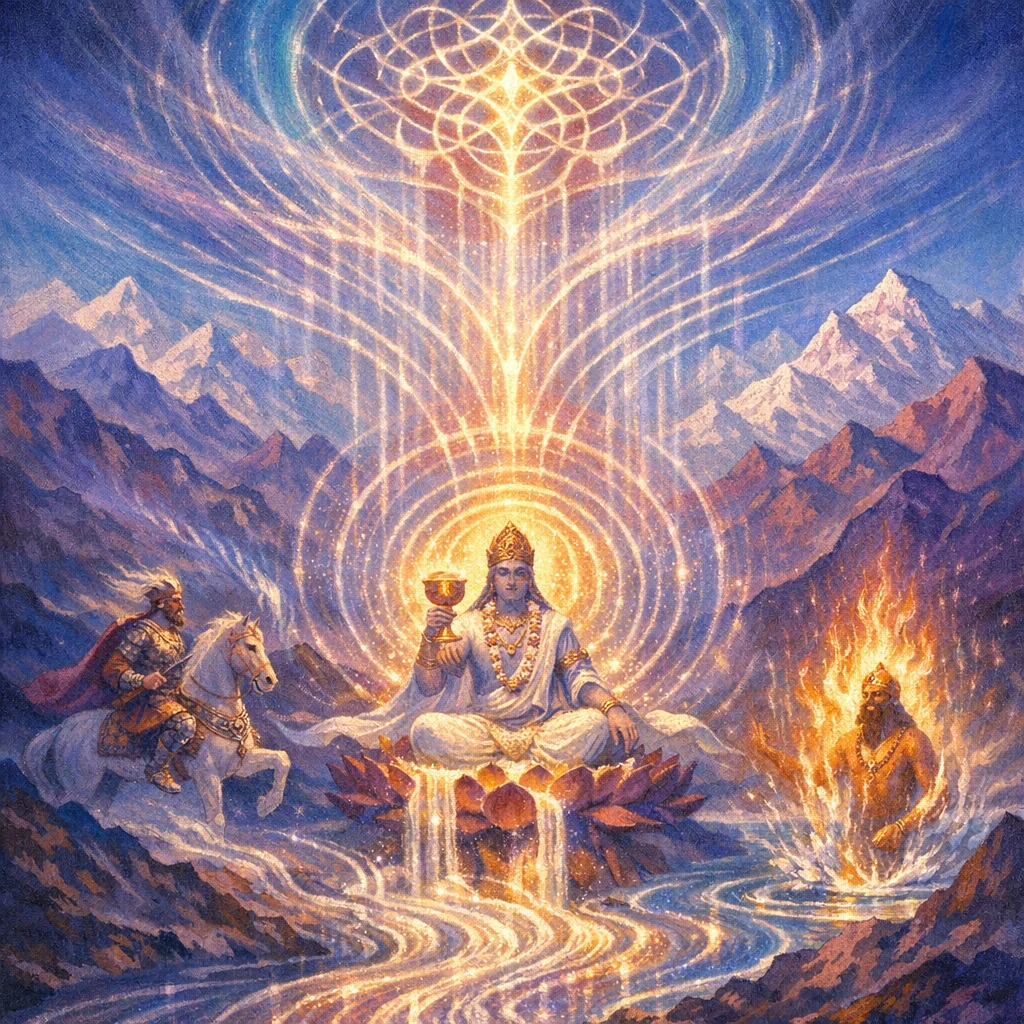
Pavamāna Soma as the yoked, wealth-bestowing, heaven-winning oblation empowered by chant and purification
Soma Pavamāna
Elevating and victorious—bright purification leading to exultant offering
R̥ṣi attribution is not fixed from the provided data; the material belongs to the Soma-pavamāna stream where verses are drawn from multiple RV seers and arranged for Sāman performance by the śākhā.
Applied to the Soma pressing and filtration (pavamāna) where the offering is prepared and celebrated as fit for Indra and the gods.
Mantras
Mantra 1
यजिष्ठं त्वा ववृमहे देवं देवत्रा होतारममर्त्यम् अस्य यज्ञस्य सुक्रतुम्
Agni, most meet for sacrifice, thee do we choose, the god, the Hotṛ among the gods, immortal, of wise and faultless ritual for this our sacrifice.
Mantra 2
स ईं रथो न भुरिषाडयोजि महः पुरूणि सातये वसूनि आदीं विश्वा नहुष्याणि जाता स्वर्षाता वन ऊर्ध्वा नवन्त
He, even Soma, like a chariot richly furnished, hath been yoked; (he is) great, (bringing) manifold riches to be won: from the beginning all human (desires) are generated (by him); he is the giver of heaven; and, uplifted, they do him homage.
Mantra 3
शुष्मी शर्धो न मारुतं पवस्वानभिशस्ता दिव्या यथा विट् आपो न मक्षू सुमतिर्भवा नः सहस्राप्साः पृतनाषाण्न यज्ञः
Powerful (Soma), purify thyself like the Marut host, unreviled and divine; like waters (that cleanse), quickly become to us benign in thought; abundant in streams, a conqueror in conflicts, (be thou) as our sacrifice (prevailing).
Frequently Asked Questions
It praises Soma as he is pressed and purified, then offered as a powerful, heaven-winning drink—especially for Indra—bringing strength, prosperity, and divine support.
Indra is the chief drinker of Soma in many rites; inviting him to drink means inviting divine power to “yoke” to the sacrifice, making the offering effective and fruitful.
Apām Napāt (“child of the waters”) expresses a bright, hidden fire/light within waters; invoking him suits the purification setting and asks that worship reach the gods and secure Mitra–Varuṇa’s favour.