Prapathaka 1
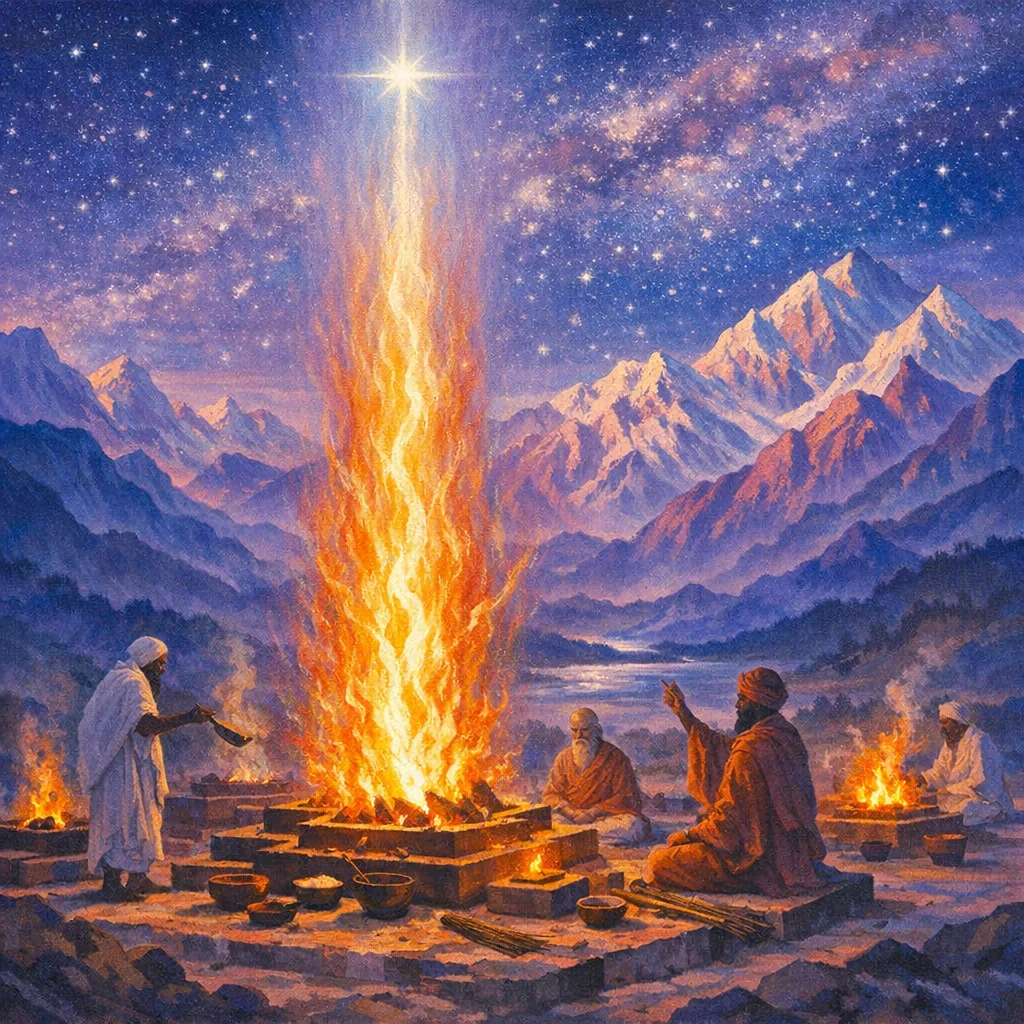
Darśa–Pūrṇamāsa (New- and Full-Moon sacrifices) within the Śrauta Agnihotra–Iṣṭi cycle; preparatory and consecratory acts around the three sacred fires (Āhavanīya, Gārhapatya, Dakṣiṇāgni) and the opening movements of the monthly iṣṭi sequence.
Kṛṣṇa Yajurveda Taittirīya Saṃhitā 2.1 stands at the threshold of the monthly iṣṭi system, situating the Darśa–Pūrṇamāsa rites within the broader maintenance of the three fires and the yajamāna’s regulated sacrificial life. The chapter’s prose mantras articulate the ritual grammar by which offerings are authorized: the fires are addressed as living recipients, the implements and spaces are sacralized, and the sacrificer is ritually aligned with cosmic order (ṛta) through formulaic identifications. The prapāṭhaka emphasizes correct sequencing—invocation, establishment, offering, and concluding pacification—so that the iṣṭi becomes a controlled transformation of food, breath, and speech into oblation. Theologically, it advances the Brāhmaṇa-style premise that efficacy depends on precise verbal performance: mantras do not merely accompany action but constitute it. The chapter thus functions as a liturgical hinge, moving from fire-cult maintenance to the structured monthly sacrifice.
Anuvakas
Anuvakas for this prapathaka are loading. Please check back soon.