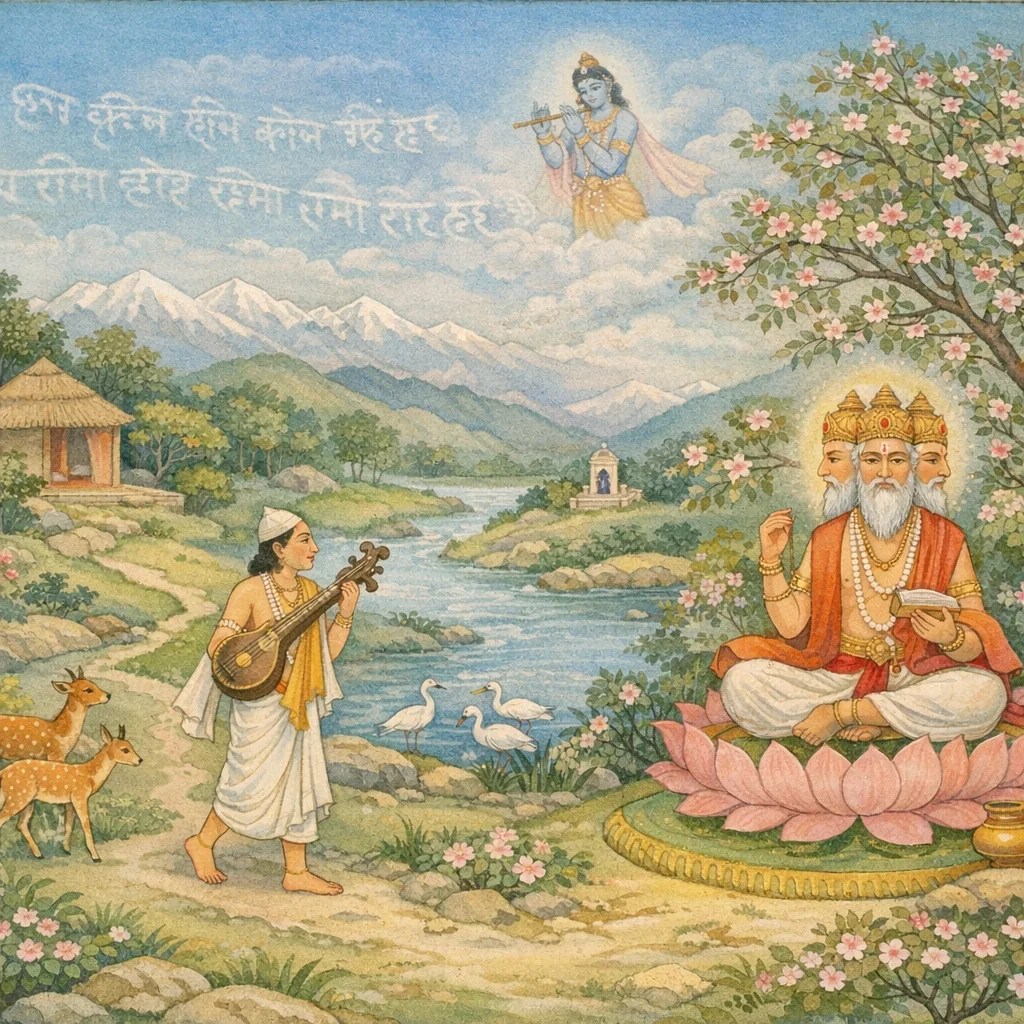
Kalisantarana
กาลิสันตระณะอุปนิษัท (Kalisantarana Upanishad) สังกัดกฤษณะยชุรเวท เป็นอุปนิษัทที่สั้นแต่ทรงอิทธิพลอย่างยิ่ง นำเสนอในรูปสนทนาระหว่างนารทกับพระพรหม โดยชี้หนทาง “ข้ามพ้น” (สันตระณะ) ความเสื่อมและความฟุ้งซ่านแห่งกลียุค ผ่านการภาวนาและสวดหมู่มหามนต์ “ฮาเร กฤษณะ” แก่นปรัชญาสำคัญคือแนวคิดความไม่แยกจากกันระหว่าง “นาม” กับ “ผู้มีนาม” (nama–namin): พระนามเป็นการประจักษ์ของความศักดิ์สิทธิ์เอง จึงเป็นวิธีชำระจิตและนำสู่โมกษะ ในประวัติศาสตร์สายภักติ โดยเฉพาะคเณียไวษณพ (Gaudiya Vaishnava) ข้อความนี้ถูกอ้างอิงบ่อยในฐานะหลักฐานศรุติของสังกีรตนะ
Key Teachings
- Kali-yuga as a spiritual condition marked by diminished capacity for complex ritual and austerity
- Nāma (the divine Name) as a direct means (sādhana) for purification and liberation (mokṣa)
- The Hare Kṛṣṇa mahāmantra presented as the principal “tāraṇa” (crossing-over) mantra for Kali-yuga
- Nāma-nāmin abheda: the Name is non-different from the divine reality it signifies
- Japa/saṅkīrtana as practical Vedāntic discipline: remembrance (smaraṇa) leading to inner transformation
- Accessibility of liberation through sound (śabda) and grace (anugraha)
not restricted by ritual status
- Mantra as both means and presence: sustained recitation dissolves impurities (pāpa/kleśa) and stabilizes devotion
Verses of the Kalisantarana
Explore the verses of this Upanishad.
No verses available for this Upanishad yet.