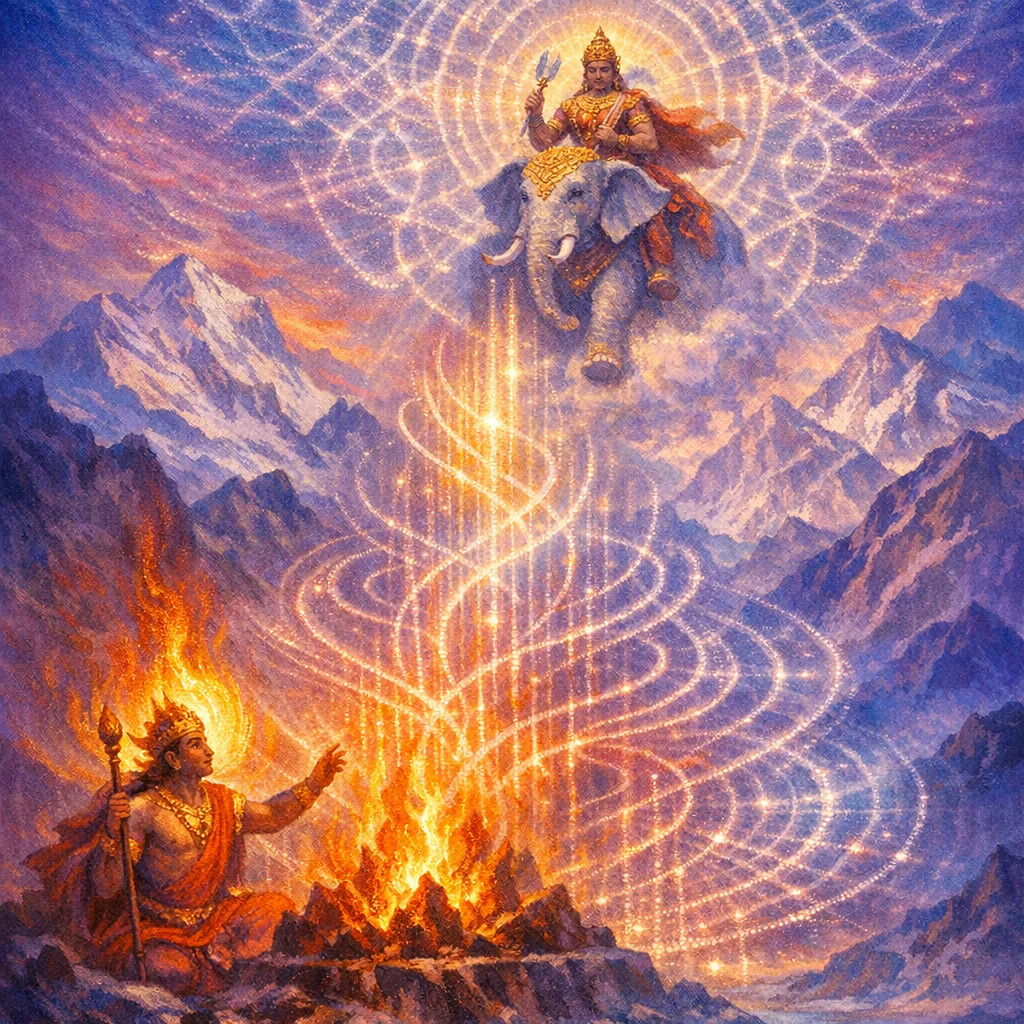
Dashati 13
Aindra invocation framed through Agni’s role as summoner and protector of the sacrifice
Indra (Aindra frame) with Agni as the operative invoker
Invocatory and auspicious—urgent calling that resolves into reassurance and protection
Rṣi not provided in the input; identification would require matching each mantra to its Rigvedic source-hymn and traditional anukramaṇī data.
บทสรรเสริญในกรอบไอन्द्रะ โดยมีอัคนีเป็นผู้เชื้อเชิญและผู้คุ้มครองพิธีโสมะ: เรียก “บุตร/สหายแห่งอมฤตะ” และหมู่เทพทั้งปวงให้มารับฟังสามัน; ยกอัคนีผู้ชำระให้บริสุทธิ์ ผู้เป็นลิ้นของเทพ และทูตผู้นำเทพมาสู่ยัญญะ; วอนขอสุมัติ (ความกรุณา/จิตใจอันเอื้อเฟื้อ) และไตรวรุธะ (ความคุ้มครองสามชั้น) เพื่อให้เทพเมตตาต่อผู้ขับร้อง และประทานพรพร้อมความปลอดภัยผ่านการนำพาของอัคนี.
Mantras
Mantra 1
अग्ने पावक रोचिषा मन्द्रया देव जिह्वया आ देवान्वक्षि यक्षि च
อัคนี (Agni) ผู้ชำระให้บริสุทธิ์ ด้วยรัศมีของท่าน ด้วยลิ้นทิพย์อันชื่นบานของเทพ โปรดนำเหล่าเทพมาสู่ที่นี้ และโปรดบูชายัญถวายแด่ท่านเหล่านั้นเถิด.
Mantra 2
त्वां दूतमग्ने अमृतं युगेयुगे हव्यवाहं दधिरे पायुमीड्यम् देवासश्च मर्त्तासश्च जागृविं विभुं विश्पतिं नमसा नि षेदिरे
โอ อัคนี พระองค์คือทูตอมตะ ผู้หอบหิ้วเครื่องบูชา (havyavāha) ผู้คุ้มครอง ผู้ควรสรรเสริญ; เหล่าเทพและมนุษย์ได้สถาปนาพระองค์ไว้ในทุกยุคทุกสมัย. ผู้ตื่นรู้อยู่เสมอ ผู้ยิ่งใหญ่ทรงฤทธิ์ เจ้าแห่งหมู่ชน (viśpati) เขาทั้งหลายเชิญประทับด้วยนมัสการ (namas).
Mantra 3
विभूषन्नग्न उभयां अनु व्रता दूतो देवानां रजसी समीयसे यत्ते धीतिं सुमतिमावृणीमहे ऽध स्मा नस्त्रिवरूथः शिवो भव
โอ อัคนีผู้รุ่งเรือง ผู้ตามสัตย์บัญญัติ (vrata) แห่งทั้งสองภพ; ในฐานะทูตของเหล่าเทพ พระองค์เคลื่อนไปในสองห้วงนภา. ครั้นเราทั้งหลายเลือกความตั้งมั่นแห่งจิต (dhīti) และไมตรีอันงาม (sumati) ของพระองค์แล้ว ขอพระองค์จงเป็นผู้เกื้อกูล อ่อนโยน เป็นมงคลแก่เรา พร้อมด้วยการคุ้มครองสามชั้น.
Frequently Asked Questions
Because Agni functions as the ritual messenger (dūta) and conveyer: he brings the gods—Indra included—to the sacrifice and enables offering (yajana).
In traditional interpretation (e.g., Sāyaṇa), they are divine associates/attendants of the gods who come to the sacrifice; ritually, they represent the wider divine company invited to hear the chant.
It is a plea for comprehensive safeguarding; commentators explain it as protection in three ways (often mapped to three domains of affliction or to the threefold ritual order), concluding with the request that Agni be śiva—benign.