Adhyaya 101: Purūravas Tīrtha and the Sarasvatī–Gaṅgā Confluence: Visibility, Curse, and Boon
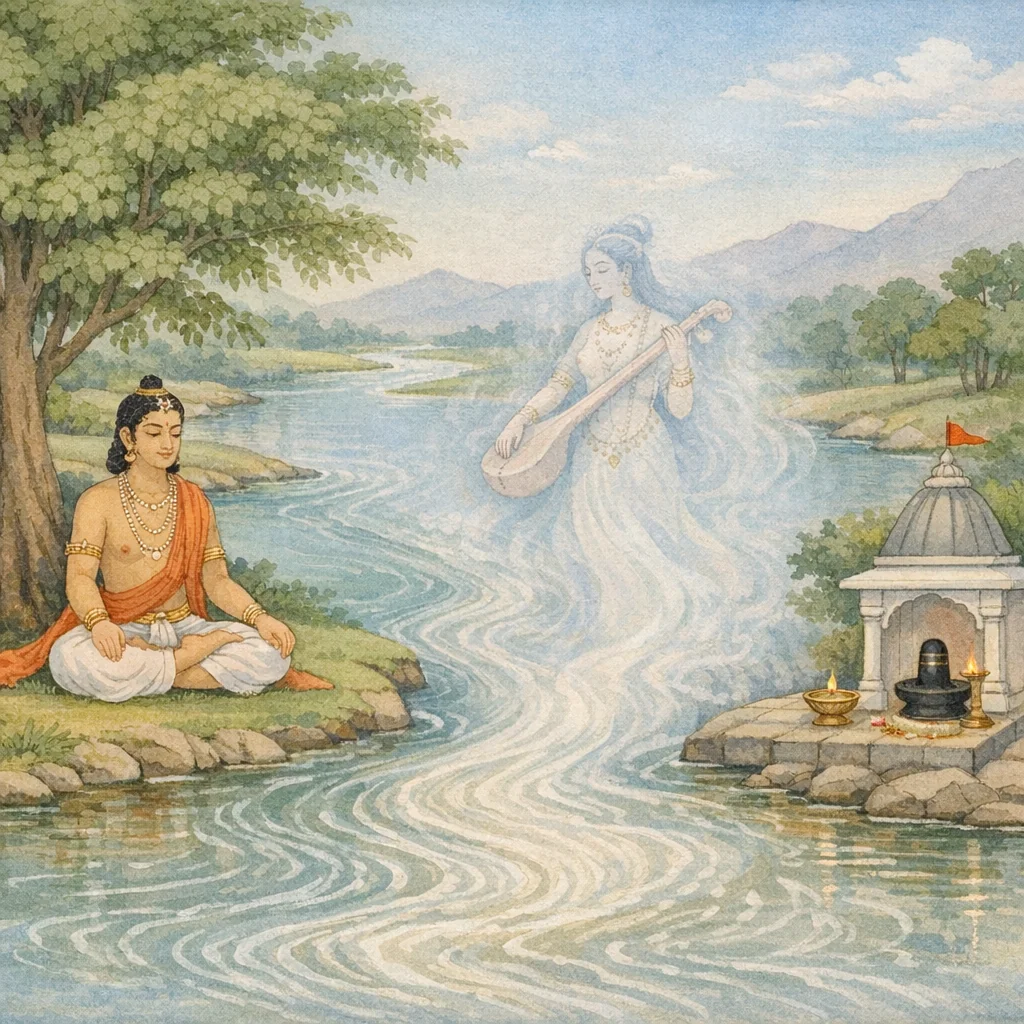
อัธยายะ 101 กล่าวถึงกำเนิดและมหิมาของตฤถะชื่อ “ปุรูรวสํ” โดยเน้นอานุภาพชำระบาปของการระลึกถึง (สมรณะ) และการได้เห็นโดยตรง (ทัรศนะ) ในสภาของพระพรหม พระเจ้าปุรูรวาสได้พบอุรวศีผู้รุ่งเรือง และทราบว่านางนั้นแท้จริงคือพระสรัสวตี ธิดาของพระพรหม ผู้มาและไปอย่างลี้ลับ บางคราวปรากฏ บางคราวเร้นกาย ด้วยการเป็นสื่อของอุรวศี พระสรัสวตียอมติดตามพระราชา ก่อให้เกิดเหตุการณ์ต่อเนื่องจนถึงคำสาปทิพย์และการบรรเทาบางส่วน—ในหมู่มนุษย์พระสรัสวตีเป็นทั้งปรากฏ–ไม่ปรากฏ และกล่าวกันว่าเสด็จไปรวมกับพระคงคาที่สังฆมะแห่งหนึ่งโดยเฉพาะ ณ ที่นั้นพระเจ้าปุรูรวาสบำเพ็ญตบะและบูชาพระศิวะในนาม “สิทธेशวร” แล้วได้รับความสมปรารถนาด้วยพระกรุณาของพระคงคา บทนี้จึงสถาปนานาม “ปุรูรวสํ” ระบุสังฆมะสรัสวตี–คงคาเป็น “พรหมตฤถะ” และยกสิทธेशวรเป็นเทวะประธานผู้ประทานพรของสถานที่นั้น
Chapter Arc
{"opening_hook":"The chapter opens in Brahmā’s sabhā with a sudden flash of beauty and wonder: Purūravas beholds the radiant Urvaśī and is drawn into a mystery of identity and presence—who is this dazzling figure, and why does she appear and vanish?","rising_action":"Curiosity becomes pursuit: Purūravas learns (through the courtly mediation of Urvaśī) that the splendor is Sarasvatī herself, Brahmā’s daughter, marked by a strange rhythm of visibility/invisibility. The king’s request and Sarasvatī’s consent set the narrative in motion toward the riverine landscape, where divine movement becomes sacred geography.","climax_moment":"The etiological revelation: a curse-and-boon logic explains Sarasvatī’s dṛśyā–adṛśyā condition among mortals and fixes her meeting with Gaṅgā at a specific saṅgama. The confluence is declared Brahma-tīrtha, and the chapter’s central teaching crystallizes—smaraṇa and darśana of the tīrtha destroy sin, with direct encounter implicitly supreme.","resolution":"Purūravas performs tapas and worship at the saṅgama, venerating Śiva as Siddheśvara; by Gaṅgā’s prasāda his desires are fulfilled. The site’s ritual identity is sealed: the saṅgama is Brahma-tīrtha, Siddheśvara is the wish-bestowing presiding deity, and the place-name Purūravasam is established as a lasting tīrtha-mahātmya.","key_verse":null}
Thematic Essence
{"primary_theme":"Tīrtha-mahātmya and sacred etiology of Purūravasam (Sarasvatī–Gaṅgā saṅgama as Brahma-tīrtha)","secondary_themes":["Smaraṇa vs darśana: graded efficacy of contact with sacred space","Dṛśyā–adṛśyā divinity: curse–boon as explanation for intermittent visibility","River-confluence theology: sanctity generated by meeting of śaktis","Śaiva integration: Siddheśvara as wish-bestowing guardian of the tīrtha"],"brahma_purana_doctrine":"A distinctive tīrtha-doctrine is asserted: even mere remembrance of Purūravasam destroys sin, while the confluence’s direct darśana and worship (especially of Siddheśvara) yields kāmya-phala—desire-fulfillment—through Gaṅgā’s prasāda.","adi_purana_significance":"As ‘Adi Purāṇa,’ the text models how primordial divine narratives become mapped onto terrestrial geography: a courtly episode in Brahmā’s sphere is converted into a permanent ritual topography (name, deity, saṅgama, and promised fruits), exemplifying Purāṇic world-making."}
Emotional Journey
{"opening_rasa":"अद्भुत (adbhuta)","climax_rasa":"अद्भुत (adbhuta)","closing_rasa":"शान्त (shanta)","rasa_transitions":["adbhuta → शृङ्गार (shringara) → adbhuta → भयानक (bhayanaka) → शान्त (shanta)"],"devotional_peaks":["Purūravas’s turn from fascination to reverent petition once Sarasvatī’s identity is revealed","The declaration of the saṅgama as Brahma-tīrtha (sacral naming as a bhakti-peak)","Purūravas’s tapas and worship of Siddheśvara culminating in boon and inner settling (śānti)"]}
Tirtha Focus
{"tirthas_covered":["पुरूरवस-तीर्थ / पुरूरवसम् (Purūravasam Tīrtha)","सरस्वती-गङ्गा-सङ्गम (Sarasvatī–Gaṅgā confluence)","ब्रह्मतीर्थ (Brahma-tīrtha)","सिद्धेश्वर-स्थान (Siddheśvara shrine/site)"],"jagannath_content":null,"surya_content":null,"cosmology_content":null}
Shlokas in Adhyaya 101
Verse 1
ब्रह्मोवाच पुरूरवसम् आख्यातं तीर्थं वेदविदो विदुः स्मरणाद् एव पापानां नाशनं किं तु दर्शनात् //
โศลกแรก—ณ ที่นี้กระแสพระวจนะปุราณะอันศักดิ์สิทธิ์เริ่มต้นขึ้น
Verse 2
पुरूरवा ब्रह्मसदः प्राप्य तत्र सरस्वतीम् यदृच्छया देवनदीं हसन्तीं ब्रह्मणो ऽन्तिके तां दृष्ट्वा रूपसंपन्नाम् उर्वशीं प्राह भूपतिः //
โศลกที่สอง—สัจธรรมถูกกล่าวเพื่อธรรมะ; ควรสดับด้วยศรัทธา
Verse 3
राजोवाच केयं रूपवती साध्वी स्थितेयं ब्रह्मणो ऽन्तिके सर्वासाम् उत्तमा योषिद् दीपयन्ती सभाम् इमाम् //
โศลกที่สาม—ปุราณะคือสาระแห่งความหมายพระเวท และเป็นประโยชน์เกื้อกูลแก่โลก
Verse 4
ब्रह्मोवाच उर्वशी प्राह राजानम् इयं देवनदी शुभा सरस्वती ब्रह्मसुता नित्यम् एति च याति च तच् छ्रुत्वा विस्मितो राजा आनयेमां ममान्तिकम् //
โศลกที่สี่—ผู้ใดสวดอ่านหรือสดับ ย่อมได้รับผลแห่งบุญกุศล
Verse 5
ब्रह्मोवाच उर्वशी पुनर् अप्य् आह राजानं भूरिदक्षिणम् //
โศลกที่ห้า—กล่าวโดยสังเขปเพียงเท่านี้; ส่วนที่เหลือจักขยายความต่อไป
Verse 6
उर्वश्य् उवाच आनीयते महाराज तस्याः सर्वं निवेद्य च //
บทที่ 101 โศลก 6—ที่นี่ไม่ได้ให้บทสันสกฤตต้นฉบับ จึงไม่อาจแปลได้อย่างถูกต้องตามความหมายเดิม
Verse 7
ब्रह्मोवाच ततस् तां प्राहिणोत् तत्र राजा प्रीत्या तदोर्वशीम् सा गत्वा राजवचनं न्यवेदयद् अथोर्वशी //
บทที่ 101 โศลก 7—เมื่อไม่มีต้นฉบับสันสกฤต จึงไม่สามารถแปลความหมายได้อย่างเหมาะสม
Verse 8
सरस्वत्य् अपि तन् मेने उर्वश्या यन् निवेदितम् सा तथेति प्रतिज्ञाय प्रायाद् यत्र पुरूरवाः //
บทที่ 101 โศลก 8—ไม่ได้ระบุบทต้นฉบับ จึงไม่อาจจัดทำคำแปลที่เชื่อถือได้
Verse 9
सरस्वत्यास् ततस् तीरे स रेमे बहुलाः समाः सरस्वान् अभवत् पुत्रो यस्य पुत्रो बृहद्रथः //
บทที่ 101 โศลก 9—มีเพียงตัวเลข ไม่มีโศลกต้นฉบับ จึงไม่สามารถแปลได้
Verse 10
तां गच्छन्तीं नृपगृहं नित्यम् एव सरस्वतीम् सरस्वन्तं ततो लक्ष्म ज्ञात्वान्येषु तथा कृतम् //
บทที่ 101 โศลก 10—ไม่ปรากฏโศลกสันสกฤตต้นฉบับ จึงไม่สามารถจัดทำคำแปลที่ถูกต้องได้
Verse 11
तस्यै ददाव् अहं शापं भूया इति महानदी मच्छापभीता वागीशा प्रागाद् देवीं च गौतमीम् //
คาถาที่ ๑๑—ที่นี่ไม่ได้ระบุบทต้นฉบับ จึงปรากฏเพียงเลข ‘๑๑’ เท่านั้น
Verse 12
कमण्डलुभवां पूतां मातरं लोकपावनीम् तापत्रयोपशमनीम् ऐहिकामुष्मिकप्रदाम् //
คาถาที่ ๑๒—ไม่มีบทต้นฉบับให้ จึงแสดงเพียงเลข ‘๑๒’ เท่านั้น
Verse 13
सा गत्वा गौतमीं देवीं प्राह मच्छापम् आदितः गङ्गापि माम् उवाचेदं विशापां कर्तुम् अर्हसि //
คาถาที่ ๑๓—มิได้ให้บทต้นฉบับ จึงเห็นเพียงเลข ‘๑๓’ เท่านั้น
Verse 14
न युक्तं यत् सरस्वत्याः शापं त्वं दत्तवान् असि स्त्रीणाम् एष स्वभावो वै पुंस्कामा योषितो यतः //
คาถาที่ ๑๔—ไม่มีถ้อยคำต้นฉบับของคาถา ปรากฏเพียงเลข ‘๑๔’ เท่านั้น
Verse 15
स्वभावचपला ब्रह्मन् योषितः सकला अपि त्वं कथं तु न जानीषे जगत्स्रष्टाम्बुजासन //
คาถาที่ ๑๕—มิได้แสดงบทคาถาต้นฉบับ มีเพียงเลข ‘๑๕’ ที่ระบุไว้
Verse 16
विडम्बयति कं वा न कामो वापि स्वभावतः ततो विशापम् अवदं दृश्यापि स्यात् सरस्वती //
คาถาที่ ๑๖—ไม่ได้ให้ต้นฉบับสันสกฤต จึงไม่อาจแปลอย่างถูกต้องได้
Verse 17
तस्माच् छापान् नदी मर्त्ये दृश्यादृश्या सरस्वती यत्रैषा संगता देवी गङ्गायां शापविह्वला //
คาถาที่ ๑๗—ไม่ได้ให้ต้นฉบับสันสกฤต จึงไม่อาจแปลอย่างถูกต้องได้
Verse 18
तत्र प्रायान् नृपवरो धार्मिकः स पुरूरवाः तपस् तप्त्वा समाराध्य देवं सिद्धेश्वरं हरम् //
คาถาที่ ๑๘—ไม่ได้ให้ต้นฉบับสันสกฤต จึงไม่อาจแปลอย่างถูกต้องได้
Verse 19
सर्वान् कामान् अथावाप गङ्गायाश् च प्रसादतः ततः प्रभृति तत् तीर्थं पुरूरवसम् उच्यते //
คาถาที่ ๑๙—ไม่ได้ให้ต้นฉบับสันสกฤต จึงไม่อาจแปลอย่างถูกต้องได้
Verse 20
सरस्वतीसंगमं च ब्रह्मतीर्थं तद् उच्यते सिद्धेश्वरो यत्र देवः सर्वकामप्रदं तु तत् //
คาถาที่ ๒๐—ไม่ได้ให้ต้นฉบับสันสกฤต จึงไม่อาจแปลอย่างถูกต้องได้
Frequently Asked Questions
The chapter’s central theme is tīrtha-mahātmya grounded in sacred topography: sin-destruction through smaraṇa and darśana of a named pilgrimage site, and the efficacy of tapas and deity-worship (Śiva as Siddheśvara) at a river confluence to obtain legitimate aims (kāma) under divine sanction.
Adhyāya 101 establishes the Sarasvatī–Gaṅgā saṅgama as Brahma-tīrtha and connects it to the named site Purūravasam. Its significance lies in providing an etiology for Sarasvatī’s intermittent visibility among mortals and in identifying the confluence as a locus where Śiva (Siddheśvara) grants boons, thereby integrating Vaiṣṇava-agnostic tīrtha praise with Śaiva ritual presence.
The chapter implies pilgrimage to Purūravasam/Brahma-tīrtha for purification—beginning with smaraṇa and culminating in darśana—and models a practice of austerity (tapas) and worship of Siddheśvara Śiva at the Sarasvatī–Gaṅgā confluence to seek ‘sarvakāma’ fulfillment, framed as obtained through Gaṅgā’s prasāda.