
Bhagavad Gita — Vibhuti Yoga, Shloka 18
Vibhuti Yoga
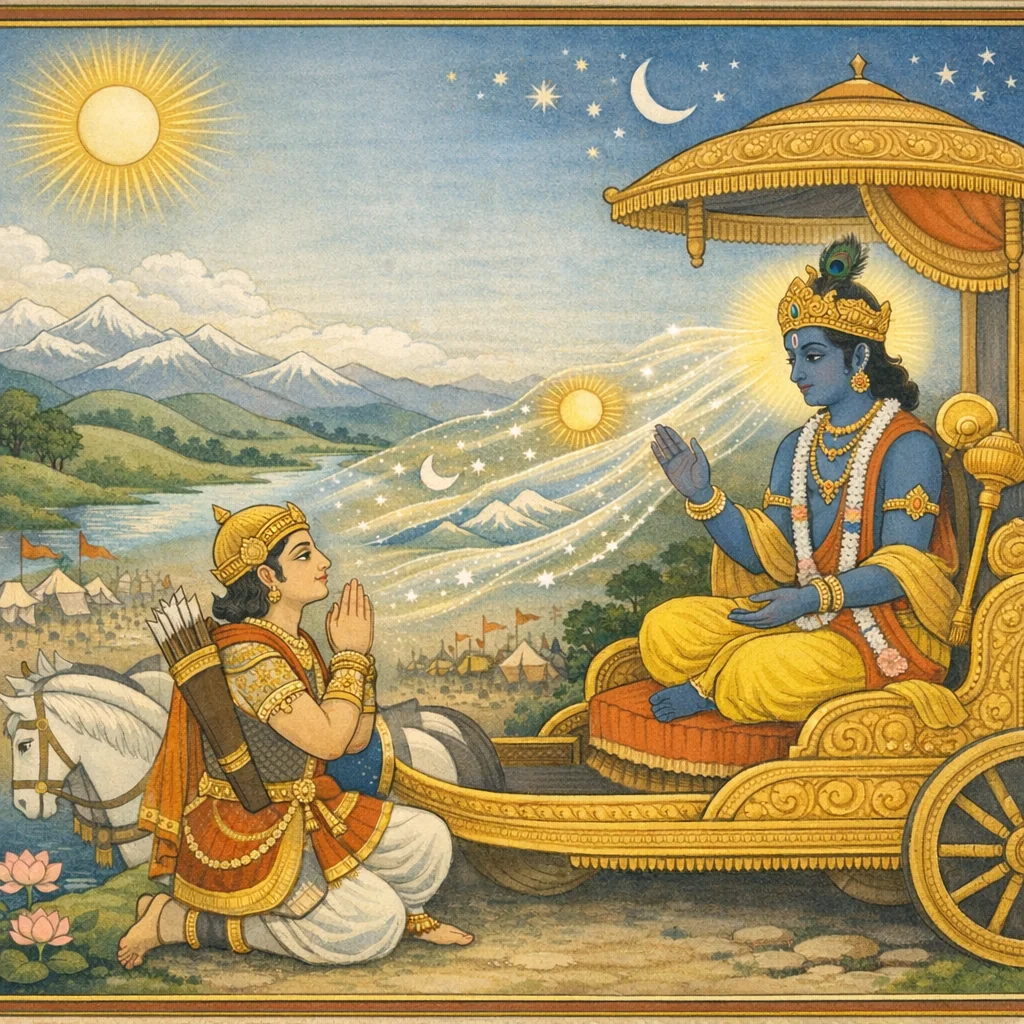
विस्तरेणात्मनो योगं विभूतिं च जनार्दन । भूयः कथय तृप्तिर्हि शृण्वतो नास्ति मेऽमृतम् ॥ १०.१८ ॥
vistareṇātmano yogaṁ vibhūtiṁ ca janārdana | bhūyaḥ kathaya tṛptir hi śṛṇvato nāsti me ’mṛtam || 10.18 ||

ข้าแต่ชนารทนะ โปรดตรัสอธิบายอีกครั้งโดยพิสดารถึงโยคะของพระองค์และวิภูติของพระองค์ เพราะแม้ได้ฟังถ้อยคำอันดุจอมฤตของพระองค์ ข้าพเจ้าก็มิอิ่มเอม
Explain again in detail, O Janārdana, Your yoga and (Your) manifestations; for I am not satisfied while hearing your nectar-like words.
Tell again, in detail, your yoga and your manifestations, Janārdana; for as I listen, there is no satiation for me—(it is) nectar.
Amṛta is metaphorical (‘nectar’ as delight/immortality-associated sweetness). Some translations supply ‘words’ or ‘speech’ as the implicit object; the Sanskrit emphasizes Arjuna’s inexhaustible desire to hear the teaching.
FAQs
It depicts intrinsic motivation in learning: when teaching resonates deeply, attention and curiosity are sustained, and repetition becomes reinforcing rather than tedious.
The ‘nectar’ metaphor conveys that knowledge of the divine is not only informative but also transformative and sustaining, pointing to a link between insight and a durable sense of meaning.
Arjuna’s request prompts Krishna to proceed with a detailed enumeration of vibhūtis, which serves as a contemplative map of divine presence in the world.
It supports iterative study: revisiting foundational teachings over time can deepen understanding, especially when paired with reflection and practical application.