
Shloka 58
Sankhya Yoga — Sankhya Yoga
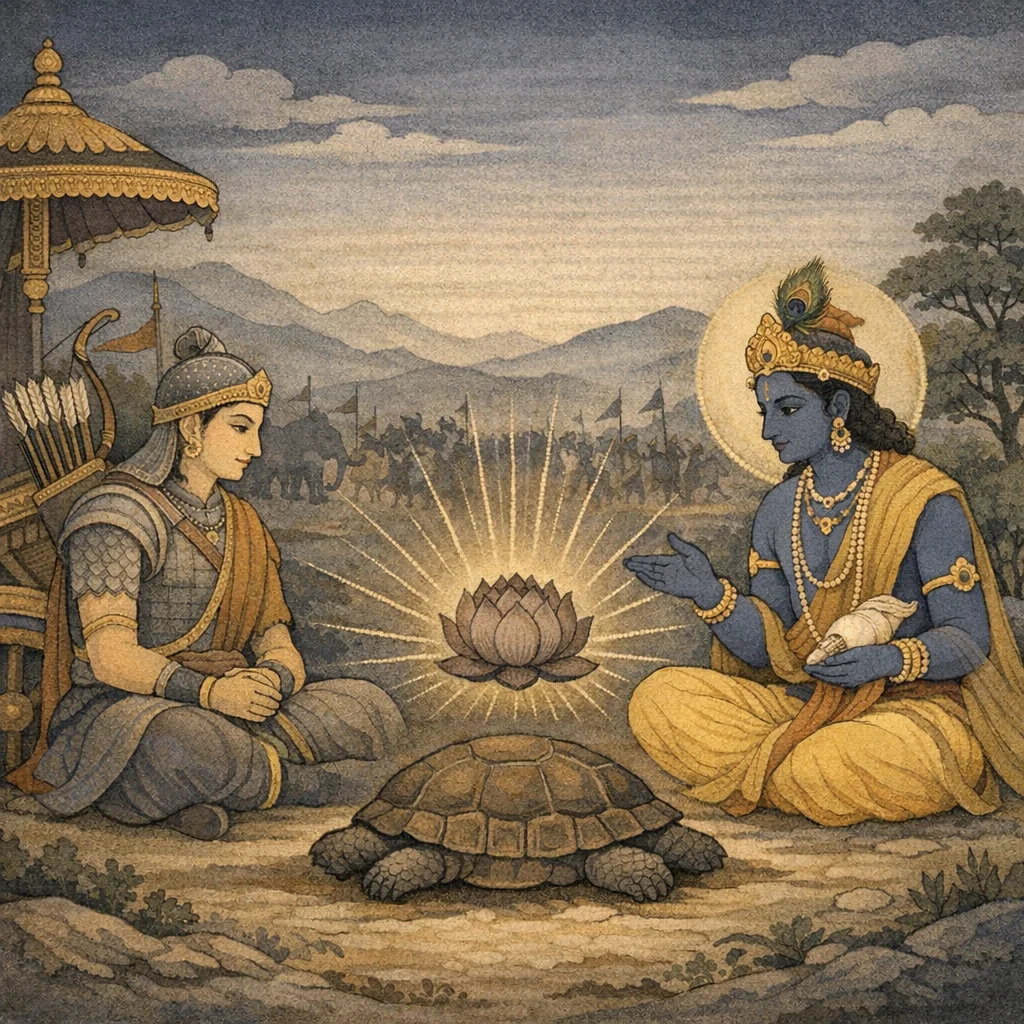
यदा संहरते चायं कूर्मोऽङ्गानीव सर्वशः । इन्द्रियाणीन्द्रियार्थेभ्यस्तस्य प्रज्ञा प्रतिष्ठिता ॥ २.५८ ॥
yadā saṃharate cāyaṃ kūrmo 'ṅgānīva sarvaśaḥ | indriyāṇīndriyārthebhyas tasya prajñā pratiṣṭhitā || 2.58 ||

เมื่อโยคีผู้นี้หดอวัยวะทั้งปวงกลับดังเต่า ฉันใด ก็หดอินทรีย์ทั้งหลายกลับจากอารมณ์แห่งอินทรีย์ทั้งปวง ฉันนั้น—ปัญญาของผู้นั้นย่อมตั้งมั่นแล้ว。
जब यह (योगी) कछुए के समान अपने अंगों को समेट लेता है, वैसे ही इन्द्रियों को इन्द्रिय-विषयों से सर्वथा समेट लेता है, तब उसकी प्रज्ञा प्रतिष्ठित होती है।
When one withdraws the senses from the objects of the senses on all sides, as a turtle draws in its limbs, his wisdom is firmly established.
The shared metaphor emphasizes disciplined withdrawal (pratyāhāra-like control). Some traditions interpret this as situational restraint rather than permanent sensory suppression.
FAQs
It describes attentional self-regulation: the ability to disengage from triggering stimuli rather than being driven by them.
By reducing identification with sensory experience, one’s center of awareness is implied to rest more firmly in the Self.
It provides a concrete behavioral marker for ‘steady wisdom’ immediately after describing equanimity toward outcomes.
Digital minimalism, deliberate breaks from overstimulation, and meditation training can be seen as contemporary parallels.