
Shloka 5
Sankhya Yoga — The Yoga of Knowledge
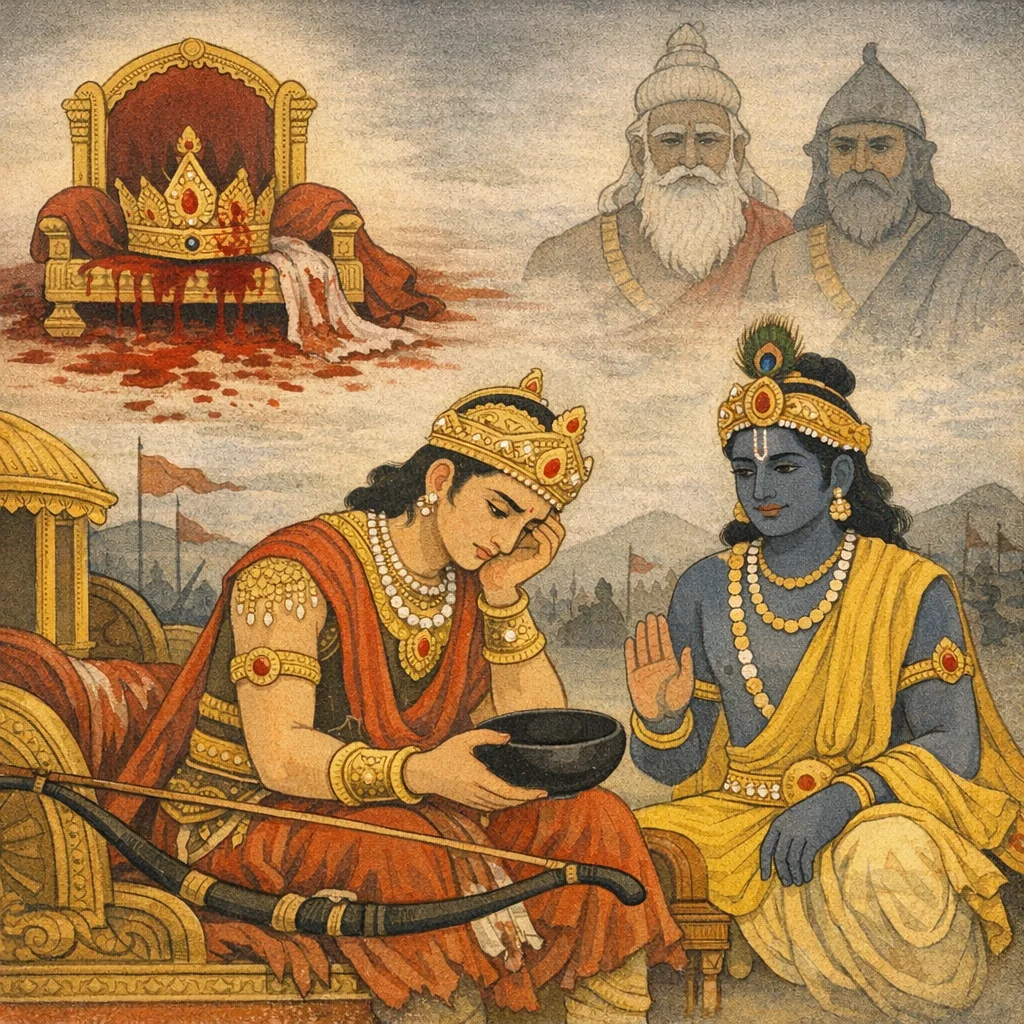
गुरूनहत्वा हि महानुभावान् श्रेयो भोक्तुं भैक्ष्यमपीह लोके । हत्वार्थकामांस्तु गुरूनिहैव भुञ्जीय भोगान् रुधिरप्रदिग्धान् ॥ २.५ ॥
gurūn ahatvā hi mahānubhāvān śreyo bhoktuṃ bhaikṣyam apīha loke | hatvārthakāmāṃs tu gurūn ihaiva bhuñjīya bhogān rudhira-pradigdhān || 2.5 ||

ในโลกนี้ การดำรงชีพด้วยการขอทานย่อมประเสริฐกว่าการฆ่าครูอาจารย์ผู้ทรงคุณอันยิ่งใหญ่ เพราะแม้จะฆ่าครูเพื่อหวังทรัพย์และความใคร่แล้วได้ชัยชนะก็ตาม ความสุขที่เสวยในที่นี้ก็ย่อมเปื้อนโลหิต เป็นสุขที่มัวหมองด้วยบาปกรรม
Arjuna says it would be better to live by alms in this world than to oppose and defeat revered teachers; even if victory is gained, the enjoyments would be morally tainted due to the act against them.
Arjuna states: ‘Not harming these venerable teachers, it is preferable to live even by begging here; but if one were to prevail against teachers who seek wealth and power, one would enjoy pleasures here that are ethically compromised.’
Most editions read a line implying ‘pleasures stained with blood’; academic renderings often soften this as ‘ethically tainted’ to reflect the verse’s focus on moral consequence rather than graphic description. Minor sandhi/compound variations occur across recensions, but the sense is stable.
FAQs
The verse reflects acute moral injury and anticipatory guilt: Arjuna imagines that even success would feel corrupted, indicating a conflict between social duty and personal conscience.
Metaphysically, it sets up the later distinction between bodily outcomes and the deeper self: Arjuna’s distress is rooted in identifying value solely with worldly relations and results, which Krishna will later challenge.
It occurs at the crisis point before Krishna’s teaching begins in earnest: Arjuna frames the central problem—how to act when obligations collide with reverence, affection, and ethical restraint.
It can be read as a case study in professional or civic dilemmas where ‘winning’ may violate one’s values; it encourages evaluating not only outcomes but the integrity of means.