
Bhagavad Gita — Raja Vidya Raja Guhya Yoga, Shloka 26
Raja Vidya Raja Guhya Yoga
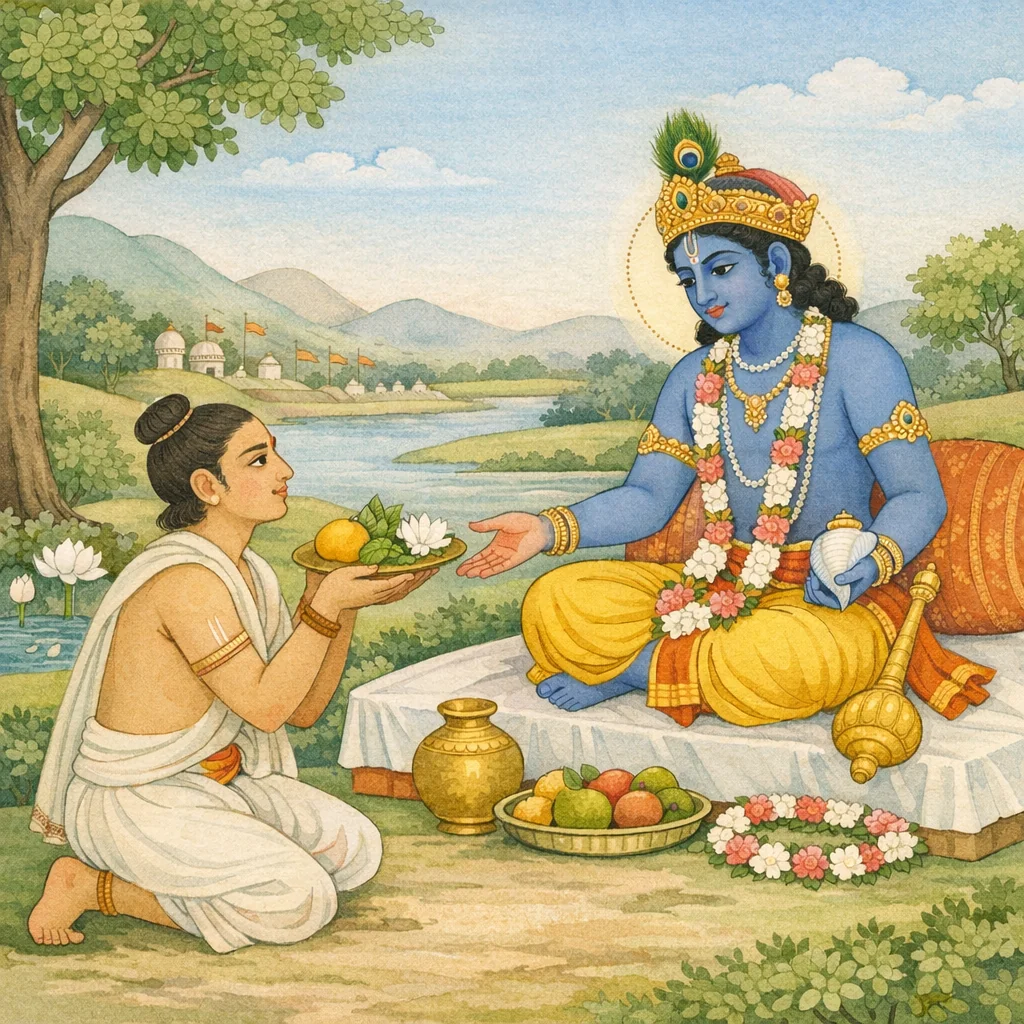
पत्रं पुष्पं फलं तोयं यो मे भक्त्या प्रयच्छति । तदहं भक्त्युपहृतमश्नामि प्रयतात्मनः ॥ ९.२६ ॥
patraṁ puṣpaṁ phalaṁ toyaṁ yo me bhaktyā prayacchati | tad ahaṁ bhakty-upahṛtam aśnāmi prayatātmanaḥ || 9.26 ||

ผู้ใดถวายแก่เราด้วยภักติ ใบไม้ ดอกไม้ ผลไม้ หรือแม้แต่น้ำ เรารับเครื่องบูชานั้นซึ่งถวายด้วยภักติจากผู้มีจิตบริสุทธิ์
Whoever offers Me with devotion a leaf, a flower, a fruit, or water, I accept that devotional offering from the pure-minded.
Whoever offers to Me with devotion a leaf, a flower, a fruit, or water—I partake of that offered-with-devotion (gift) of the disciplined/self-controlled person.
The main difference across translations is how to render ‘aśnāmi’ (I eat/partake/accept). Many devotional translations choose ‘accept’ to convey theological decorum, while literal versions keep ‘partake’ to reflect the idiom of offering and divine reception.
FAQs
It emphasizes that meaningful practice depends more on sincerity and attention than on extravagance, supporting a non-competitive, inwardly grounded spirituality.
The verse portrays the supreme as responsive to devotion, reframing sacrificial exchange as relational participation rather than mere ritual transaction.
After discussing worship and its aims, Krishna presents a democratized form of offering, shifting emphasis from complex rites to devotion.
It can inspire simple, consistent practices—gratitude, mindfulness, and ethical intention—without requiring elaborate resources.