
Shloka 62
Moksha Sannyasa Yoga — Moksha Sannyasa Yoga
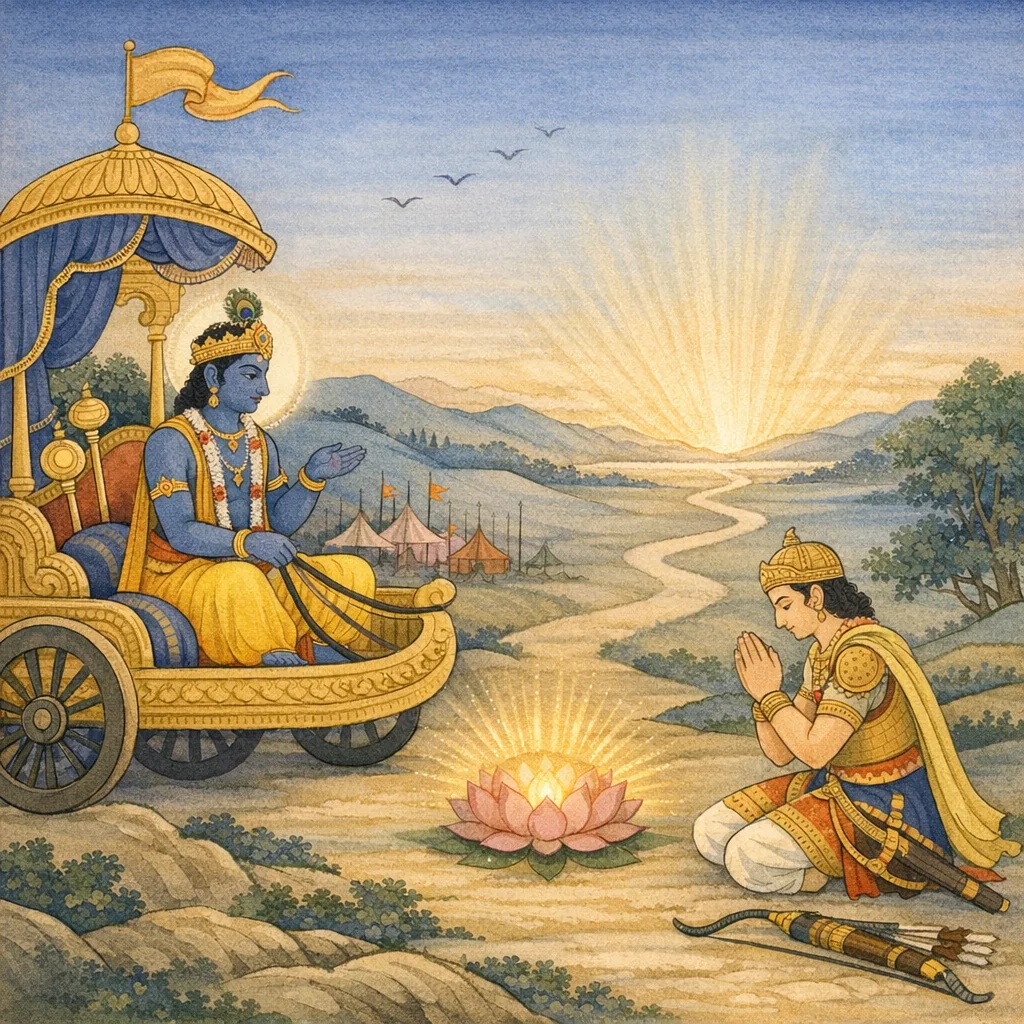
तमेव शरणं गच्छ सर्वभावेन भारत । तत्प्रसादात्परां शान्तिं स्थानं प्राप्स्यसि शाश्वतम् ॥ १८.६२ ॥
tam eva śaraṇaṁ gaccha sarvabhāvena bhārata | tatprasādāt parāṁ śāntiṁ sthānaṁ prāpsyasi śāśvatam || 18.62 ||

ดูก่อนภารตะ! จงไปถึงพระองค์นั้นเป็นที่พึ่งโดยสิ้นเชิง; ด้วยพระกรุณาของพระองค์ เธอจักบรรลุสันติอันสูงสุด และสถานอันนิรันดร์ (ธรรมสถาน)
हे भारत! तू सम्पूर्ण भाव से उसी की शरण में जा; उसकी कृपा से तू परम शान्ति और सनातन धाम को प्राप्त होगा।
Go to him alone for refuge with your whole being, O Bhārata; by his favor you will attain supreme peace and an everlasting abode/state.
‘स्थानं’ may be translated as ‘abode’ (devotional-theistic reading) or ‘state/condition’ (more philosophical soteriological reading). ‘सर्वभावेन’ implies total orientation—affective, cognitive, and practical—rather than mere assent.
FAQs
‘Refuge’ can be read as a therapeutic re-centering: relinquishing compulsive self-control and aligning with a stable ideal reduces inner conflict and supports equanimity.
The verse articulates a devotional pathway to liberation: divine favor mediates the transition to ‘supreme peace’ and an enduring liberated condition.
Following the depiction of Īśvara’s indwelling governance (18.61), Krishna recommends the practical response: wholehearted surrender as the means to peace.
In secular terms, it can mean committing fully to an ethical compass or contemplative discipline and letting that commitment guide decisions, especially under stress.