
Shloka 60
Moksha Sannyasa Yoga — Moksha Sannyasa Yoga
स्वभावजेन कौन्तेय निबद्धः स्वेन कर्मणा । कर्तुं नेच्छसि यन्मोहात्करिष्यस्यवशोऽपि तत् ॥ १८.६० ॥
svabhāvajena kaunteya nibaddhaḥ svena karmaṇā | kartuṁ necchasi yan mohāt kariṣyasy avaśo 'pi tat || 18.60 ||

ดูก่อนกุนตีบุตร! เธอถูกผูกพันด้วยกรรมของตนซึ่งเกิดจากสวภาวะของตน; ด้วยความหลง เธอไม่ปรารถนาจะทำสิ่งใด สิ่งนั้นเองเธอก็จักทำ แม้โดยจำยอม
हे कौन्तेय! अपने स्वभाव से उत्पन्न कर्म के द्वारा बँधा हुआ तुम मोहवश जो करना नहीं चाहते, वही तुम विवश होकर भी करोगे।
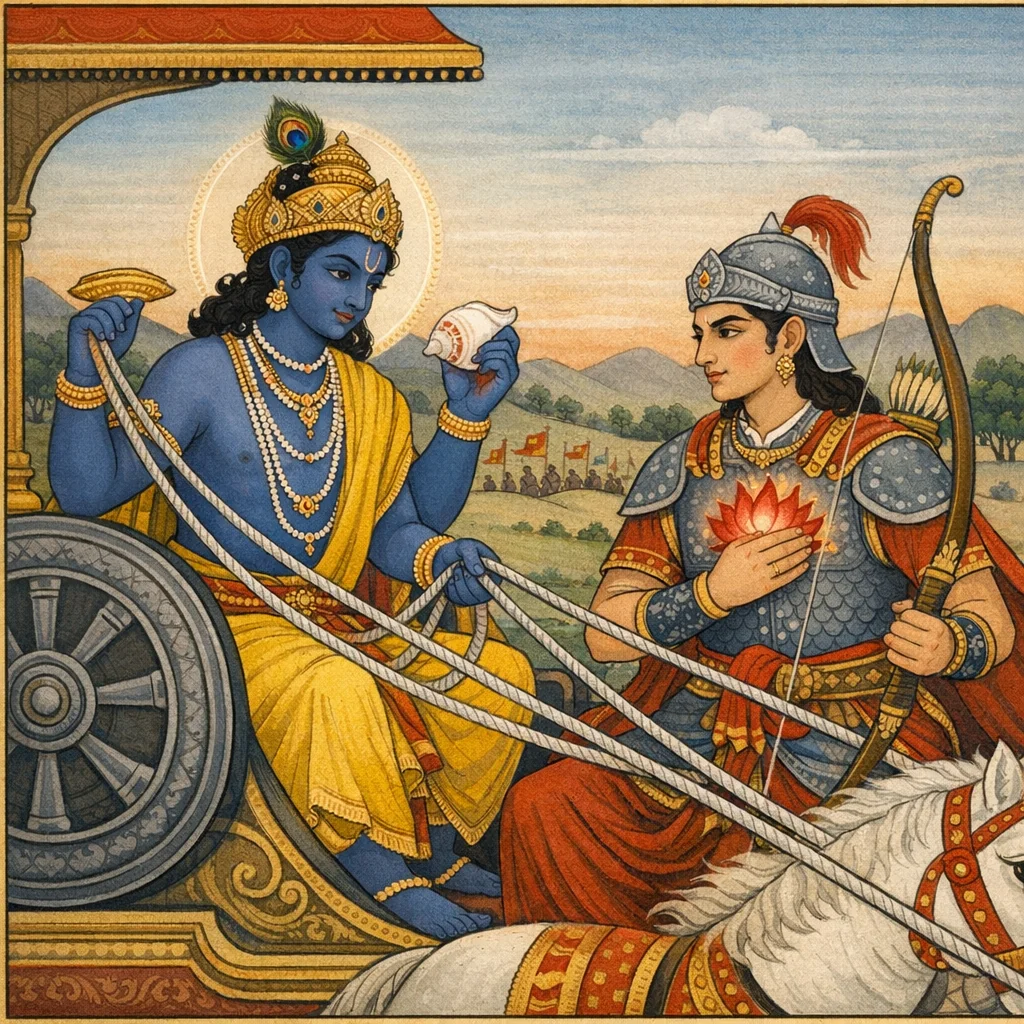
Bound by your own action arising from your nature, O son of Kuntī, what you do not wish to do out of delusion, that you will do even against your will.
‘स्वभावज’ is commonly glossed as ‘born of one’s nature/temperament,’ while ‘स्वेन कर्मणा’ can be taken as (a) one’s prescribed role-based action, or (b) accumulated karmic momentum expressed as tendency. The verse emphasizes compulsion through delusion (moha), not an absolute denial of moral responsibility.
FAQs
It describes akrasia-like behavior: under confusion, people act against their better intentions due to entrenched habits and identity-based pressures.
The verse supports the Gita’s layered agency model: the empirical self is driven by prakṛti and karmic dispositions; liberation involves disidentifying from these drivers through knowledge and disciplined practice.
Krishna presses Arjuna to recognize that avoidance is not a stable solution; inner and social dispositions will push him back toward action within the narrative’s dharma frame.
It can motivate reflective practice: identify the forces (habits, roles, conditioning) that steer behavior, and reduce ‘moha’ through clarity, values-based planning, and training.