
Bhagavad Gita — Gunatraya Vibhaga Yoga, Shloka 1
Gunatraya Vibhaga Yoga
श्रीभगवानुवाच । परं भूयः प्रवक्ष्यामि ज्ञानानां ज्ञानमुत्तमम् यज्ज्ञात्वा मुनयः सर्वे परां सिद्धिम...
śrī-bhagavān uvāca | paraṃ bhūyaḥ pravakṣyāmi jñānānāṃ jñānam uttamam | yaj jñātvā munayaḥ sarve parāṃ siddhim ...

พระผู้มีพระภาคตรัสว่า— เราจักกล่าวอีกครั้งถึงญาณอันสูงสุด เป็นญาณอันประเสริฐยิ่งในบรรดาญาณทั้งหลาย ซึ่งเมื่อรู้แล้ว มุนีทั้งปวงได้บรรลุความสำเร็จสูงสุด
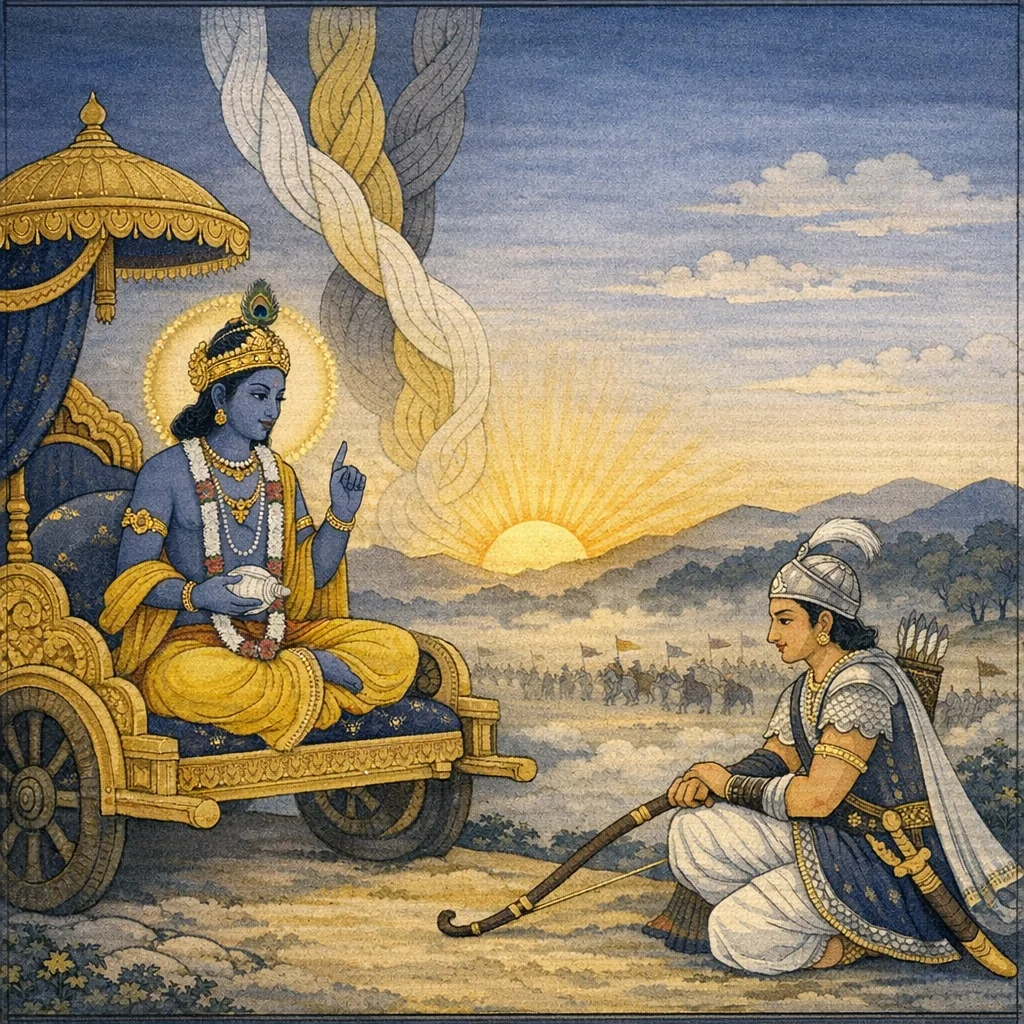
The Blessed Lord said: Again I shall declare the supreme knowledge, the best of all knowledge, knowing which all sages have attained the highest perfection.
The Lord said: I will again speak the highest (teaching), the best ‘knowledge among knowledges’; by knowing it, all sages reached the supreme accomplishment.
The provided Sanskrit appears truncated; translations reflect the standard transmitted reading of 14.1. Chapter 14 shifts from kṣetra/kṣetrajña analysis to the guṇas as the principal explanatory framework for bondage and liberation.
FAQs
The verse frames learning as transformative: knowledge is not merely informational but intended to reorient perception and behavior toward freedom.
It introduces a ‘highest knowledge’ that will be articulated via the doctrine of guṇas, explaining how prakṛti conditions experience and how transcendence is possible.
It opens Chapter 14 by connecting prior teaching to a new analytic lens—sattva, rajas, tamas—used to describe bondage and the path beyond it.
It encourages sustained study and reflection: revisiting core ideas can deepen insight, much like iterative learning in contemporary education and therapy.