
Shloka 18
Dhyana Yoga — Atma Samyama Yoga
यदा विनियतं चित्तमात्मन्येवावतिष्ठते । निःस्पृहः सर्वकामेभ्यो युक्त इत्युच्यते तदा ॥ ६.१८ ॥
yadā viniyataṁ cittam ātmany evāvatiṣṭhate | niḥspṛhaḥ sarvakāmebhyo yukta ity ucyate tadā || 6.18 ||

เมื่อจิตที่ถูกฝึกอย่างดีตั้งมั่นอยู่ในอาตมันเท่านั้น และเป็นผู้ไม่ยึดติดจากความปรารถนาทั้งปวง เมื่อนั้นจึงเรียกว่า ‘ผู้ประกอบด้วยโยคะ’
जब (साधक का) मन भलीभाँति संयमित होकर केवल आत्मा में ही स्थिर हो जाता है और वह सम्पूर्ण कामनाओं से स्पृहारहित हो जाता है, तब वह योगयुक्त कहा जाता है।
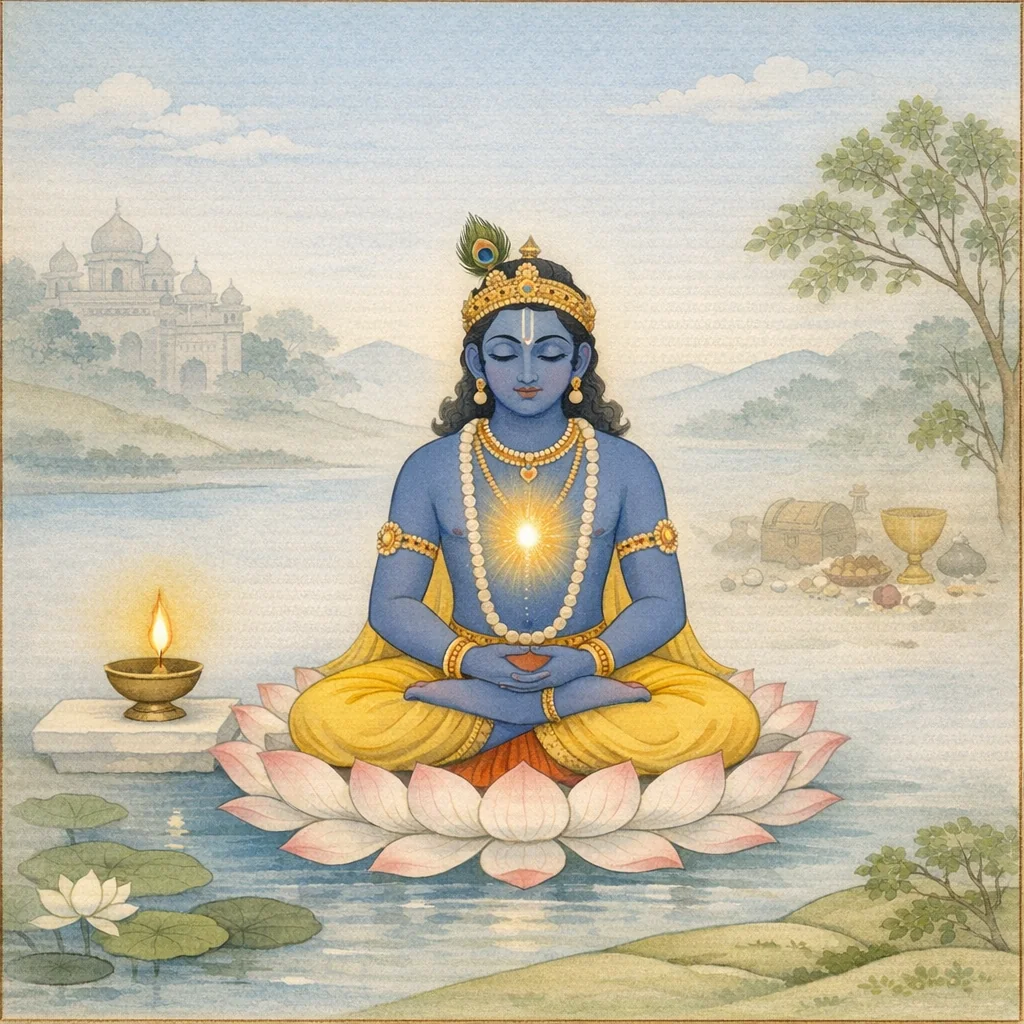
When the disciplined mind comes to rest in the Self alone, and one is free from craving for all desires, then one is said to be ‘yoked’ (in yoga).
Most recensions are stable here. Interpretive difference centers on ‘युक्त’ as (i) achieved meditative absorption vs. (ii) established in the discipline of yoga; ‘निःस्पृहः’ can be read as absence of craving rather than suppression of ordinary needs.
FAQs
The verse describes a stabilized attentional state: the mind is regulated and no longer pulled by recurring wants. It frames well-being as reduced reactivity to desire-driven impulses.
It presupposes a distinction between changing mental contents (citta) and the Self (ātman). Yoga is characterized as abiding in the Self rather than identifying with desire and fluctuation.
In Chapter 6, Krishna explains meditative practice and its markers. This verse functions as a criterion for when one may be called ‘yukta’—properly established in yoga.
As a practice-criterion: cultivate consistent routines that reduce compulsive craving (e.g., mindful pauses before acting), and repeatedly return attention to a chosen contemplative anchor.