
Shloka 14
Bhakti Yoga — Bhakti Yoga
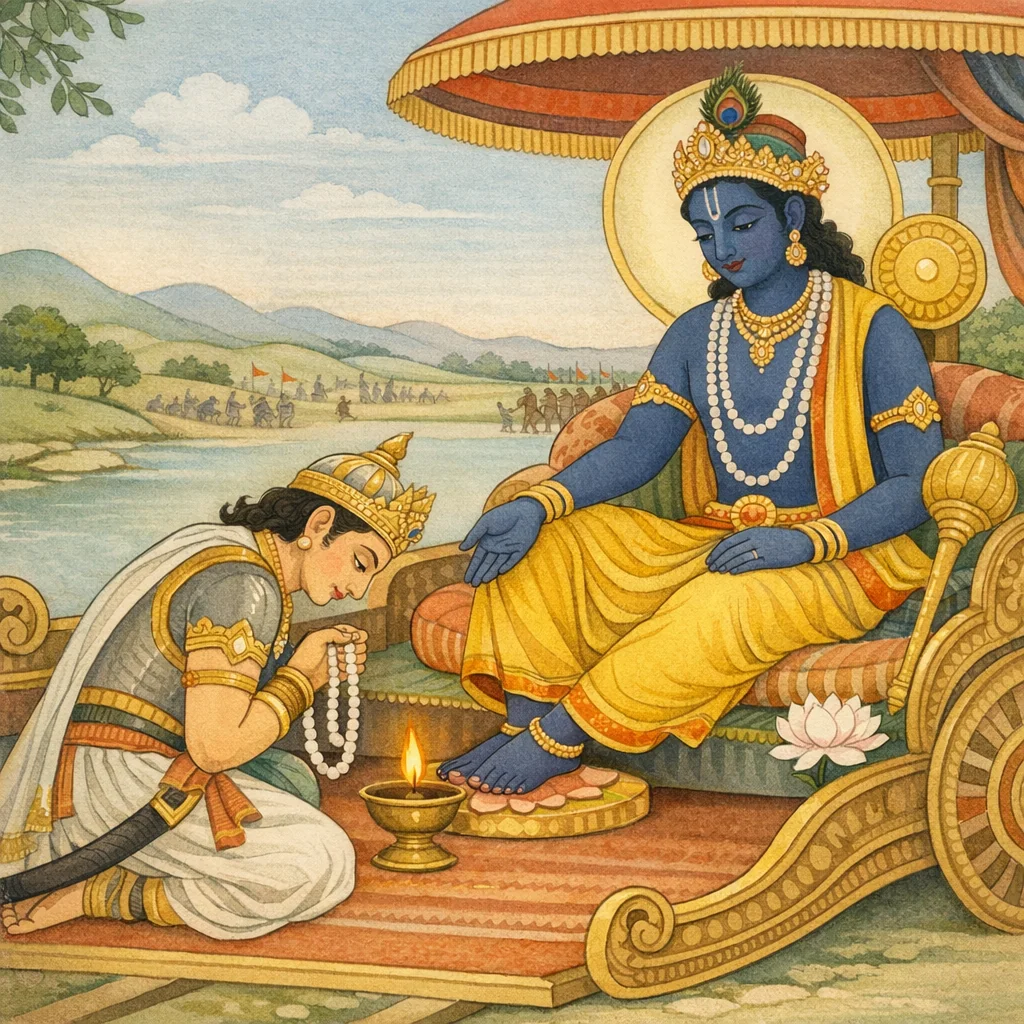
संतुष्टः सततं योगी यतात्मा दृढनिश्चयः । मय्यर्पितमनोबुद्धिर्यो मद्भक्तः स मे प्रियः ॥ १२.१४ ॥
saṃtuṣṭaḥ satataṃ yogī yatātmā dṛḍha-niścayaḥ | mayy arpita-mano-buddhir yo mad-bhaktaḥ sa me priyaḥ || 12.14 ||

ผู้เป็นโยคีผู้สันโดษอยู่เสมอ มีการสำรวมตน มีความตั้งมั่นแน่วแน่ และอุทิศทั้งจิตและปัญญาไว้ในเรา—ภักตะผู้นั้นเป็นที่รักของเรา
Content always, disciplined, of firm resolve, with mind and intellect dedicated to Me—such a devotee is dear to Me.
Always content; a practitioner of yoga; self-controlled; of firm determination; one whose mind and understanding are offered to Me—such a devotee is dear to Me.
Interpretations differ mainly on ‘arpita’ (“offered/entrusted/dedicated”)—devotional surrender in traditional readings versus a more neutral ‘directed toward’ in academic phrasing. ‘Yogī’ here functions as a general term for a disciplined practitioner, not necessarily a technical school label.
FAQs
Contentment and firm resolve are portrayed as traits that reduce rumination and impulsivity, supporting sustained practice and emotional steadiness.
Dedicating mind and intellect to the divine indicates a re-centering of cognition away from self-serving aims toward a perceived ultimate reality.
Continuing the devotee-profile, the verse integrates affective stability (contentment) with cognitive commitment (resolve) and devotional intentionality.
Cultivate contentment practices (gratitude, sufficiency) alongside clear commitments; align attention and decision-making with chosen higher values.