Adhyaya 357
Tिङ्विभक्तिसिद्धरूपम् (Established Forms of Tiṅ-Inflections)
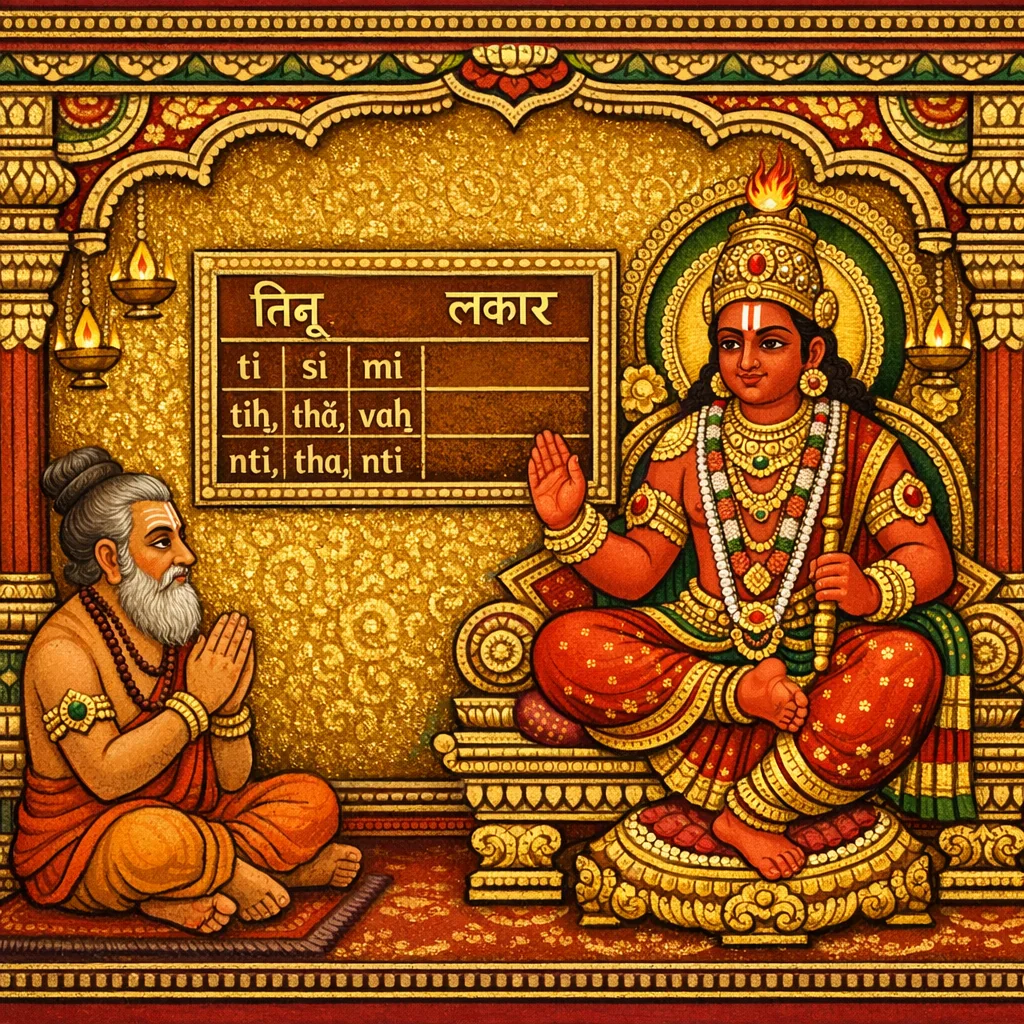
บทนี้เปลี่ยนเป็นคู่มือไวยากรณ์แบบย่อว่าด้วยปัจจัยติง (tiṅ: ปลายคำกริยาตามบุรุษ/พจน์) และการใช้ในภาวะ bhāva (การกระทำ/สภาพแบบไม่ระบุผู้กระทำ), karma (แนววัตถุ/กัมมวาจก), และ kartṛ (แนวผู้กระทำ/กัตตวาจก). ตอนต้นกล่าวถึงความขาดตอนของข้อความที่เกี่ยวกับเนื้อหาอุณาทิ (uṇādi) ก่อนหน้า แล้วแจกแจงลการะและขอบเขตความหมายตามลำดับ—laṭ ปัจจุบัน, liṅ สำหรับข้อบัญญัติ/ออปเททีฟและการอวยพร, loṭ สำหรับคำสั่งและพร, laṅ อดีตกาลไกล, luṅ และ liṭ อดีตกาล (liṭ เน้นความหมายเชิงอ้อม/ไม่ประจักษ์), และ luṭ/ḷṅ สำหรับอนาคต. ต่อมาระบุปัจจัยบุรุษและความต่างระหว่าง parasmaipada/ātmanepada พร้อมยกแบบรูปจากธาตุ bhū (“เป็น/มีอยู่”) และ edh (“เจริญ/ลุกโพลง”) รวมทั้งกลุ่มธาตุอื่นและข้อสังเกตเรื่อง vikaraṇa. ท้ายบทแสดงรูปที่เกิดจากการแปลง—desiderative (san), causative (ṇic), frequentative (yaṅ) และ yaṅ-luk—เชื่อมกับตัวอย่างการใช้และแบบจำลอง “rūpaka” เพื่อให้เห็นรูปคำชัดเจน.
Shlokas
No shlokas available for this adhyaya yet.
Frequently Asked Questions
The mapping of lakāras to time/meaning (present, past, future, injunction, benediction, conditional) along with tiṅ-ending paradigms across persons and voices, illustrated via bhū/edh and related dhātu examples plus san–ṇic–yaṅ derivations.
By safeguarding linguistic precision for mantra and śāstra, it supports correct ritual speech and disciplined study; this technical clarity is framed as Agneya Vidya—worldly mastery (bhukti) placed in service of dharma and inner purification toward mukti.