Adhyaya 348
Vyākaraṇa—Pratyāhāra System, Upadeśa Conventions, and Manuscript-Critical Notice (Agni Purana, Chapter 348)
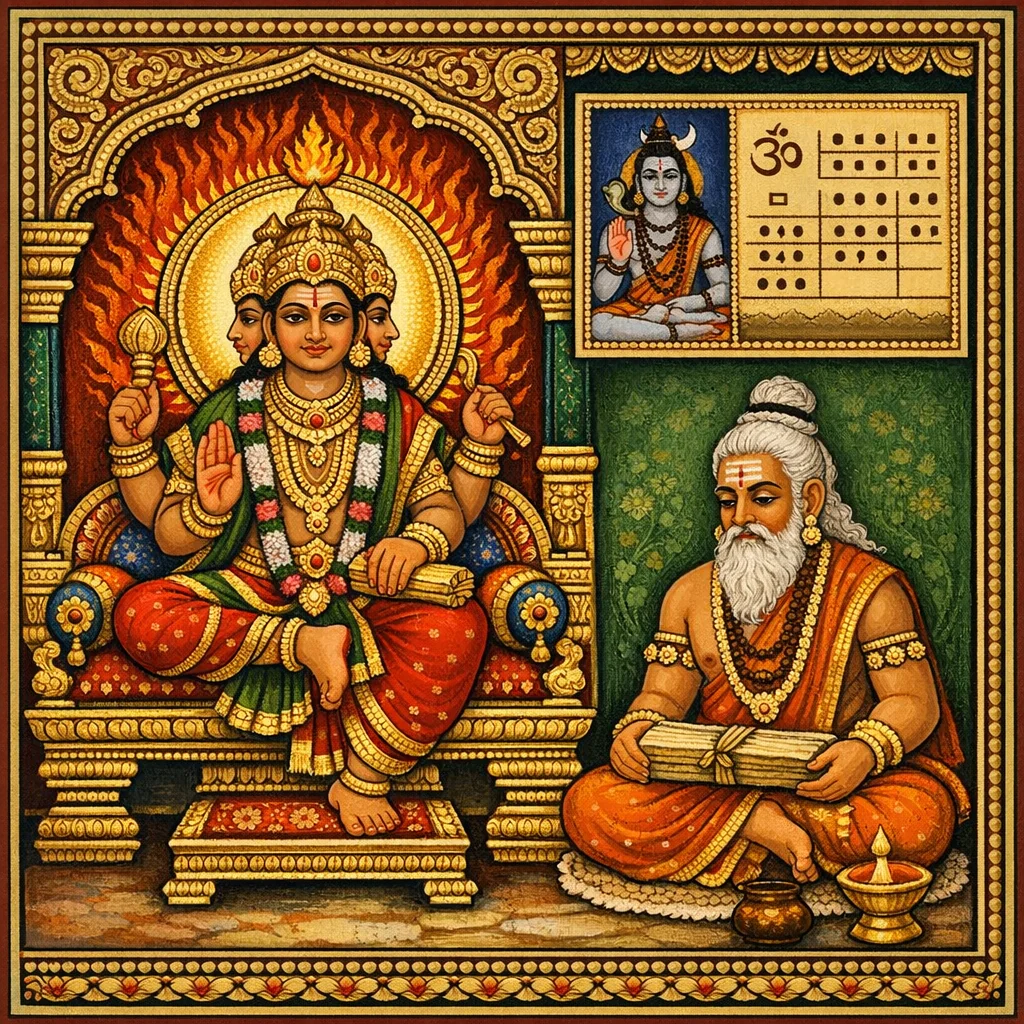
บทนี้เริ่มด้วยคำชี้แจงเชิงวิจารณ์ต้นฉบับอย่างชัดเจนว่า ข้อความที่สับสนก่อนหน้านั้นให้ปฏิเสธว่าเป็นความผิดพลาดจากการคัดลอก ยืนยันว่าการสืบทอดศาสตรา (śāstra) ต้องเที่ยงตรง จากนั้นสกันทะประกาศอธิบายไวากรณะ (Vyākaraṇa) โดยย่อว่าเป็น “สภาพที่ตั้งมั่นของถ้อยคำ” ตามสายคาตยายะนะ และเพื่อสอนผู้เริ่มต้น เนื้อหานำเสนอศัพท์เทคนิคที่ใช้ในการดำเนินการทางไวยากรณ์ โดยเน้นวิธีประตยะหาระ (pratyāhāra) ผ่านลำดับศิวสูตร (Śiva-sūtra) ตั้งแต่ “a i u ṇ …” จนถึง “ha la” พร้อมกล่าวถึงธรรมเนียมอุปเทศ (upadeśa) ว่าเสียงถูกกำกับด้วยเครื่องหมายอิต (it-marker) และในการใช้กฎให้ถือว่าไม่เป็นเสียงนาสิก สุดท้ายอธิบายหลักการเลือกประตยะหาระว่า เสียงต้นร่วมกับตัวบ่งชี้ท้ายหมายถึงชุดของเสียงที่อยู่ระหว่างกลาง โดยรับแต่ละเสียงตามขอบเขตของตน ในทัศนะเชิงสารานุกรมของอัคนีปุราณะ ไวยากรณ์เป็นเครื่องมือศักดิ์สิทธิ์เพื่อความแม่นยำในการสวดเวท ความถูกต้องแห่งพิธีกรรม และการตีความที่เชื่อถือได้ จึงประสานความเคร่งครัดทางภาษาเข้ากับเป้าหมายแห่งธรรมะและโมกษะ (mokṣa)
Shlokas
No shlokas available for this adhyaya yet.
Frequently Asked Questions
The chapter emphasizes the pratyāhāra mechanism based on the Śiva-sūtras, including the role of the final indicator (it-marker) and the upadeśa convention that sounds are treated as having it-markers and as non-nasalized for grammatical operations.
It identifies an exemplar/manuscript defect (ādarśa-doṣa) and rejects the corrupted passage, underscoring that śāstric knowledge depends on accurate textual transmission and disciplined philological scrutiny.
By treating linguistic precision as dharmic discipline: correct phonology and rule-application safeguard mantra and scripture, supporting accurate ritual performance and reliable interpretation—practical rigor that ultimately serves both social order (bhukti) and spiritual clarity (mukti).