Adhyaya 206
Agastyārghyadāna-kathana (On the Giving of the Agastya Honor-Offering)
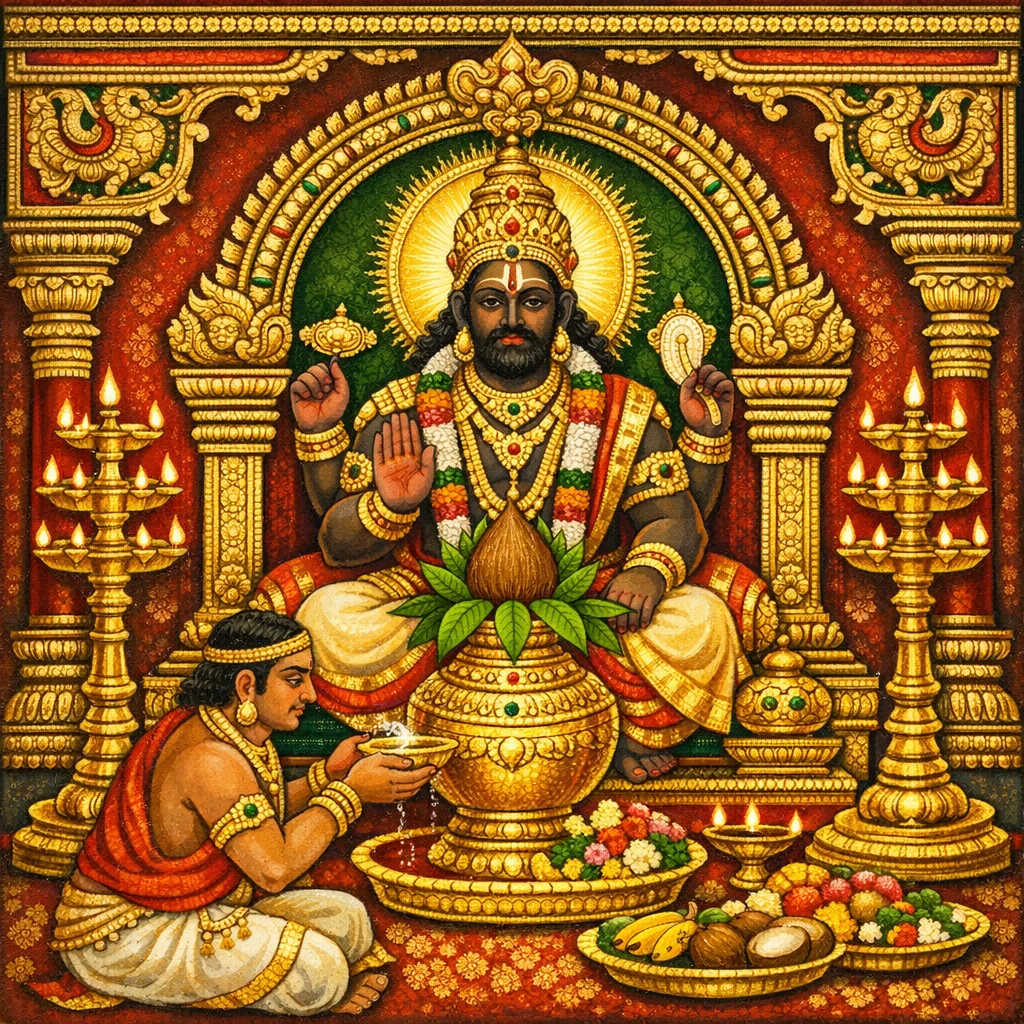
ในบทนี้ พระอัคนีทรงกำหนดพิธีบำเพ็ญวรตะบูชาที่มีฤๅษีอคัสตยะเป็นศูนย์กลาง โดยระบุชัดว่าอคัสตยะเป็นรูปแห่งพระวิษณุ จึงเชื่อมพิธีฤๅษีกับคติไวษณพเรื่องการบรรลุพระหริ. ตลอดสามวัน ผู้ปฏิบัติต้องถือศีลอดก่อนอาทิตย์ขึ้น ทำการบูชาและถวายอรฺฆยะ (น้ำบูชา) แด่อคัสตยะ. ครั้นเวลา “ประโทษะ” ให้ตั้งรูปจากดอกกาศะไว้ในหม้อน้ำ/กุมภะ แล้วทำการเฝ้าตื่นยามคืน (ปรชาคระ). เช้าวันถัดไปถวายอรฺฆยะใกล้แหล่งน้ำ พร้อมสรรเสริญวีรกรรมของอคัสตยะ เช่น ทำให้มหาสมุทรแห้ง และปราบอาตาปิ–วาตาปิ แล้วอธิษฐานขอพรและคติภพหน้าอันเป็นมงคล. บทนี้ยังกล่าวถึงเครื่องสักการะและรูปแบบทาน ได้แก่ จันทน์ พวงมาลัย ธูป ผ้า ข้าว/ธัญพืช ผลไม้ ทองคำ การถวายหม้อน้ำแก่พราหมณ์ รวมทั้งเลี้ยงอาหารและทักษิณา (โค ผ้า ทอง). มีการกล่าวถึงความต่างของบทมนต์ และกำหนดว่า สตรีกับศูทรให้ทำพิธีโดยไม่ใช้มนต์เวท. การปฏิบัติถวายอรฺฆยะยาวนานเจ็ดปีให้ผลเป็นความมั่งคั่งครบถ้วน—ผู้ไร้บุตรได้บุตร และหญิงสาวได้สามีผู้เป็นกษัตริย์.
Shlokas
No shlokas available for this adhyaya yet.
Frequently Asked Questions
Fasting and worship precede the arghya; at pradoṣa a kāśa-flower image is placed in a ghaṭa/kumbha, followed by night vigil; in the morning the arghya is offered near water, then tyāga (grain, fruit, libation) and charitable gifts/feeding of brāhmaṇas conclude the rite.
Sandalwood, garlands, incense, cloth, rice/grains, fruits, gold (and in an expanded description: five gems, gold and silver, seven grains, curd, sandalwood), plus a pot-gift to a brāhmaṇa and dakṣiṇā including cow, garments, and gold.
The rite explicitly aims at attaining Hari through Agastya-worship (mukti-oriented devotion) while also promising dharma-anchored prosperity—health, fortune, desired boons, lineage, and marital success—thus integrating dharma, artha, kāma, and mokṣa.
It states that for women and Śūdras the rite is ‘non-Vedic,’ i.e., performed without Vedic mantras, indicating an inclusive procedural adaptation while preserving the devotional and charitable structure.
By giving the arghya for seven years, ‘all obtain everything’: a childless woman gains sons and good fortune, and a maiden gains a husband of royal birth; the arghya is also described in some readings as imperishable and mind-fulfilling.