Adhyaya 204
Chapter 204 — मासोपवासव्रतम् (The Vow of Month-long Fasting)
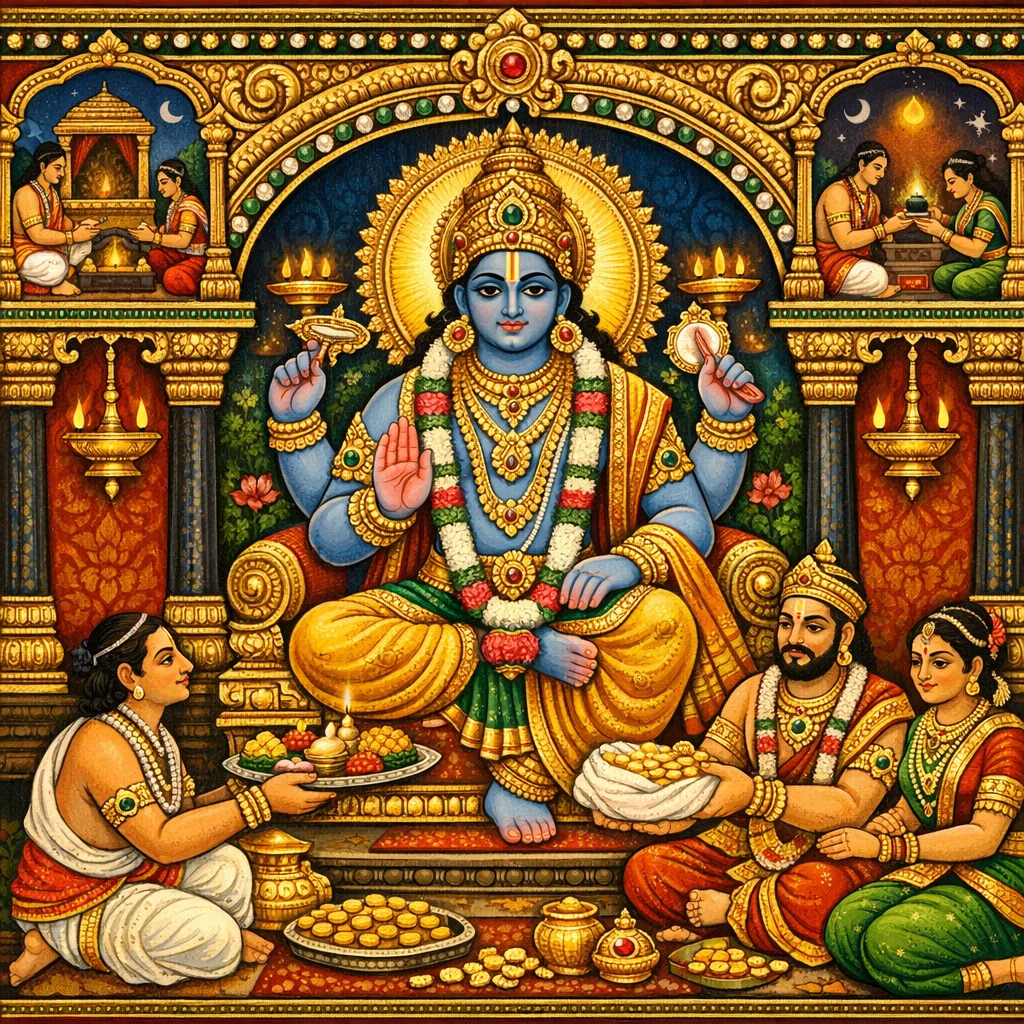
พระอัคนีทรงสอนฤๅษีวสิษฐะถึงมาสोपวาสวรตะว่าเป็นวรตะอันประเสริฐยิ่ง ควรปฏิบัติหลังยัญไวษณพและต้องได้รับอนุญาตจากครูบาอาจารย์ ผู้ปฏิบัติควรประเมินกำลังด้วยตบะเตรียมการ เช่น กฤจฉระ และขยายสิทธิแก่ผู้ถือพรตป่า (วานปรัสถะ) นักบวช และสตรี (รวมถึงหญิงหม้าย) วรตะเริ่มในปักษ์สว่างเดือนอาศวิน หลังถือศีลอดวันเอกาทศี แล้วดำเนินสามสิบวันเป็นการบูชาพระวิษณุจนถึงวันอุตถาน (การตื่น) ผู้ถือวรตะบูชาพระวิษณุวันละสามเวลา พร้อมอาบน้ำสามครั้ง ถวายเครื่องสักการะ สวดมนต์ (ชปะ) และภาวนา โดยเคร่งครัดเรื่องวาจา ความไม่ยึดติด และข้อห้ามด้านการสัมผัส/ความประพฤติ ในวันทวาทศีจึงปิดวรตะด้วยการบูชา เลี้ยงพราหมณ์ ให้ทักษิณา และทำปารณะให้ถูกต้อง พร้อมระบุทานมาตรฐานโดยเฉพาะเป็นชุดละสิบสาม ผลคือความบริสุทธิ์ การยกฐานะวงศ์ตระกูล และได้ถึงวิษณุโลก; หากเป็นลม อนุญาตน้ำนมและเนยใสเป็นหวิสที่พราหมณ์รับรอง
Shlokas
No shlokas available for this adhyaya yet.
Frequently Asked Questions
It is undertaken in the bright fortnight of Āśvina, after fasting on Ekādaśī, and is maintained for up to thirty days, oriented toward worship of Viṣṇu until his Utthāna.
After assessing personal capacity via austerities like kṛcchra, the vow is prescribed for vānaprasthas, ascetics (yatis), and women—explicitly including widows.
Thrice-daily worship of Viṣṇu, triple bathing, offering fragrance and flowers, recitation of Viṣṇu hymns/praises, and meditation, accompanied by restraints on speech and desire for gain.
The vow is completed by worship, feeding brāhmaṇas on Dvādaśī, giving dakṣiṇā and prescribed gifts, and then performing pāraṇa—the regulated, proper breaking of the fast.
No. The chapter states that milk and ghee given to a fainting vow-holder do not violate the vow, as they are treated as havis (an oblation) approved by brāhmaṇas.