Adhyaya 202
Puṣpādhyāya-kathana (Account of Flowers in Worship)
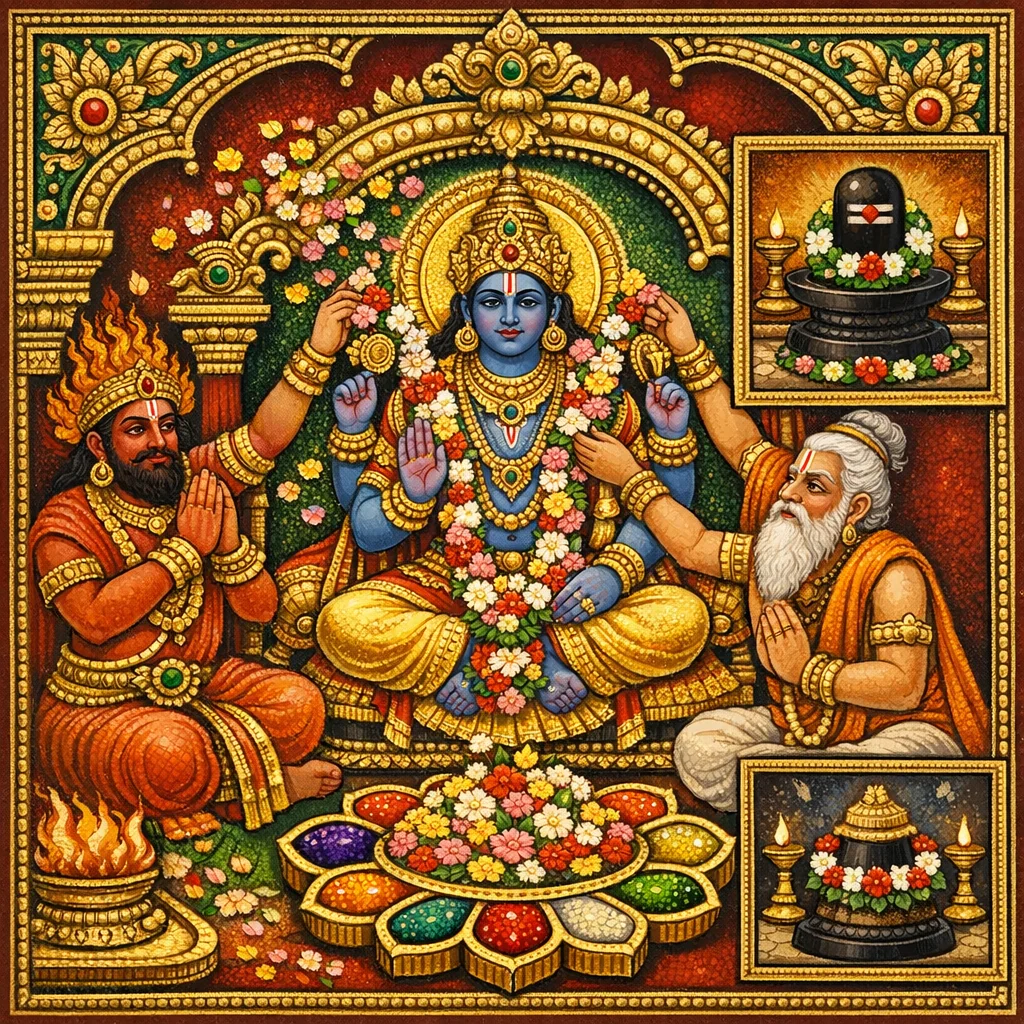
บทนี้ในวรตขันฑะสืบต่อคำสอนพิธีบูชาภาคปฏิบัติ โดยพระอัคนีตรัสแก่ฤๅษีวสิษฐะว่า การถวายเครื่องสักการะ—โดยเฉพาะดอกไม้และของหอม—เป็นสื่อแห่งภักติที่มีวินัย ทำให้หริ (วิษณุ) พอพระทัย และให้ผลเป็นลำดับคือ การสิ้นบาป (ปาปหานิ), ภุกติ, มุกติ และการเข้าถึงวิษณุโลกะ. ตอนต้นแจกแจงดอกไม้และใบไม้ที่ “เหมาะแก่เทพ” (เทวโยคยะ) พร้อมผลเฉพาะของอุปหารถวายต่าง ๆ; ต่อมาวางข้อห้ามว่าไม่ควรบูชาด้วยของเหี่ยวแห้ง แตกหัก บกพร่อง หรืออัปมงคล. ยังแยกตามนิกายว่า ดอกไม้บางชนิดเหมาะสำหรับวิษณุ ส่วนพระศิวะบูชาด้วยดอกไม้อื่น และมีของถวายบางอย่างที่ห้ามสำหรับศิวะ. คำสอนมุ่งสู่การทำให้เป็นภายในว่า “ดอกไม้” สูงสุดคือคุณธรรมและสมาธิภาวนา—อหิงสา, ชนะอินทรีย์, ขษานติ, ทยา, ศมะ, ตปัส, ธยานะ, สัตยะ (บางฉบับเพิ่ม ศรัทธา)—แสดงว่าความประณีตภายนอกสมบูรณ์ด้วยอุปนิสัยภายใน. ท้ายบทจัดวางการถวายในกรอบปูชาอย่างเป็นระบบ (อาสนะ, มูรติ-ปัญจางคะ, อัษฏปุษปิกา) และลำดับพระนาม (วาสุเทวะ-อาทิสำหรับวิษณุ; อีศานะ-อาทิสำหรับศิวะ).
Shlokas
No shlokas available for this adhyaya yet.
Frequently Asked Questions
Flowers and fragrant substances (gandha, dhūpa, dīpa, naivedya) are emphasized, with extensive lists of specific blossoms, lotuses, aromatic leaves, and also bilva and śamī leaves; the text also highlights that devotion (bhakti) makes all admissible offerings effective.
They are inner virtues presented as worship-offerings—commonly ahiṃsā, indriya-nigraha/jaya, kṣānti, dayā, śama/śānti, tapaḥ, dhyāna, and satya (with manuscript variation also referencing śraddhā). They are central because they complete external pūjā with ethical and contemplative transformation, aligning ritual with mukti.
One should avoid withered/fallen items, broken or damaged materials, and offerings marked by defects (described as “extra limbs/defects”); additionally, certain flowers are disallowed for Śiva, and inauspicious, non-fragrant items (e.g., associated with kuṣmāṇḍa or nimba in the text’s phrasing) are rejected.
It combines (1) catalog-style taxonomies of flowers and offering-types, (2) ritual-legal admissibility rules, (3) deity-specific liturgical distinctions, and (4) a moral psychology of worship via the inner ‘flowers’—integrating technical detail with the spiritual goals of bhukti and mukti.