Adhyaya 201
Worship of the Nine Vyūhas (Nava-vyūha-arcana)
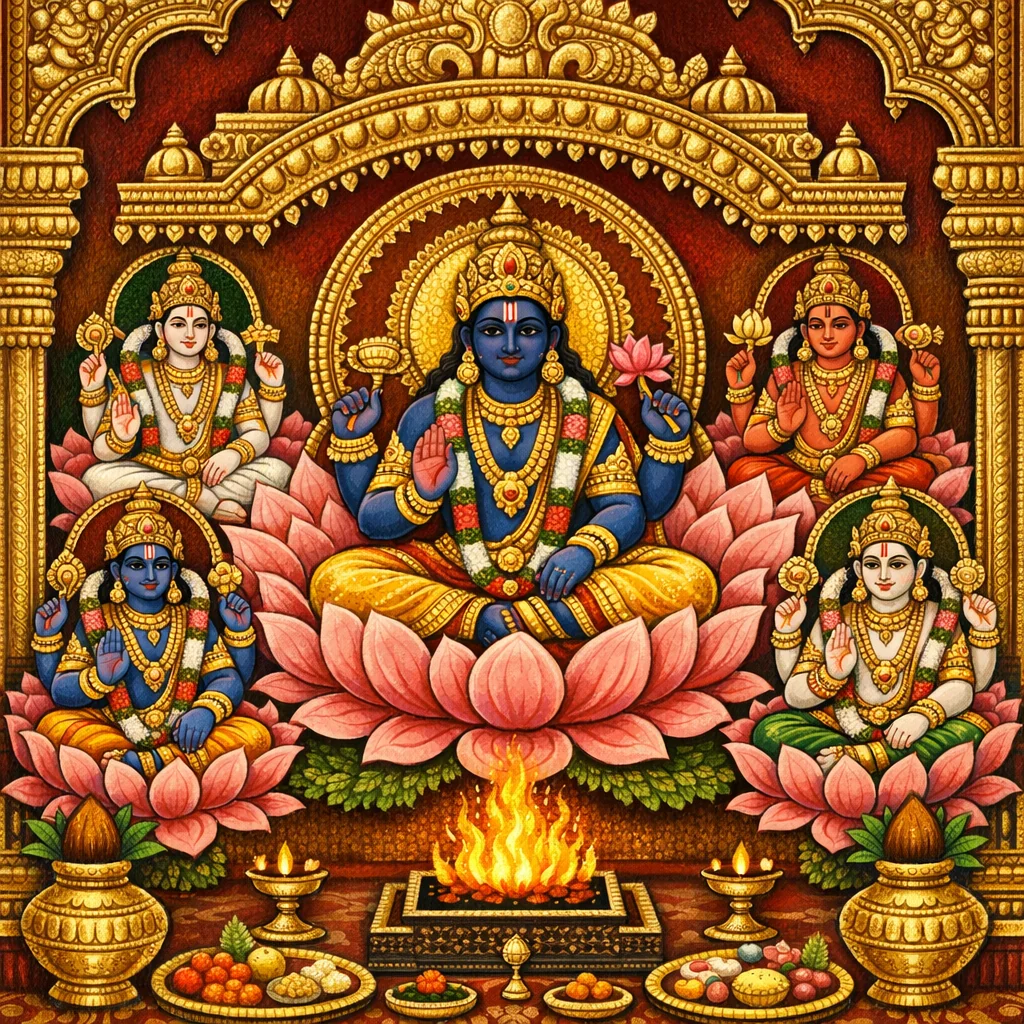
บทนี้เริ่มด้วยการระบุการสิ้นสุดของพิธีพรตทานประทีป (Dīpadāna-vrata) ก่อนหน้า แล้วเปลี่ยนเข้าสู่พิธีกรรมเชิงเทคนิคว่าด้วยการบูชานววยูหะ (Navavyūha) ตามที่หริถ่ายทอด อัคนีสอนการจัดมณฑลรูปดอกบัว โดยมีวาสุเทวะอยู่กลาง และวางสังกัรษณะ ประทยุมน์ อนिरุทธ และนารายณะตามทิศ พร้อมเชื่อมโยงพยางค์บีชะ (bīja) เฉพาะและตำแหน่งธาตุ/ตำแหน่งพิธี รวมถึงการตั้งน้ำ ต่อจากนั้นอธิบายผังมนตร์-บีชะของรูปประกอบ เช่น สัทพรหมา วิษณุ นฤสิงห์ ภูรวราหะ ตลอดจนการวางนยาสเสริมที่ปากประตูและทิศตะวันตก พร้อมวิธีเฉพาะของมนตร์ครุฑและมนตร์คทา (gadā) ลำดับพิธีเคลื่อนจากการสร้างมณฑลภายนอกสู่การทำให้เป็นภายใน: บูชาตามลำดับทศางคะ (daśāṅga-krama), ตั้งหม้อพิธี (ghaṭa) สำหรับผู้พิทักษ์ทิศ, นิมิตโตรณะและวิทานะ และสมาธิกายละเอียดในน้ำอมฤตแห่งจันทร์ ตอนท้ายทำนยาสด้วยบีชะสิบสองเพื่อก่อ “กายทิพย์”, ระบุศิษย์ด้วยการเสี่ยงทายโปรยดอกไม้, กำหนดจำนวนโหมะเพื่อชำระ และค่าดีกษา—ย้ำว่าการอุปสมบทเป็นตราประทับทั้งทางสังคมและทางจิตวิญญาณของวิทยาพิธีกรรมนี้
Shlokas
No shlokas available for this adhyaya yet.
Frequently Asked Questions
A lotus-maṇḍala Navavyūha worship beginning with Vāsudeva at the center, followed by directional deity placements with specific bīja-syllables, then internalization through visualization, daśāṅga-krama, and nyāsa culminating in dīkṣā.
After mandala and mantra placements, it shifts to subtle-body contemplation (lunar nectar), self-identification with Viṣṇu, and nyāsa that produces a “divine body,” explicitly valuing heart-worship of Hari (anirmālyā) as the inner completion of the rite.
Disciples are seated to the left, identify a chosen form by blind flower-casting, perform homa with 108 and then 1000 oblations for purification, and receive dīkṣā after payment of prescribed fees honoring the guru.